Decision: pause the short-period, arithmetic-key and phrase-driven searches. Reconstruct the page structure before choosing another cipher. No new plaintext.
The last several sessions narrowed specified models, but repeatedly extending that same search is giving diminishing returns. A failed family is not evidence for whichever family we try next. This session changes the question from “which key fits?” to “what information did our working representation retain or discard?”
First, check what known solutions actually establish
Replayed the five established LP1 groups used in our benchmark and the two solved LP2 pages. Every tested method preserves the sequence of rune counts per word. On LP2 page 56, the known prime-minus-one method, with its known F exception, re-encrypts exactly.
Page 56 illustrates why random-looking rune values do not establish a non-letter cipher:
| Property | Page 56 ciphertext | Page 56 plaintext |
|---|---|---|
| Runes | 85 | 85 |
| Rune words | 25 | 25 |
| Mean runes per word | 3.40 | 3.40 |
| Rune index of coincidence | 0.03249 | 0.07003 |
Its ciphertext coincidence rate is close to the uniform 29-symbol value, about 0.03448, even though a known position-dependent arithmetic rule recovers ordinary prose. The short sample cannot characterize all unsolved pages, but it is a concrete counterexample to treating flat rune frequencies as proof of compression or nonlinguistic content.
The word-length preservation check confirms these known methods, not the unknown cipher. Replacing rune values while keeping delimiters is part of their already established decoding procedure; the preserved layout is not a new discovery. Our five LP1 groups do not cover every solved LP1 method.
The community briefing also describes delimiter preservation as an assumption supported by solved pages. Its structural overview distinguishes manuscript layout from rune values. Consulted 28 September 2026 UTC.
Separate layout evidence from letter evidence
Using the corrected apostrophe handling from Session 42:
| Property | Five solved LP1 groups | Eight substantial unsolved sections |
|---|---|---|
| Runes | 1,963 | 12,947 |
| Rune words | 483 | 2,894 |
| Mean runes per word | 4.06 | 4.47 |
| One-rune words | 14 | 83 |
| One-rune words as a share of words | 2.90% | 2.87% |
| Identical neighboring runes within each group/section | 47 / 1,958 | 86 / 12,939 |
| Neighboring-repeat rate | 2.40% | 0.665% |
These are descriptive comparisons, not a test proving that the boundaries are English word boundaries. Headings and labels are included, the samples differ in size and subject, and the nine-rune unsolved fragment is omitted. The resemblance of the singleton rate does not establish what individual singleton symbols mean.
The practical distinction is nevertheless useful: the distribution of visible word lengths remains plausible, while rune identities and local repetition behave differently. We should preserve word boundaries as a provisional clue and investigate what other information the page carries. We do not need to replace one unsupported certainty with another.
A concrete problem in the working transcription
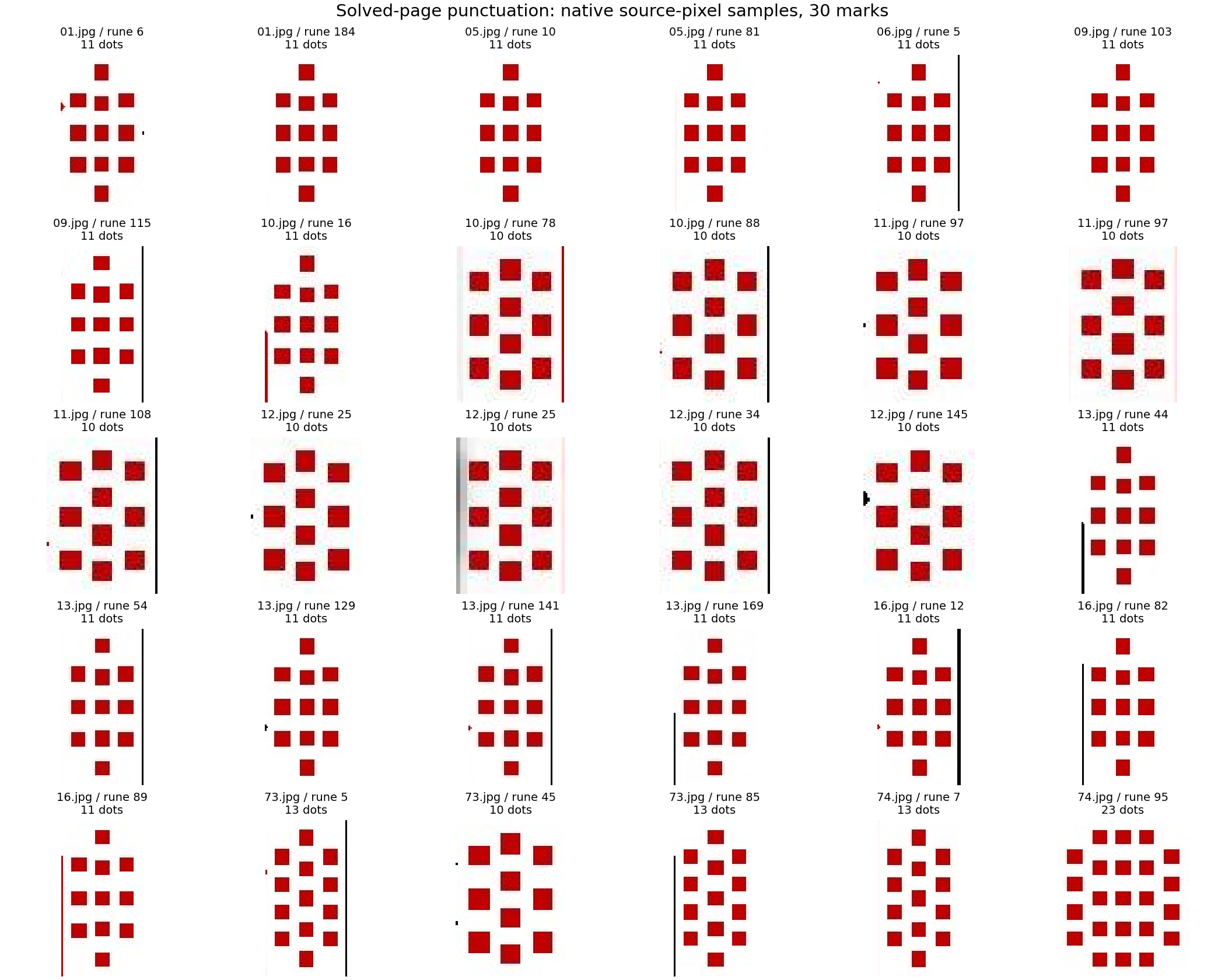
Session 20 already documented separate visual marks at identical rune offsets. For example:
| Archive image | Rune offset | Separate printed events |
|---|---|---|
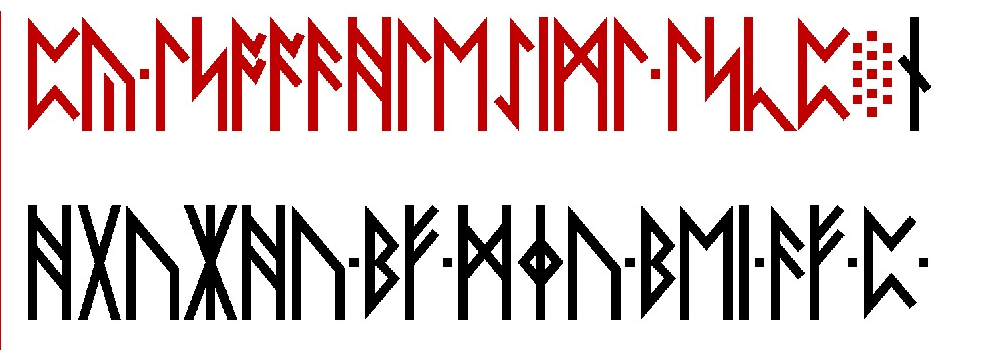
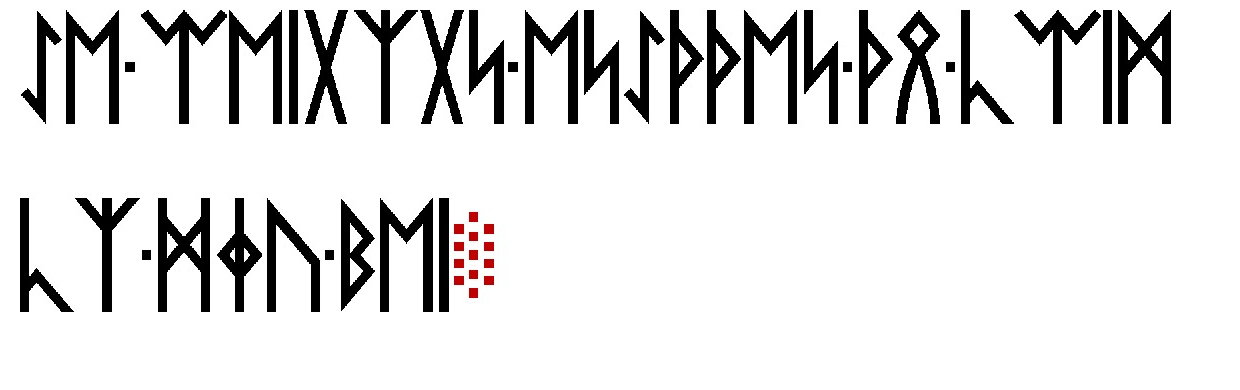
| 11.jpg | 97 | A red 10-dot subsection ending, then a separate red 10-dot opening for the next heading |
| 12.jpg | 25 | Another subsection ending and heading opening, each with its own red 10-dot mark |
Thus, “one punctuation character at one rune offset” is not a faithful representation of every printed event. Other abstractions also lose color or dot count. This was known in our earlier audit; it is not a newly discovered hidden message. Prior experiments remain valid for their declared inputs, but cannot establish what an omitted visual distinction does.
I have now consolidated 32 previously audited red marks into a machine-readable event ledger. The marks occur on 13 images, drawn from audits covering 15 images. The record retains each event independently, with its image hash, bounding box, rune offset, color, dot count and source audit. An interpreted role is stored separately from those observed properties. Distinct events at the same rune offset are not merged.
The ledger includes coverage information: the two phrase-context audits are local checks, not full-page censuses. No record must be interpreted as “no mark exists.” All referenced source-image hashes match the retained audit records. There was no new visual transcription in this session.
The new approach
Treat the original pages as structured documents, then ask what that structure tells us about how to process the text.
- Build a faithful map of one unsolved section. Start with LP2 pages 27–32, which include one repeated-phrase occurrence and the tree image we discussed. Record headings, colored marks, ordinary separators, illustrations and text blocks as separate events. Do not assign them cipher operations yet.
- Compare that map with solved sections. Ask whether the same visual arrangement marks titles, independent passages, inserted material or a change of reading order. Establish document roles before guessing that a mark means “reset” or “advance.”
- Demand a prediction elsewhere. Any interpretation inferred from one page must correctly describe another page before it earns a key search. If the map yields no distinctive instruction, record that negative result rather than manufacture a code from the dot counts.
This connects to the user's early interest in imagery and manuscript traditions through observable page structure. It does not assume ancient mythology, Stephenson or a particular literary source supplied the cipher.
This turn completes the known-answer comparison and creates the initial event ledger. It does not complete the six-page unsolved-section map or identify a new processing instruction. That map is the next concrete research task.
What we are parking
The period-42 exception, more short arithmetic streams, larger speculative keyword lists, and attempts to force English onto the six-rune phrase are low priorities unless new source evidence motivates them. The old results remain available with their limitations. No model is declared universally impossible, and no new solution is claimed.
Reproduce
- Review and ledger-building script
- Full known-pair profiles and word-length histograms
- Audited mark source
- Audited phrase-context source
Run python -B representation_review.py with NumPy and the companion notebook files. The script uses retained sources, verifies image hashes and page-56 re-encryption, and records the unchanged master-transcription hash. No key search is run.