20 September 2026. Source audit completed. No new plaintext.
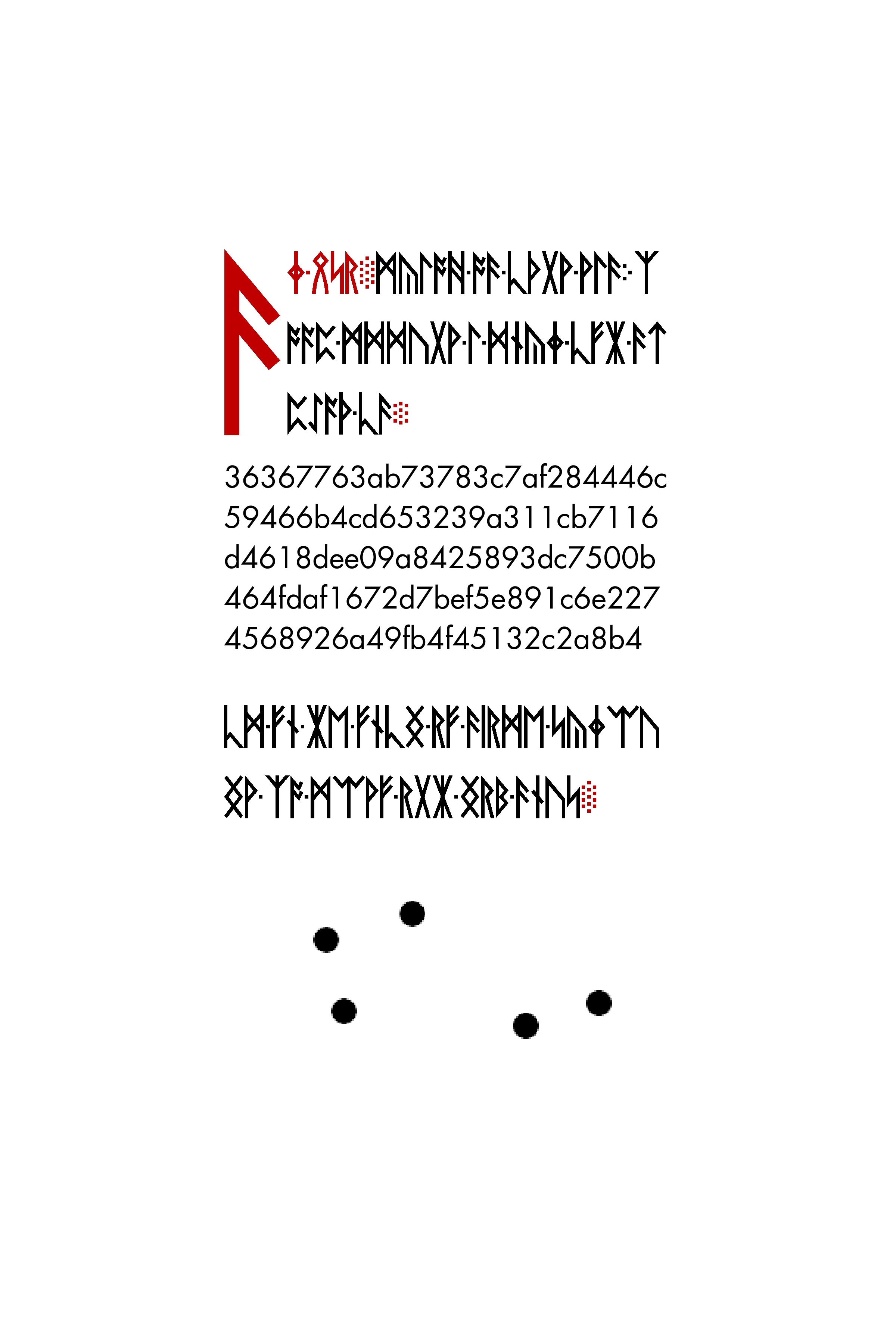
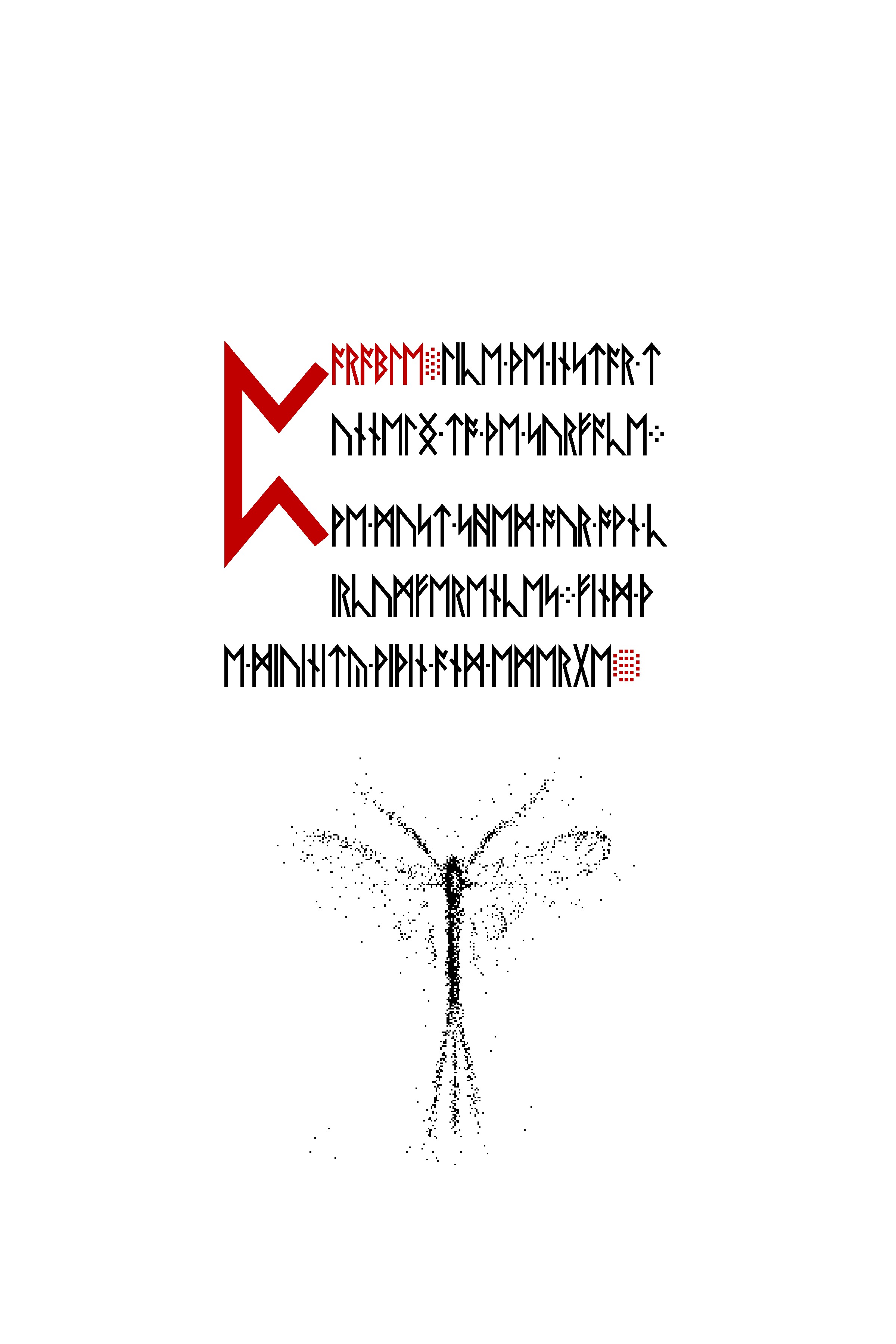
The 10-dot mark is not a unique list delimiter. In solved text it surrounds subsection headings, ends subsections, and introduces a hexadecimal digest. Similar large marks also differ across the sampled volumes: LP1 has an 11-dot design, whereas the three large ordinary marks on the two solved LP2 pages have 13 dots. The last LP2 page ends with a distinct 23-dot design.
Scope and method
Examined 13 selected solved images from the iBotPeaches archive: 01, 05–13, 16, 73 and 74. These are all native 2400 × 3600 pixels. This is not a complete census of all solved pages. Archive 73 and 74 correspond to LP2 pages 56 and 57; archive 49 is the user's tree page, LP2 page 32.
Reproduced the selected text from the retained rune transcription using the previously known methods: reverse alphabet for the warning, shifted reverse alphabet for the first koan, direct Gematria Primus readings for the other selected LP1 pages and LP2 57, and the known prime-minus-one method with its F exception for LP2 56. These are reproductions of known solutions, not discoveries.
The detector uses the same red-pixel connected-component method as Session 18. All 30 detected multi-dot marks retain their counts at red-dominance thresholds 40, 65 and 90: 39 page/threshold checks. Counts are machine-measured; contextual roles and rune offsets are manually aligned to the images and reproduced text. This is not OCR, and the detector is not a proof that every possible unusual red ornament was found.
Results
| Dot count | Occurrences in this sample | Observed context |
|---|---|---|
| 10 | 10 | Six marks surrounding three LP1 subsection headings; three LP1 subsection endings; one LP2 digest introduction |
| 11 | 16 | LP1 heading endings and text-block endings, including introductions to number squares |
| 13 | 3 | LP2 heading endings and the closing prose of page 56 |
| 23 | 1 | Closing mark on LP2 page 57 |
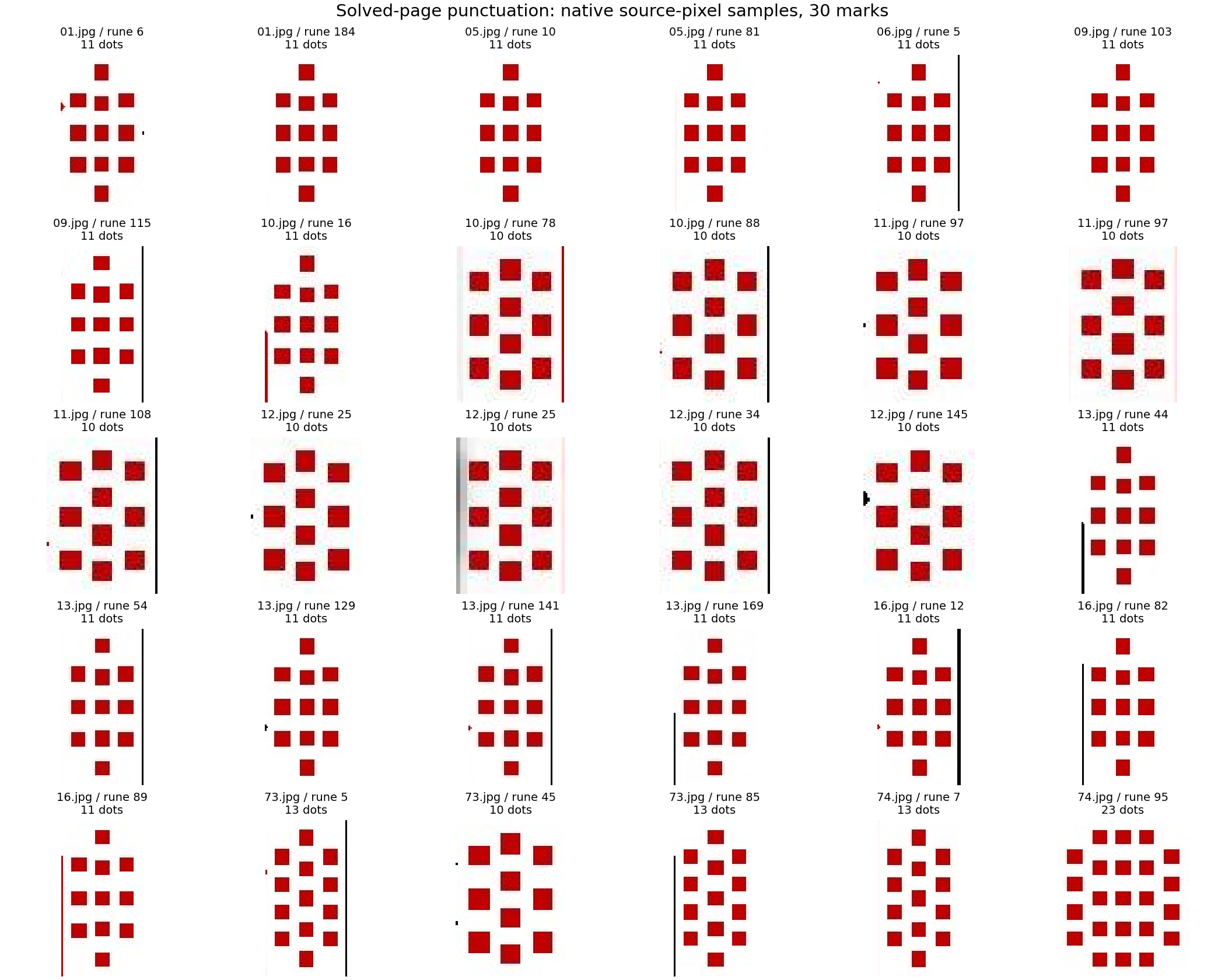
The 11-dot design is visibly different, not a failed count of 13. Its rows contain 1, 3, 3, 3, 1 dots. The 13-dot design has staggered columns of 4, 5 and 4. The 10-dot design has staggered columns of 3, 4 and 3. The last-page 23-dot mark has rows containing 3, 2, 3, 2, 3, 2, 3, 2 and 3 dots. The original crop is retained so no speculative glyph name is needed.
The decisive comparisons
| Source | Position | What the known text establishes |
|---|---|---|
| 10.jpg | Rune offsets 78 and 88 | Two 10-dot marks surround the heading “Consumption,” not the following numbered list |
| 11.jpg | Offset 97, twice; then 108 | A 10-dot mark closes the consumption passage. A separate 10-dot mark starts the next heading at the same rune offset, and another ends that heading |
| 12.jpg | 25, twice; 34; 145 | The same structure around “Adherence,” followed later by a 10-dot subsection ending |
| 73.jpg, LP2 56 | Offset 45 | The 10-dot mark introduces the hash; it is not paired with another 10-dot mark on this page |
| 73.jpg, LP2 56 | Offsets 5 and 85 | 13-dot marks follow the heading and finish the prose |
| 74.jpg, LP2 57 | Offsets 7 and 95 | A 13-dot heading terminator and a separate 23-dot final mark |
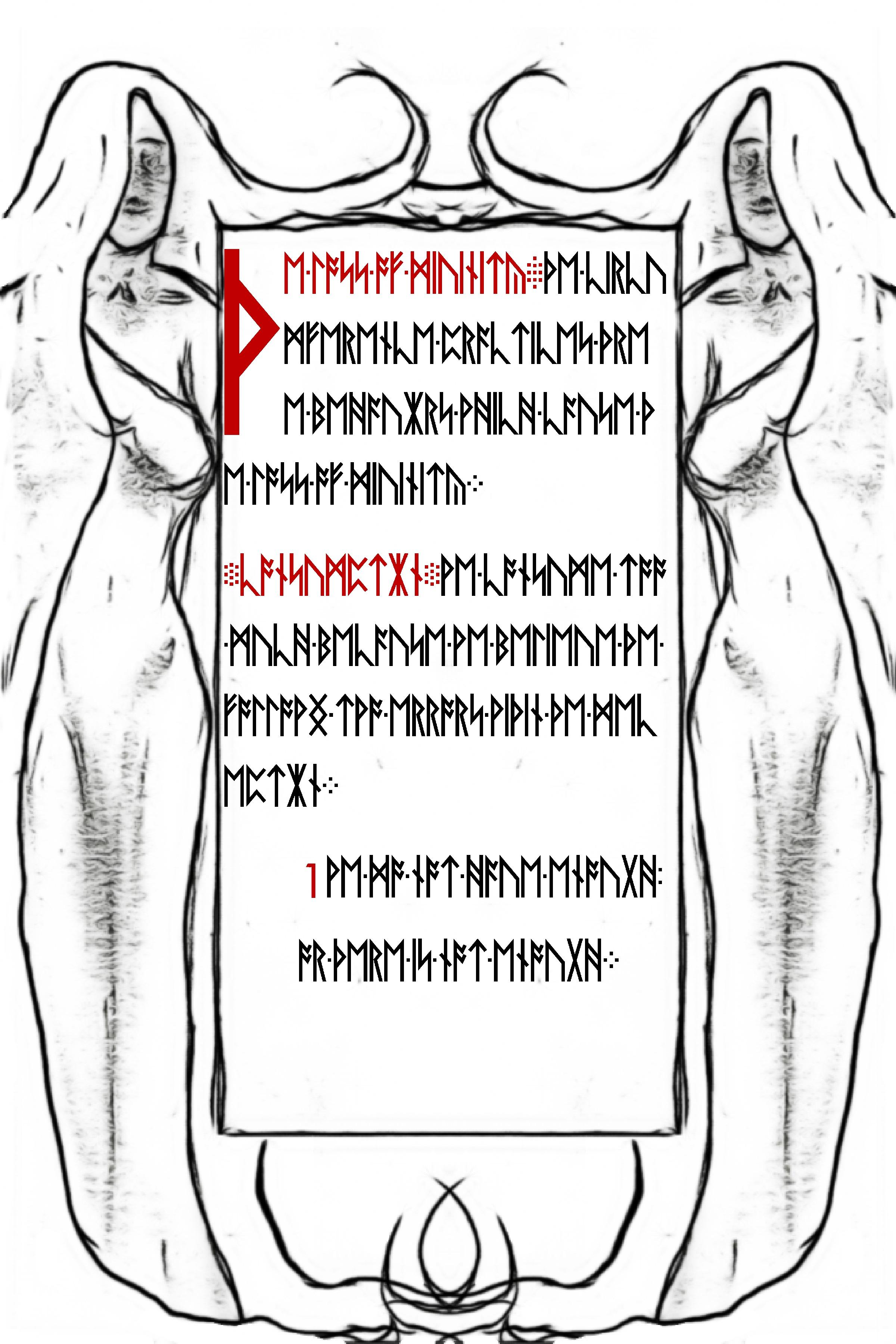
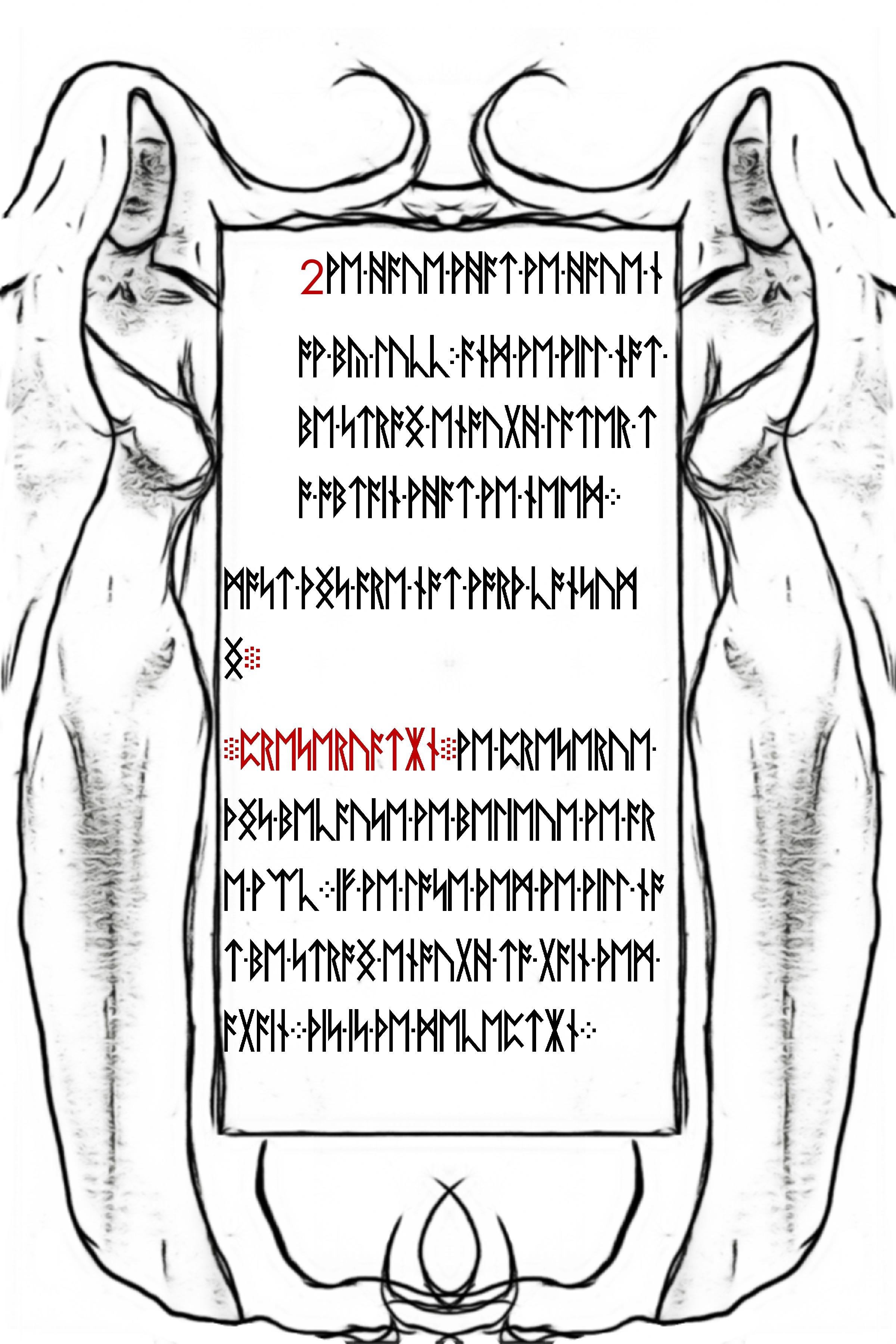
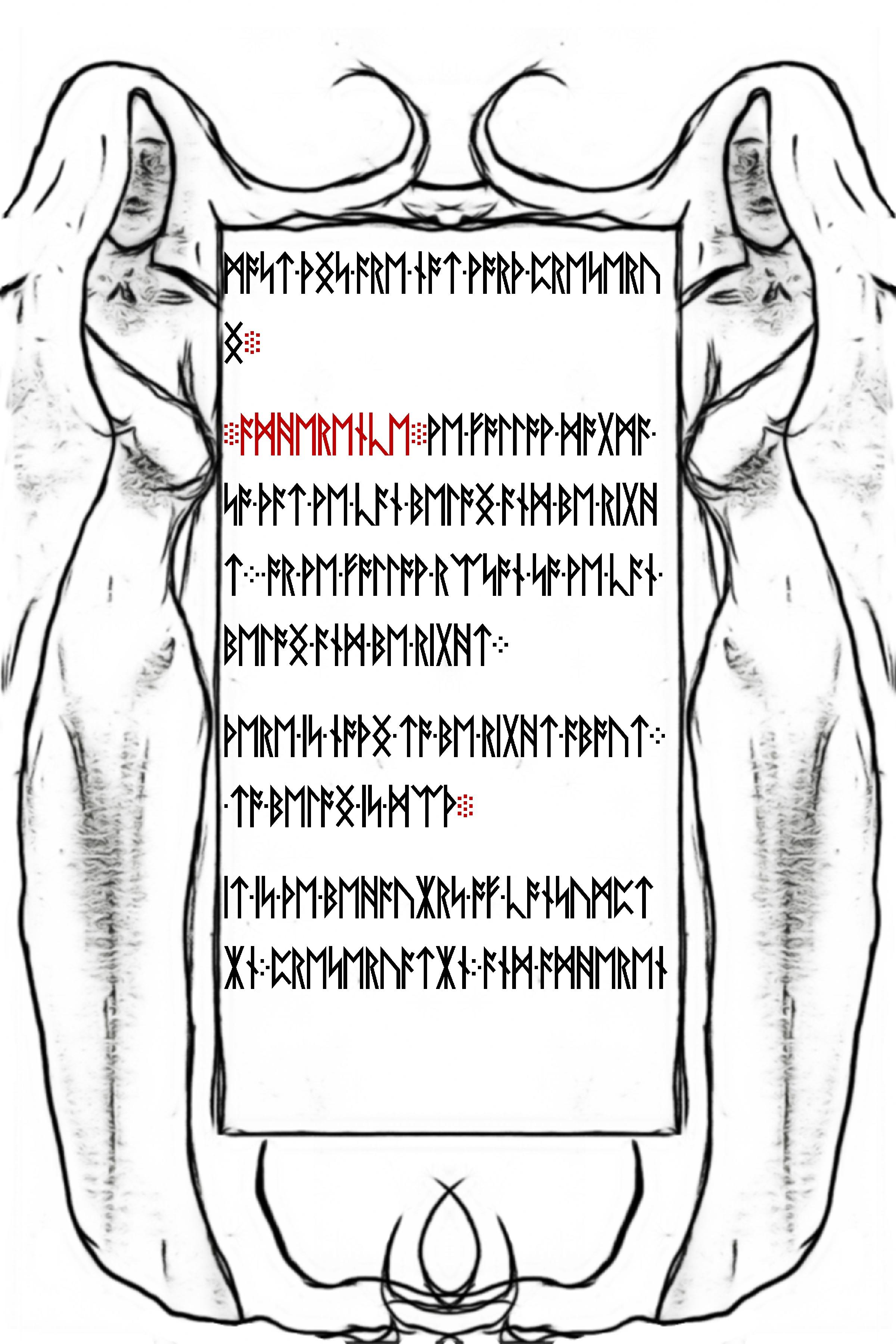
This also exposes a transcription limitation: two separate visual marks can occur at the same rune offset. At archive 11 offset 97 and archive 12 offset 25, a subsection ending and the next heading's opening mark are separated by layout but not by runes. The master transcription does not preserve them as two distinct colored tokens. At archive 10 offset 78, the preceding black sentence terminator and the next red heading opener likewise share an offset. Treating each transcription full stop as exactly one visible mark is unsafe beyond the earlier audited section.
What changes in our working hypothesis
The 10-dot pair around the unsolved five-item passage remains a real visual observation. Solved usage supports interpreting it as a structural boundary, but does not identify it as a unique list instruction or arithmetic switch.
Likewise, 13 dots do not automatically mean “restart the key.” The mark occurs after a heading on the known prime-encrypted page and on a directly readable page. Typography and cipher operation must be established separately. Session 19's seven counter tests remain negative within their defined scope.
The sample supports a working hierarchy of headings and text blocks. It does not establish a universal punctuation grammar or the authors' intended numerical significance for 10, 11, 13 or 23. Counting these as primes or composites would be a new hypothesis, not a decipherment.
Reproducible record
- Audit script
- Complete counts, bounding boxes, manual alignments and reproduced text
- Original-image URLs and SHA-256 hashes
- Community LP1 reading reference
The science-fiction lead raised during this work is recorded separately in Session 21.