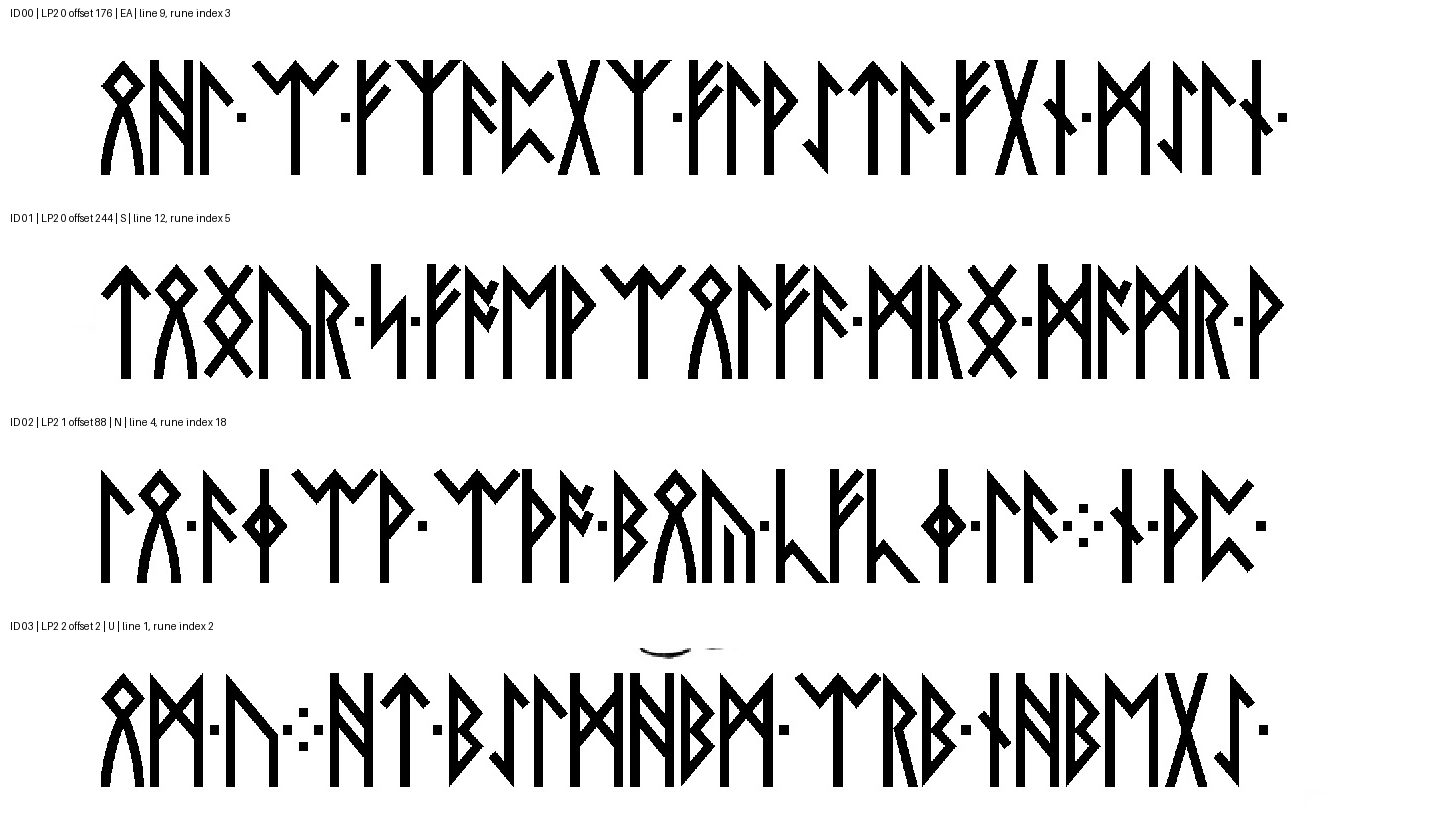
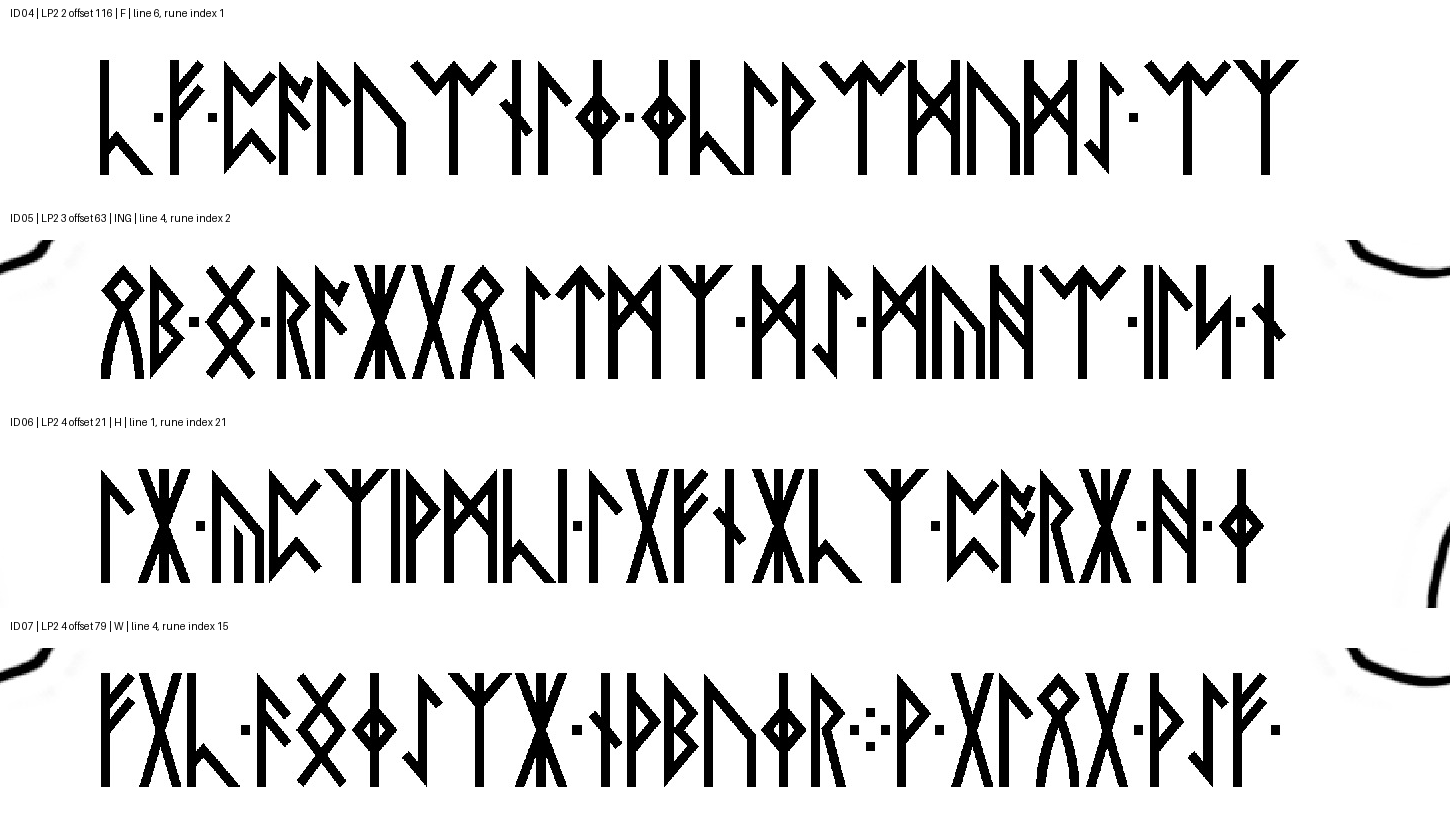
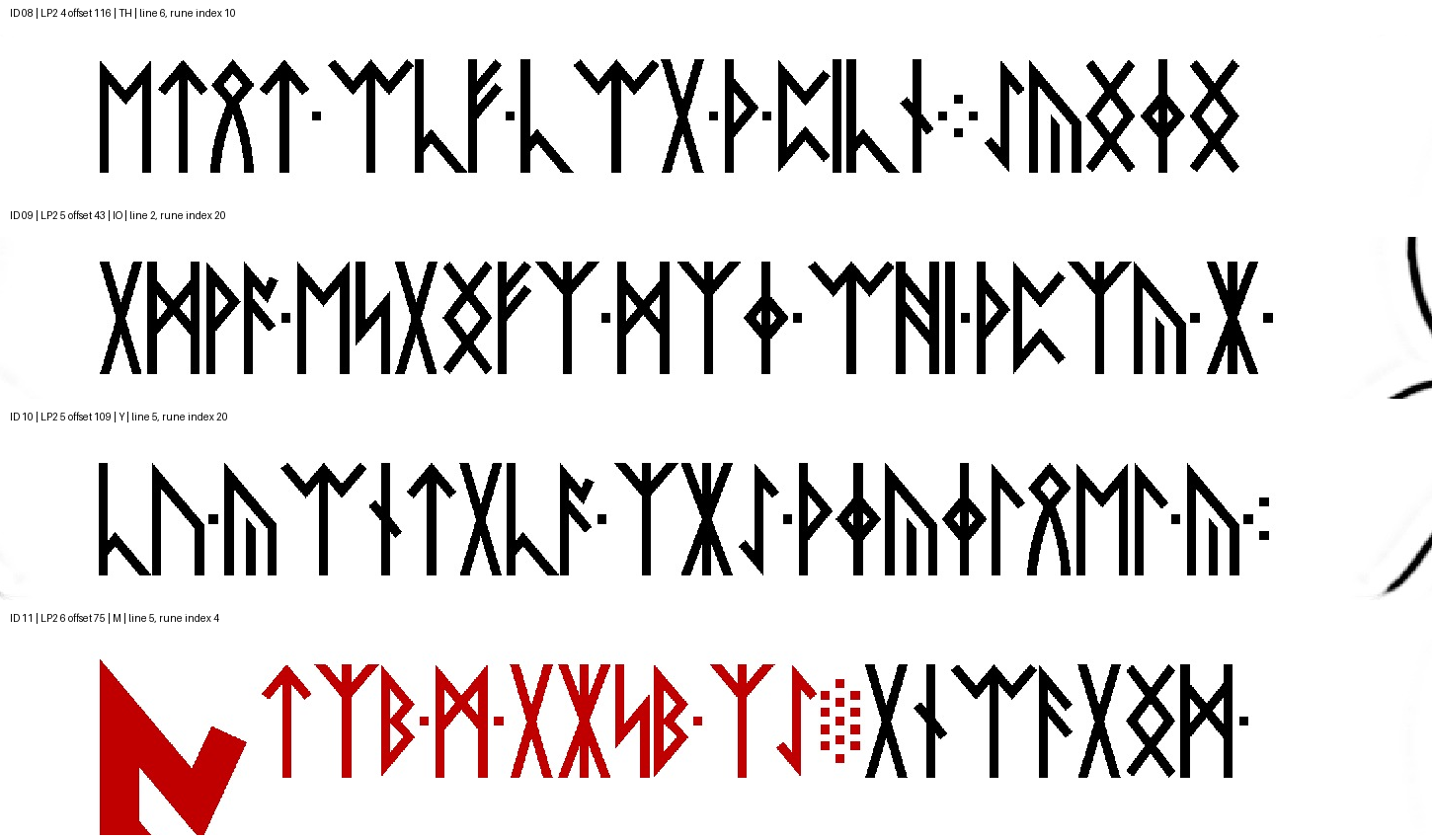
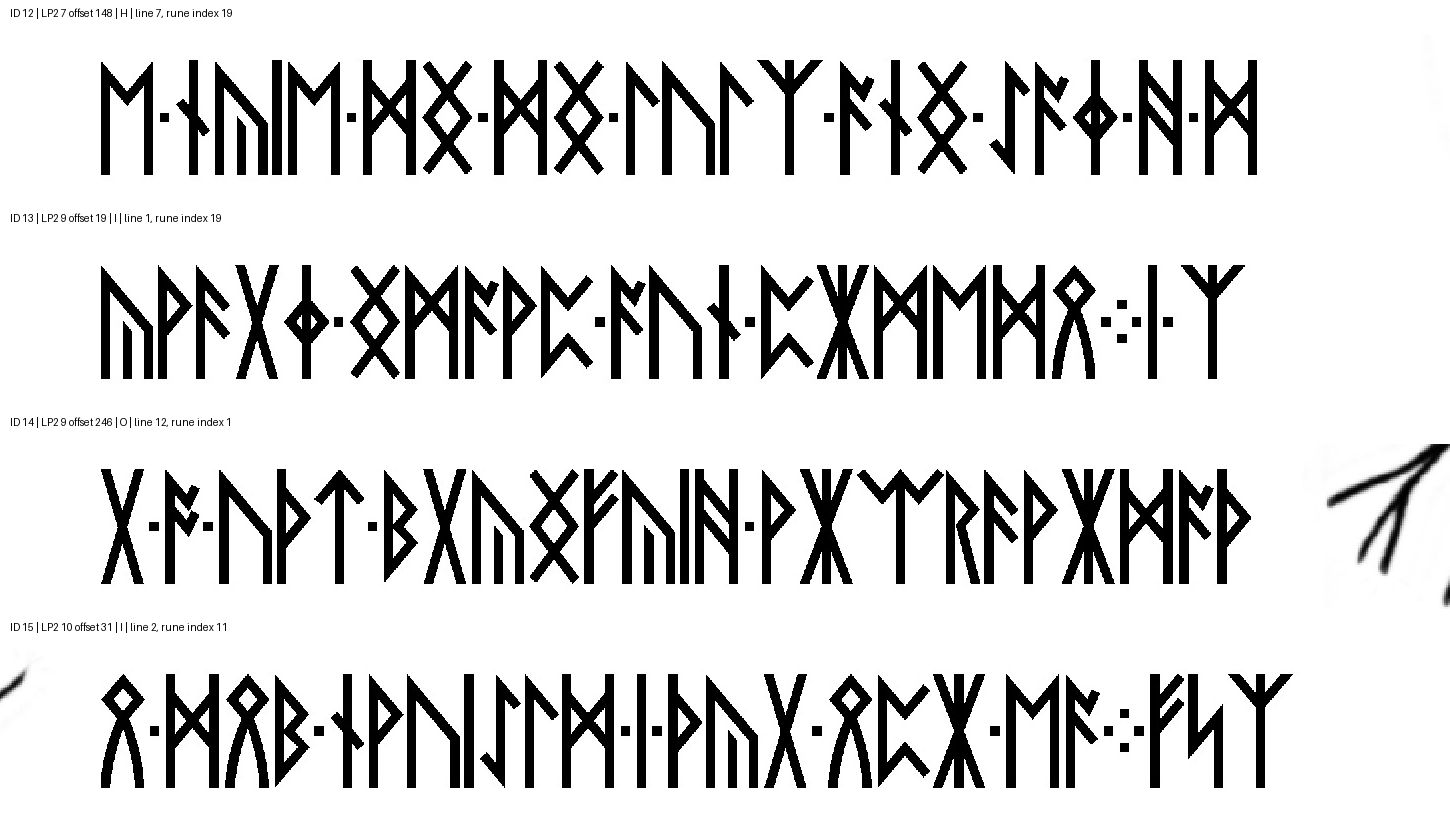
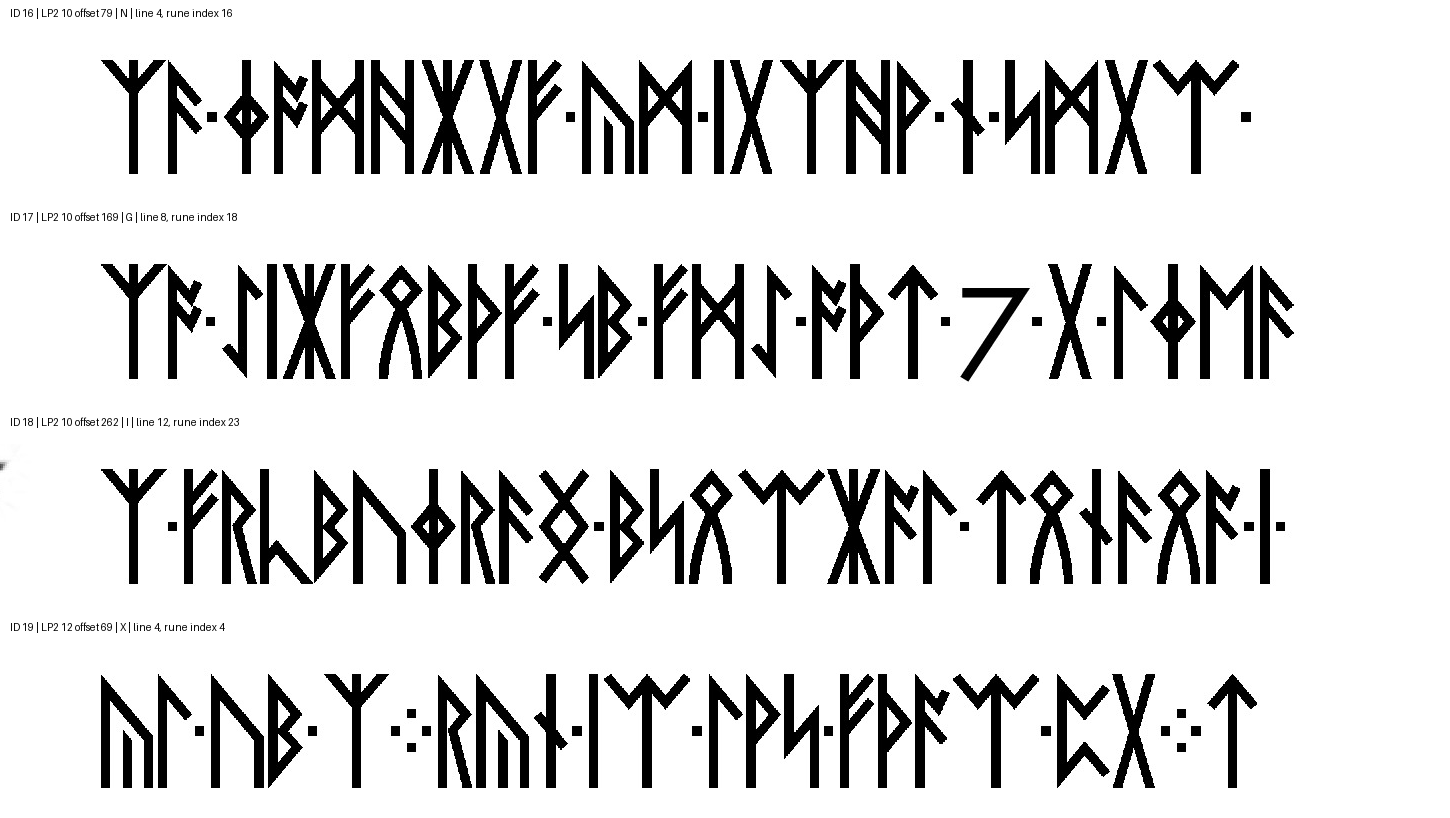
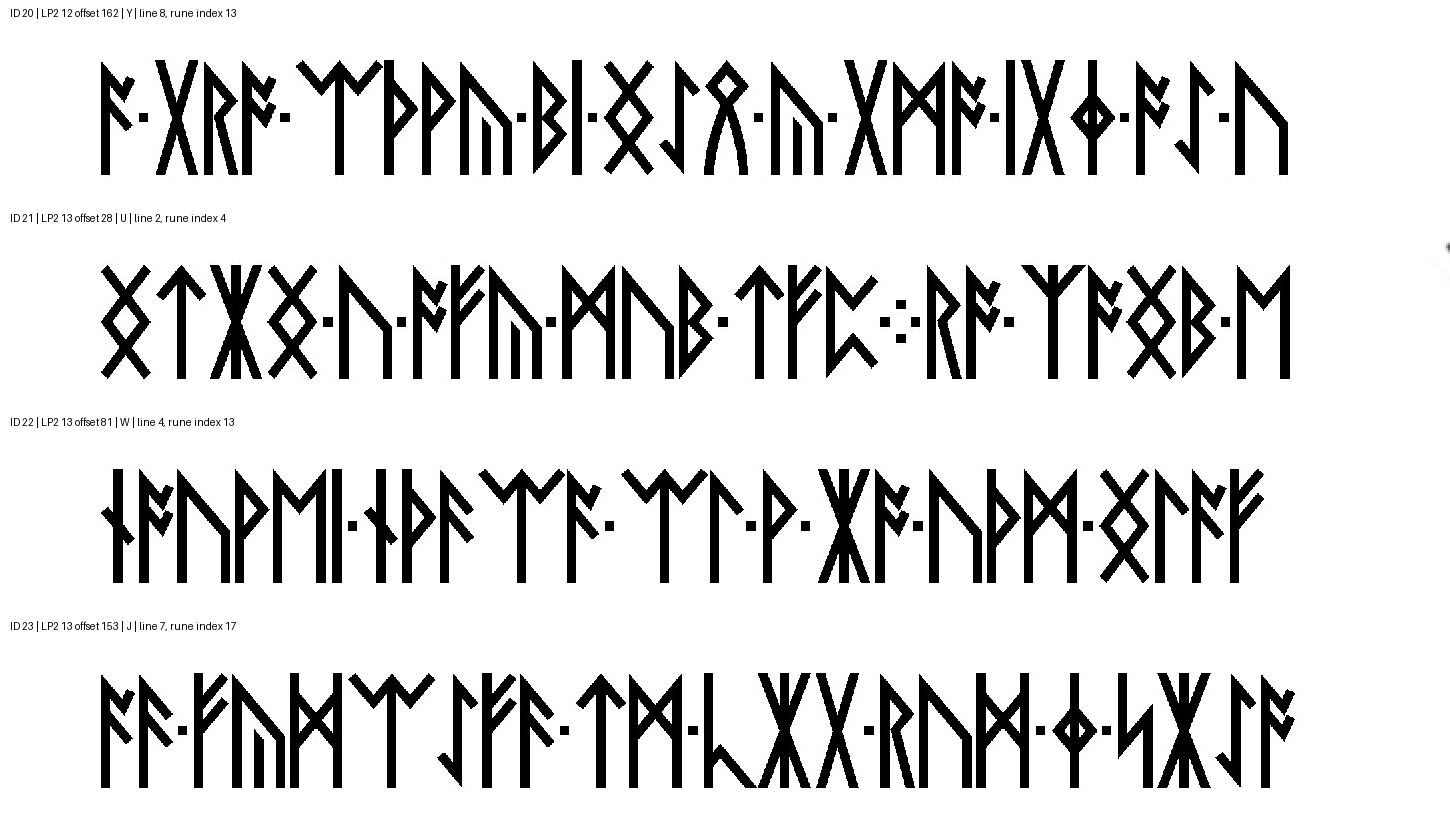
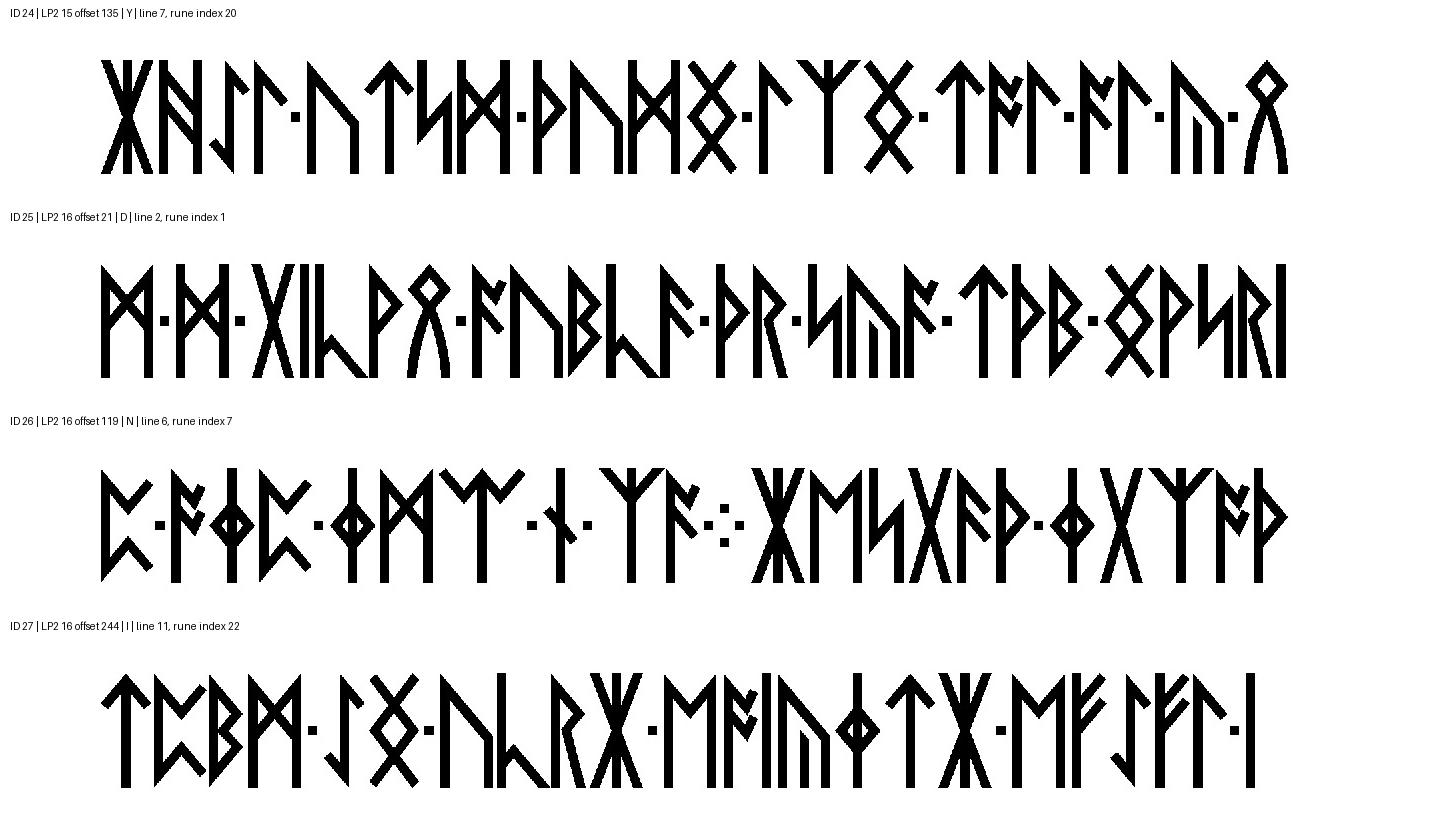
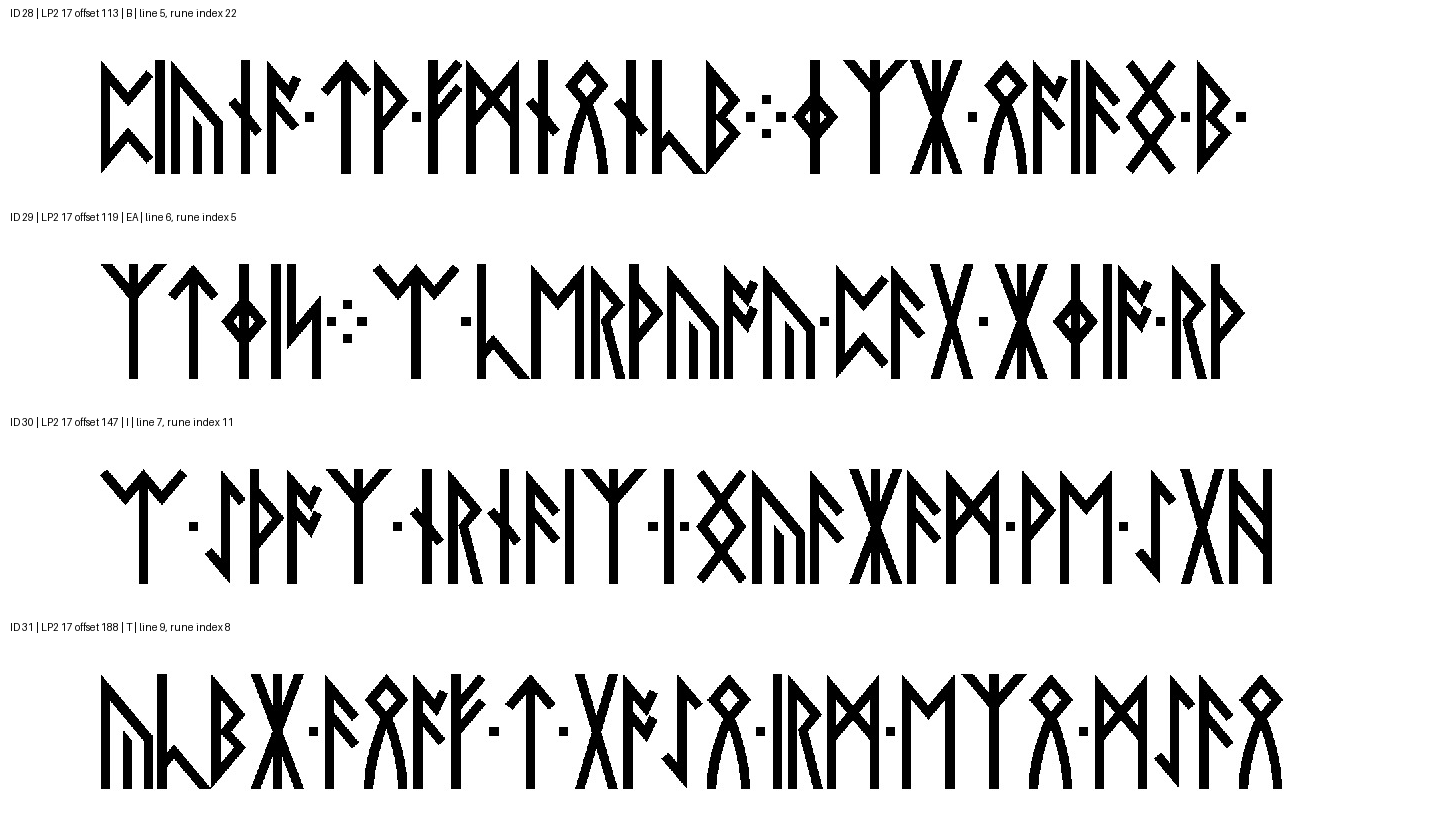
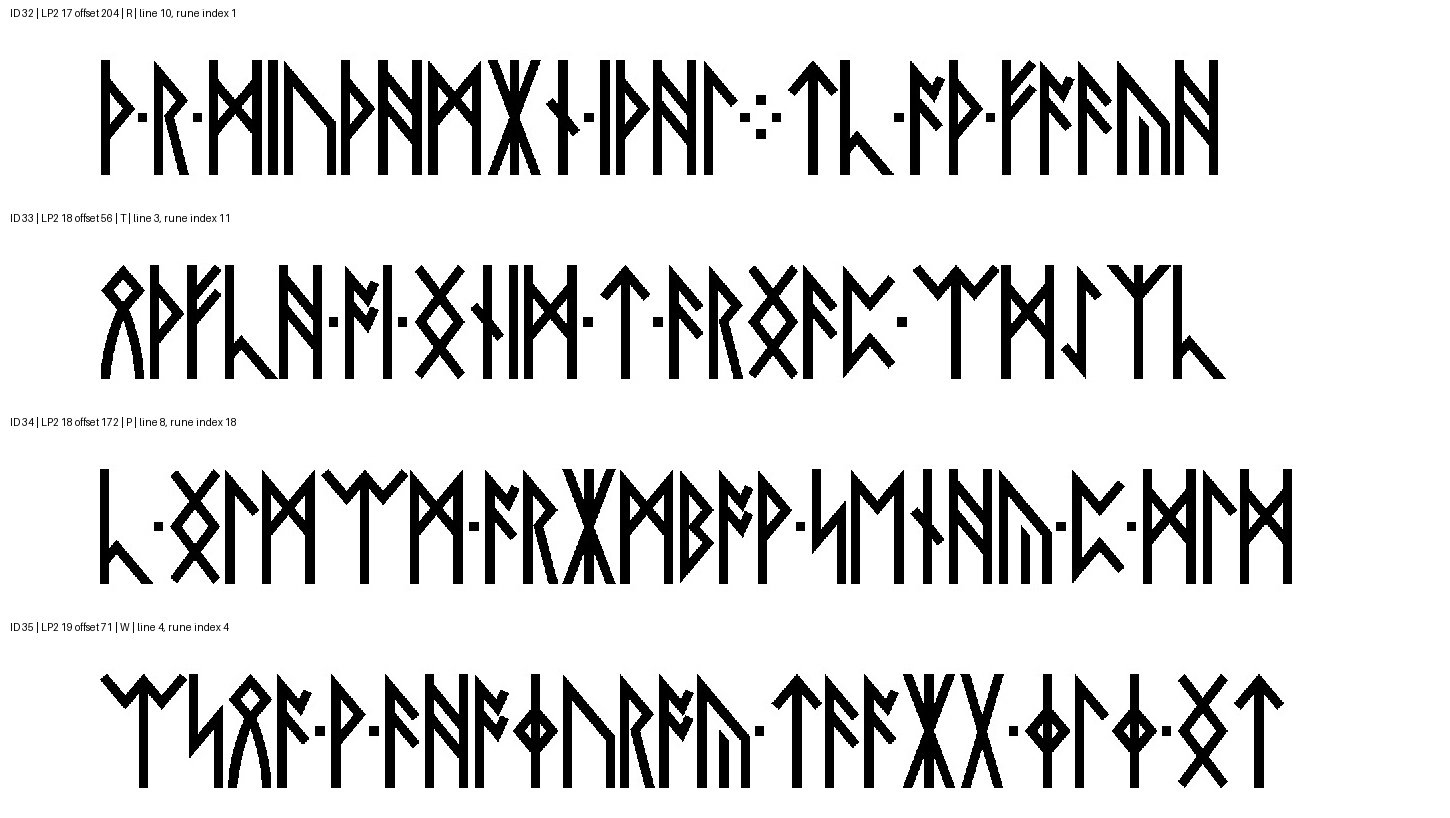
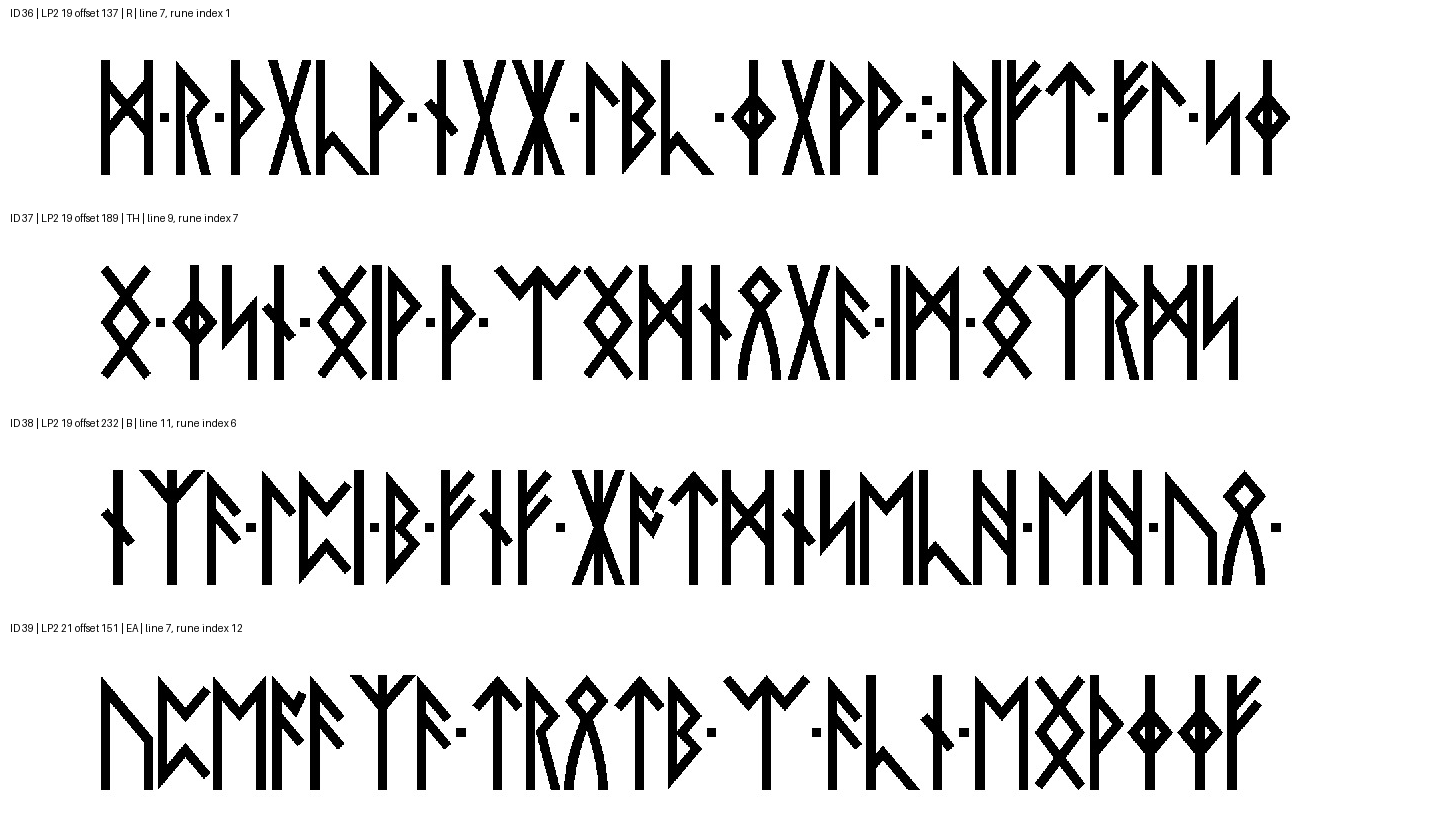
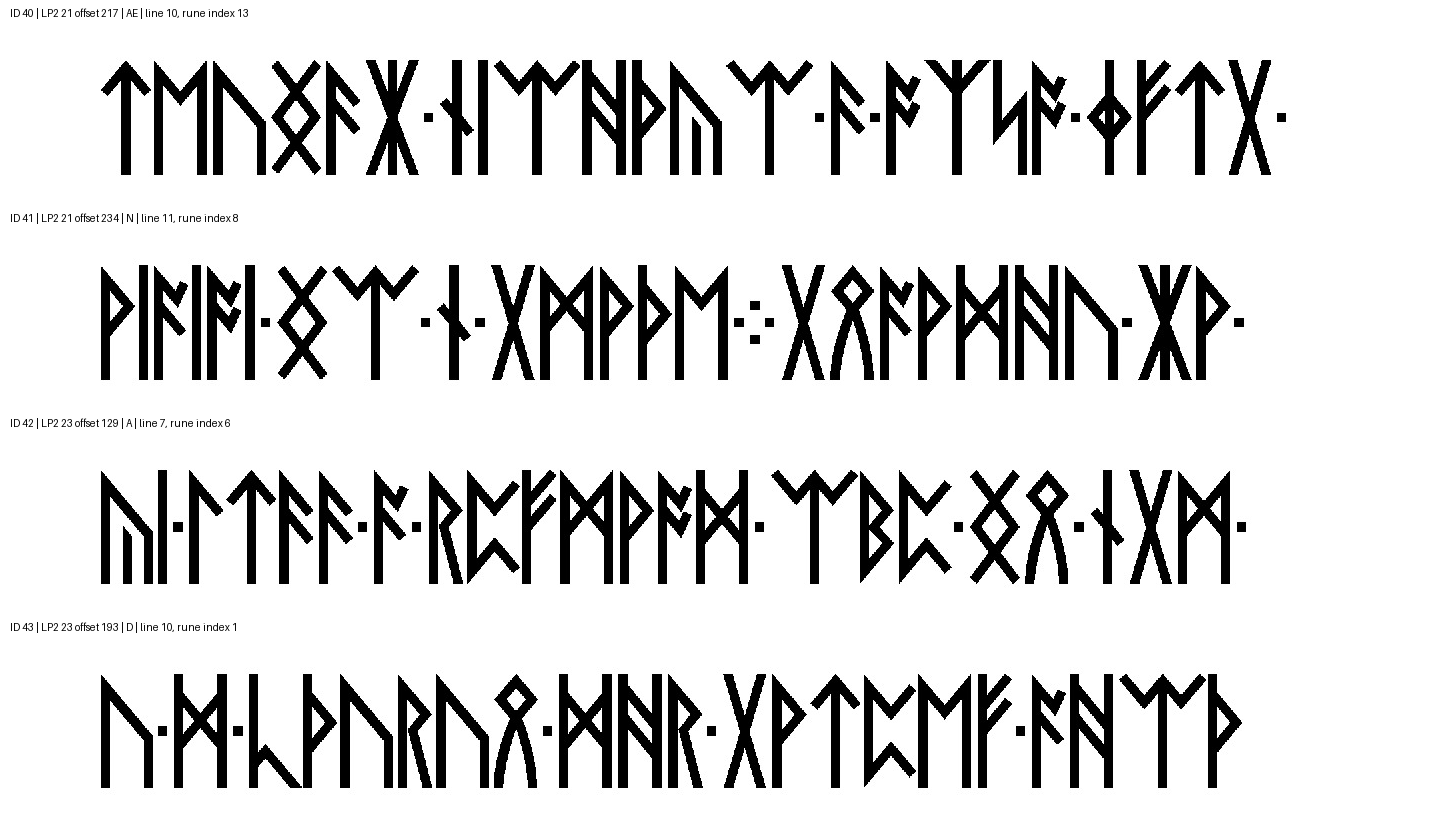
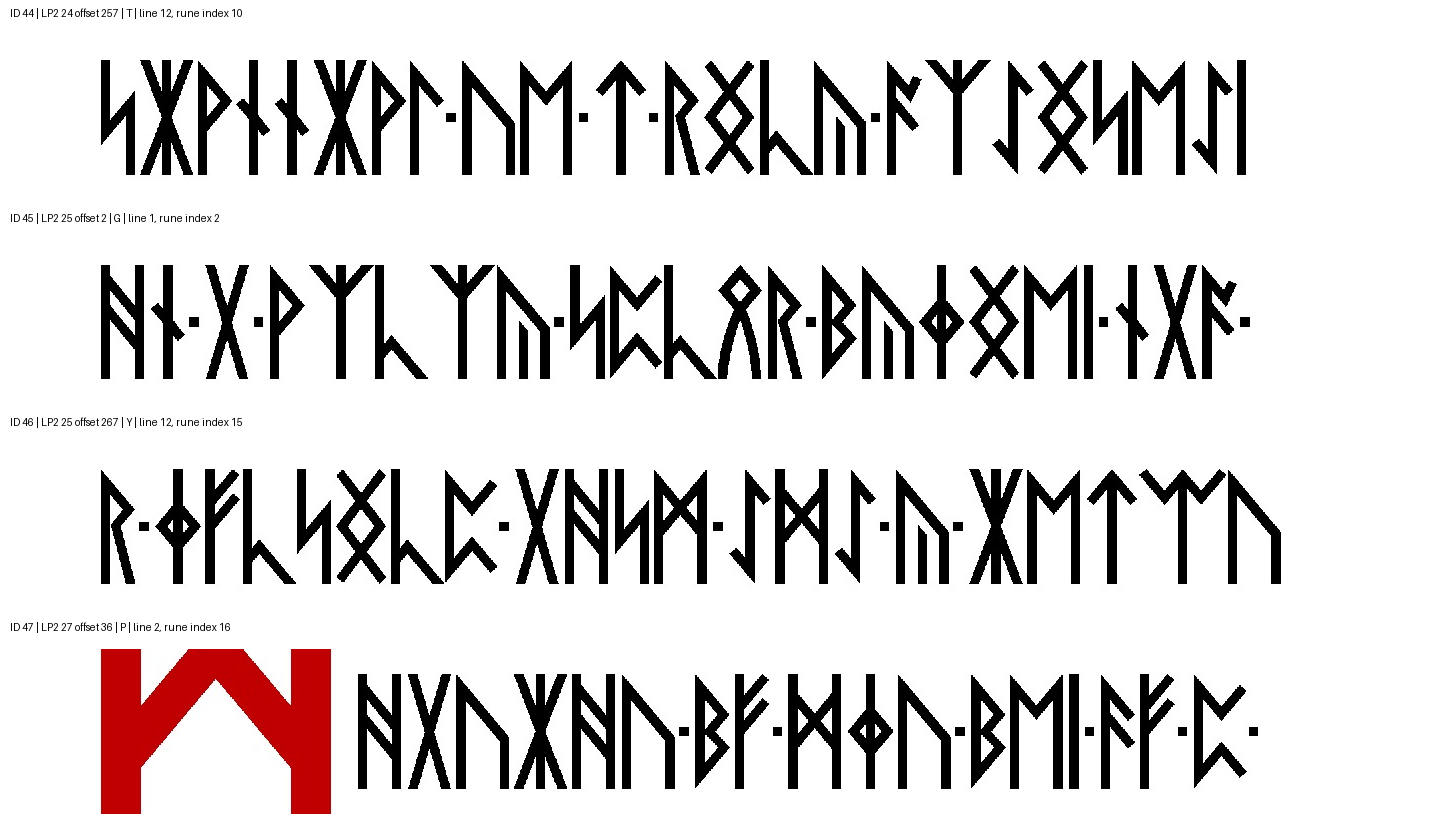
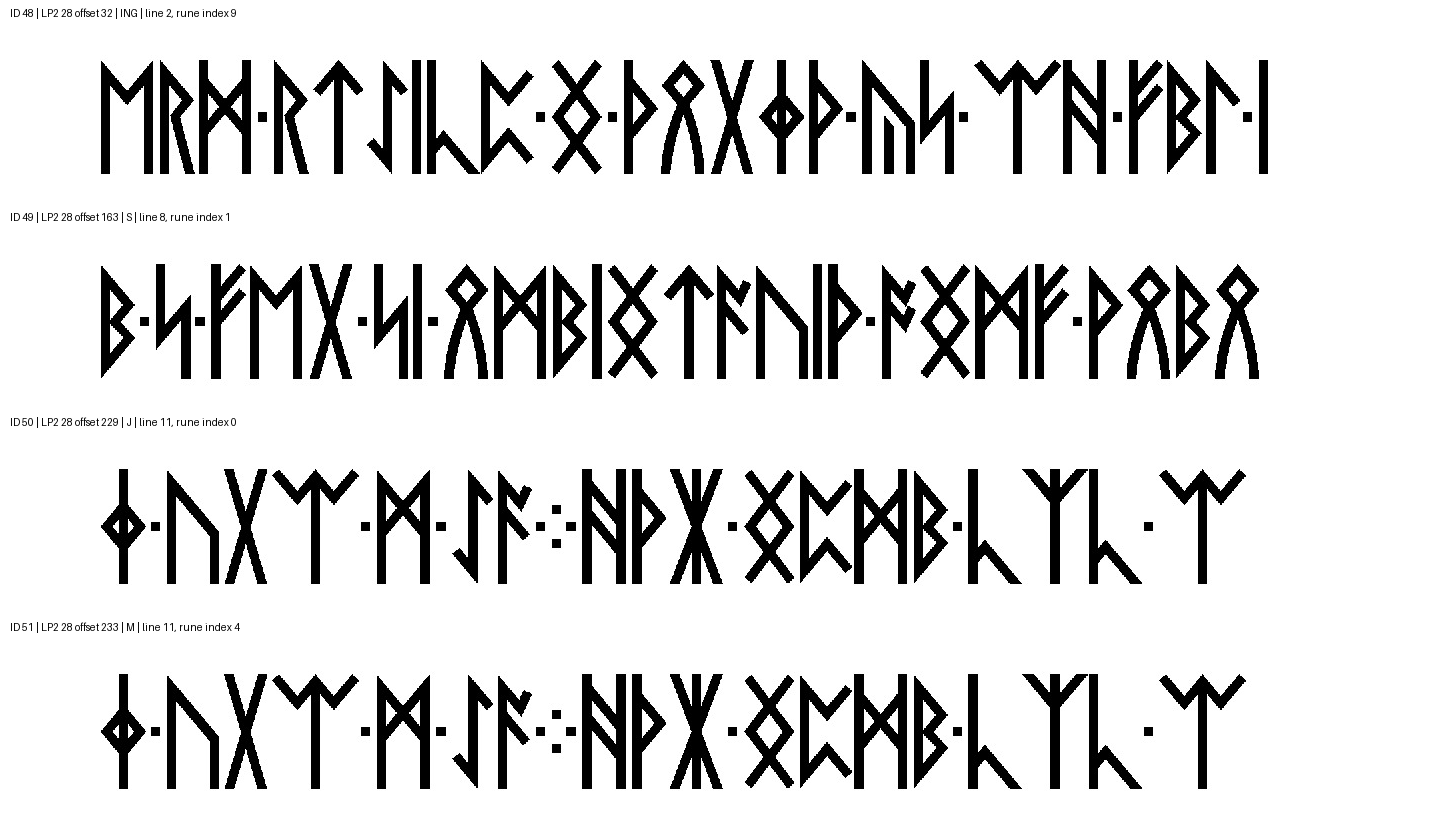
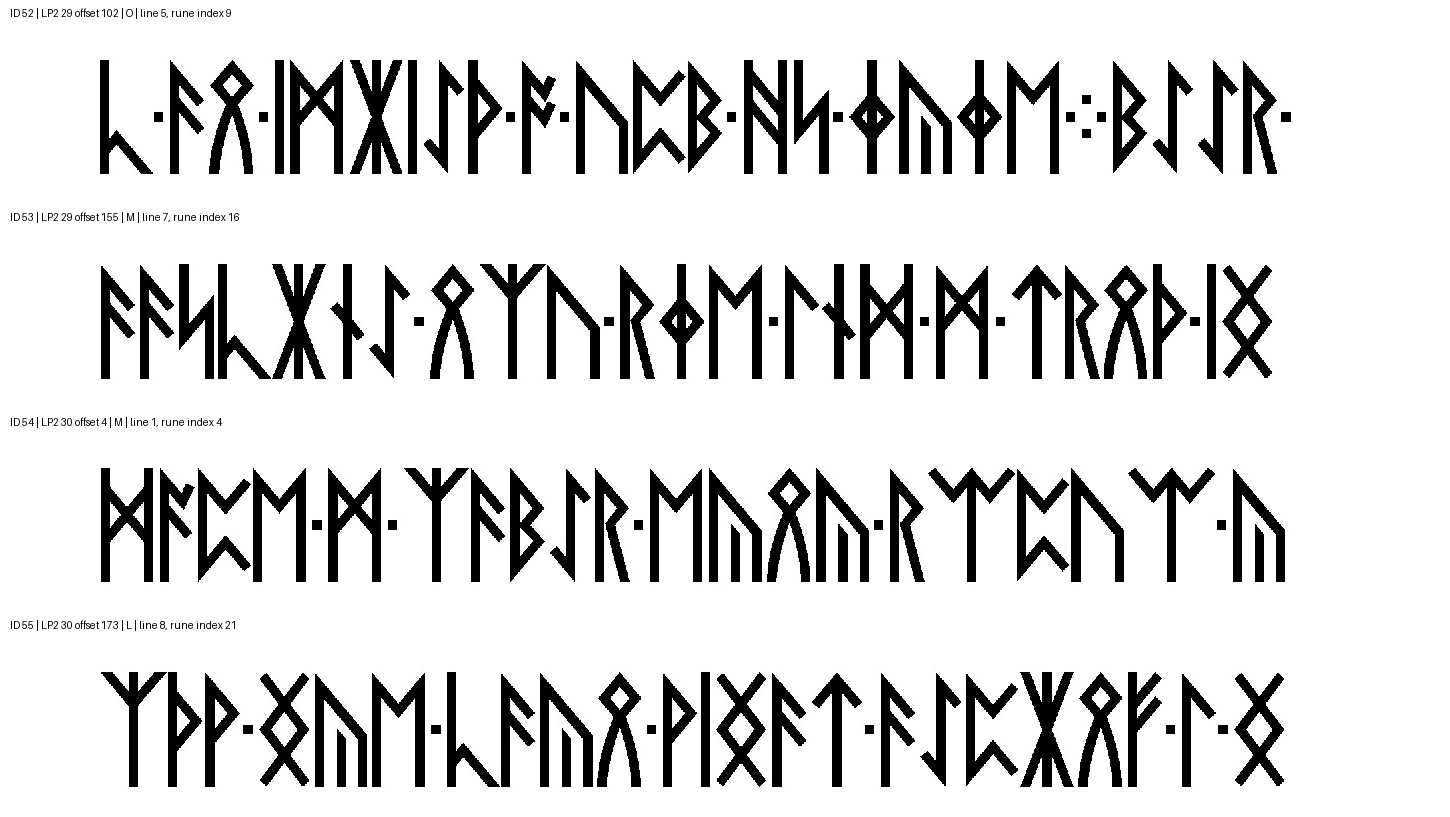
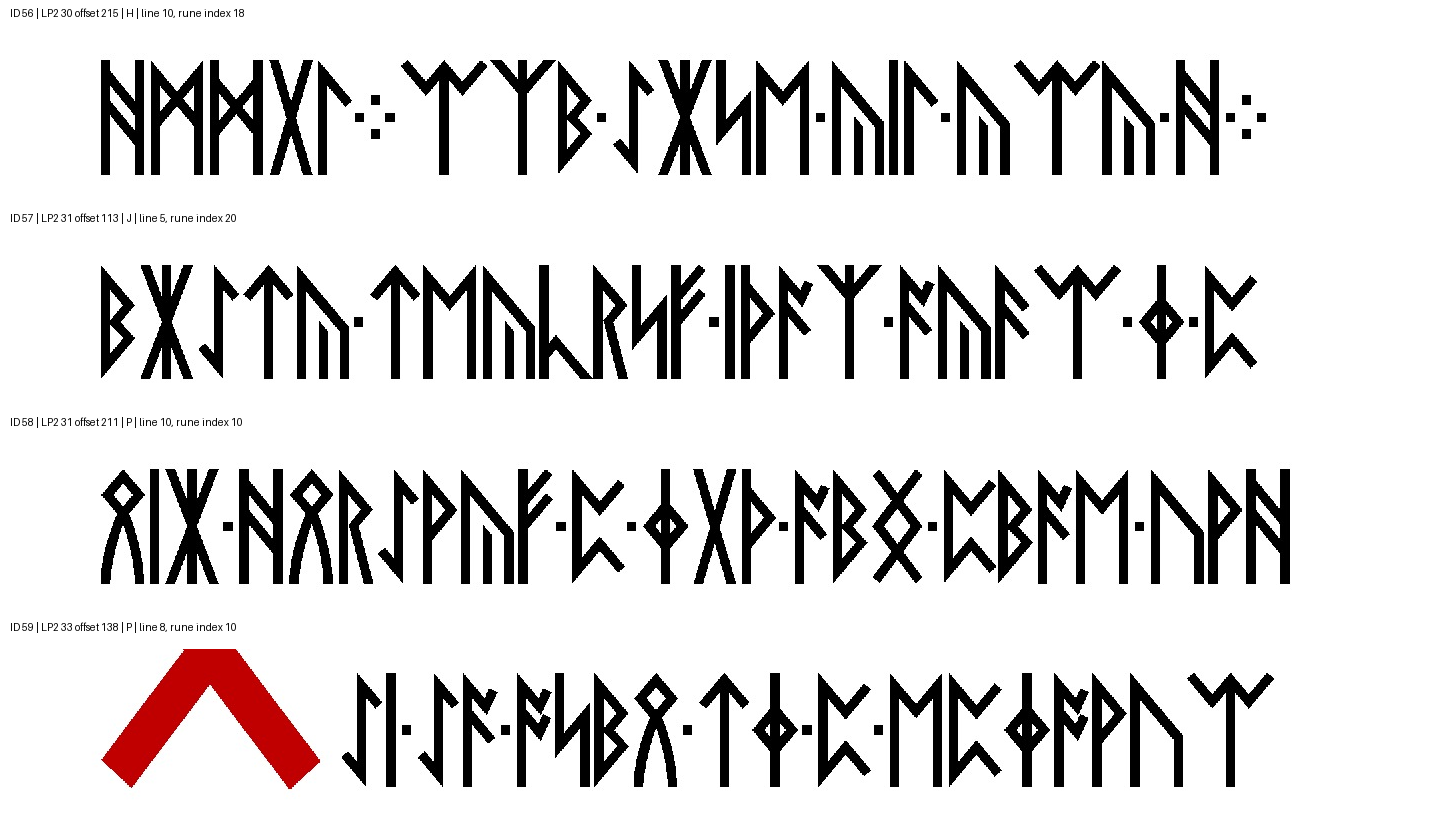
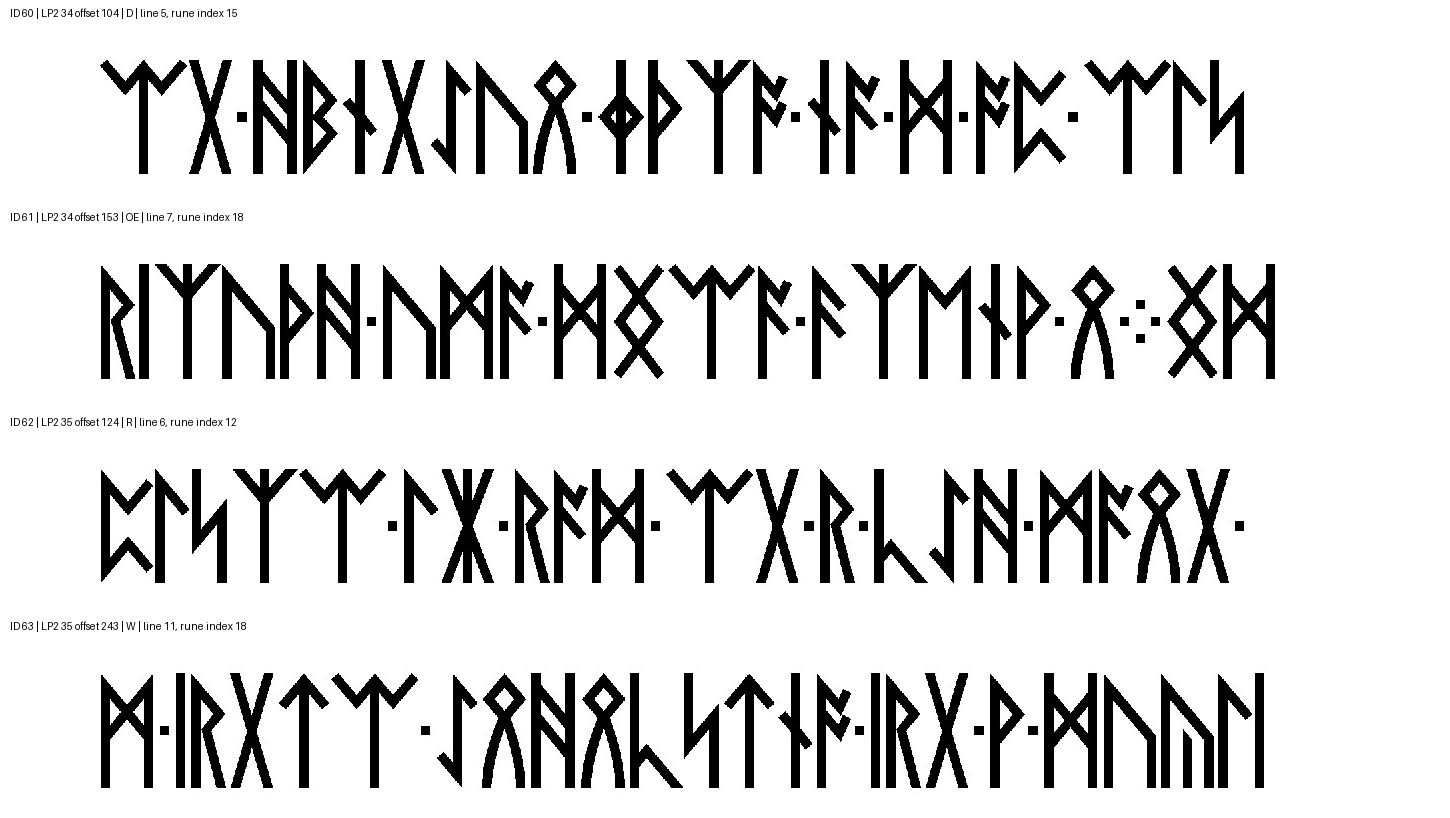
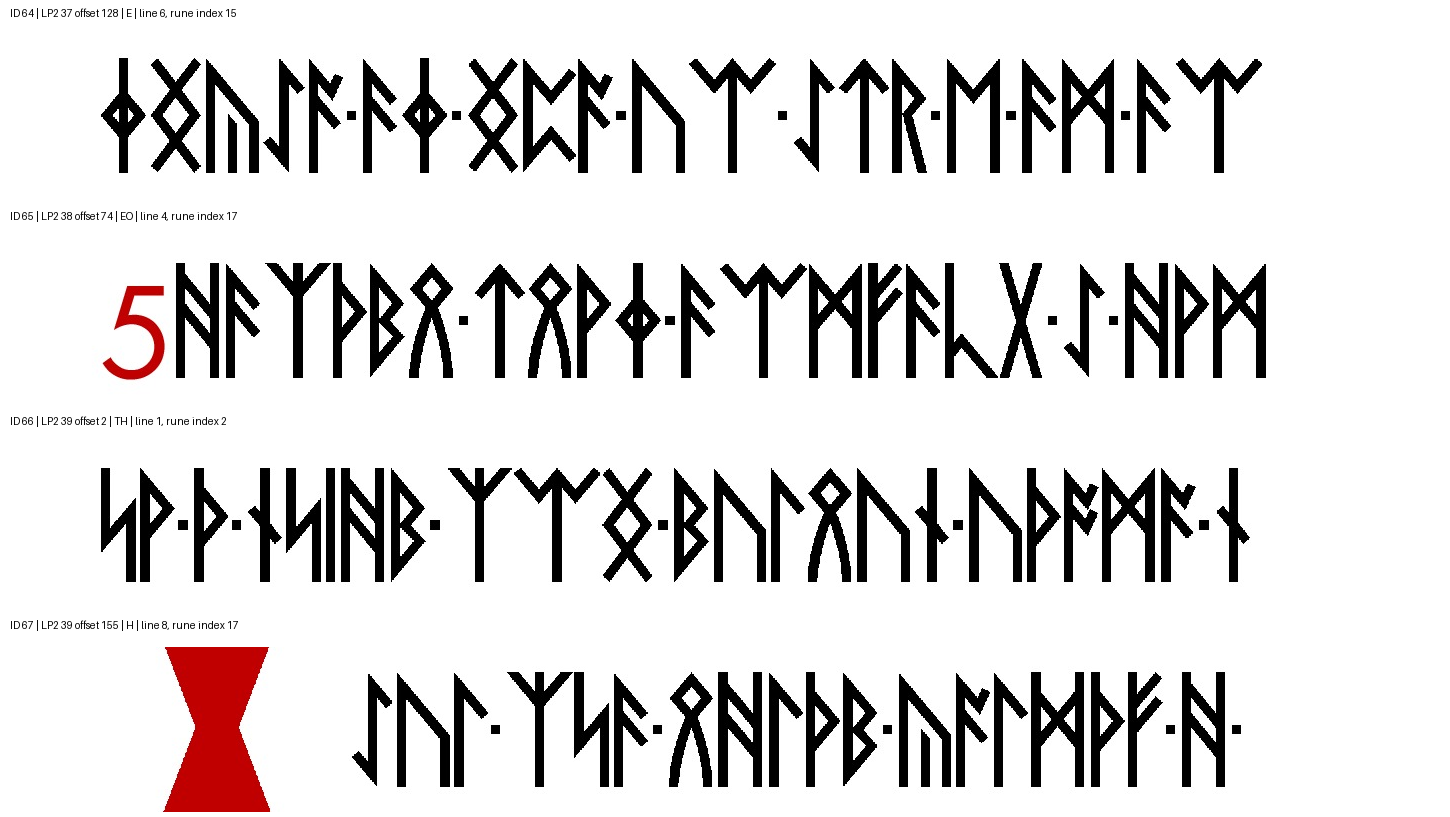
All 68 remaining one-rune tokens have visible source-image boundaries. No further correction was found. Together with the 15 surviving section-8 tokens inspected in Session 42, this completes the targeted visual check of the revised 83-token inventory, spanning 28 distinct rune symbols.
This is a data-quality result, not a decipherment or a claim of a new community discovery. There is still no new verified plaintext.
What was checked
We enumerated one-rune tokens with lexical_words.tokenize_words, which joins apostrophes immediately flanked by runes, then matched every token outside section 8 to its archived page image. Each source JPEG was checked against the pinned SHA-256 manifest. Page numbers are zero-based LP2 numbers; offsets count runes from zero within each page. The corresponding archive image number is page + 17.
Automatic ink-band detection located candidate rows. Oversized initials, number blocks and illustrations required manual alignment adjustments. Final judgments came from visual inspection of the glyph and punctuation, not the detector. The evidence crops preserve decoded source pixels without rescaling, enhancement or generative reconstruction. Contact-sheet labels are outside the source pixels.
| Check | Result |
|---|---|
| Remaining singleton locations reviewed | 68 |
| Additional lexical boundary corrections | 0 |
| Previously confirmed section-8 survivors | 15 |
| Combined revised singleton inventory | 83 |
| Distinct rune symbols | 28 |
The earlier three apostrophe suffixes remain joined. The historical claim of all 29 symbols appearing as singleton words remains withdrawn.
Layout details worth preserving
- LP2 page 16, offset 244: I ends a line. A multi-dot stop begins the next line, confirming the following boundary. Two-row crop.
- LP2 page 28, offset 229: J starts a line. The previous line ends in a multi-dot stop; a single dot follows J. Two-row crop.
- LP2 page 6, offset 75: M is a separate token in red heading text. It is not ordinary black body text. Source row.
- LP2 page 5, offset 109: Y ends with two-dot punctuation. This remains a separate token; punctuation type should not be silently collapsed when testing reset rules. Source row.
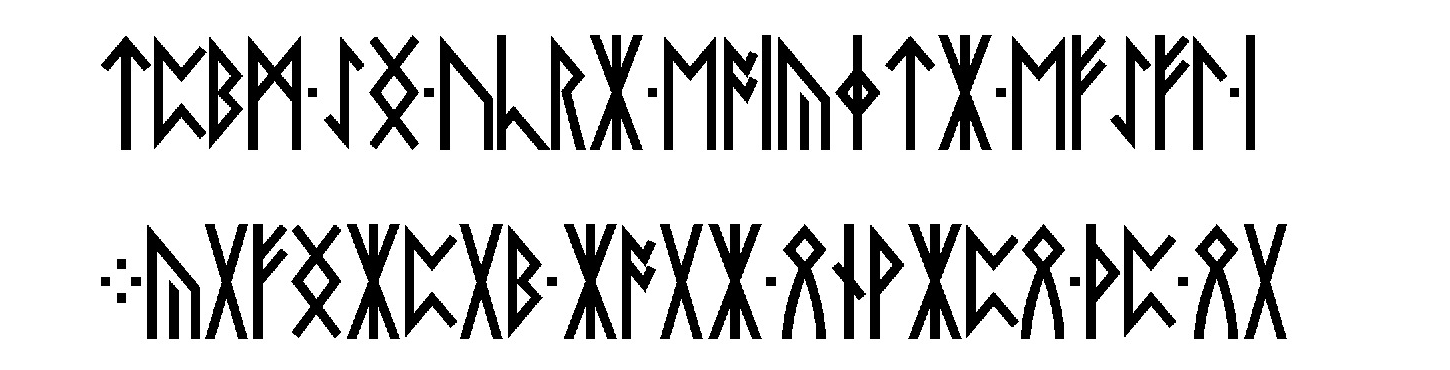
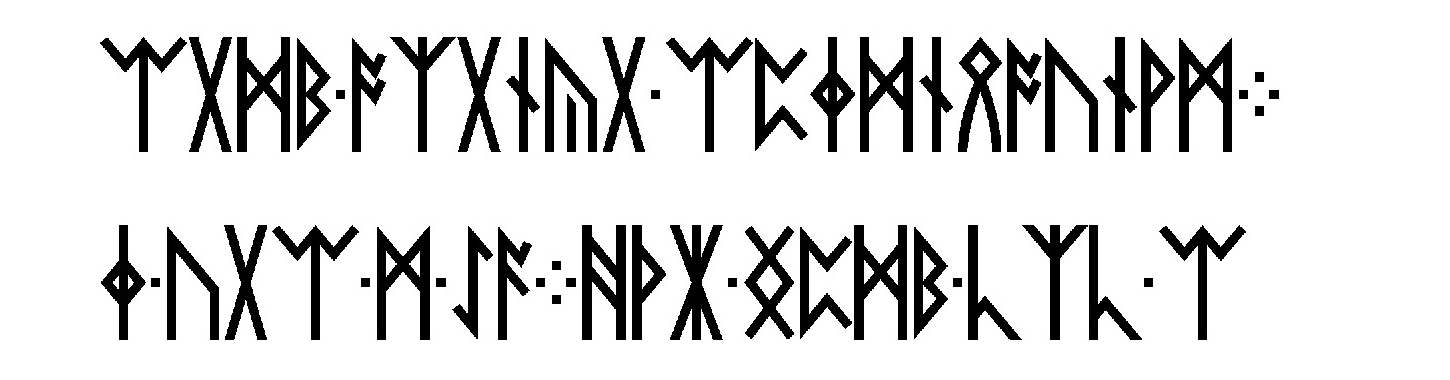


The red heading M and the previously checked red initial A on page 54 should retain their layout labels in future sensitivity analyses. This audit does not decide whether either is a plaintext word, an instruction or another structural element.
Consequence for the hunt
The unusually diverse singleton inventory survives source inspection. If these are plaintext word boundaries in ordinary English, a single fixed one-to-one substitution cannot turn 28 different ciphertext symbols into just A and I. That is a conditional constraint: unusual vocabulary, abbreviations, non-English text, different boundaries, different keys across sections or a position-dependent transformation could change the interpretation.
No new frequency or repetition search was run here. Session 42 already recalculated the two latest word-based analyses after fixing apostrophe handling. Older reports may still use the historical grouping and should be checked before their word-level results are reused.
A useful next bounded test is to compare singleton positions within each section against a small, declared family of key schedules. Use a known solved page as a recovery control and test predictions on held-out singleton locations. Avoid pooling different sections under an untested shared-key assumption.
Reproducible evidence
Per-token observations, page offsets, source URLs, hashes and crop boxes · Crop reproduction script · Pinned JPEG manifest · Lexical grouping helper.
The following contact sheets cover IDs 0 through 67 in order. The JSON links each ID to its individual full-width source-row crop. This is a targeted audit of these locations, not a proof that the complete transcription or every punctuation mark is correct.