The gaps on page 15 settle a tempting near-match. The first line reads 3258 3222 3152 3038. It has sixteen characters, just like a grid row. But on the original scan, the widest gap inside any of the sixteen numbers is 33 pixels. The narrowest gap between numbers is 70 pixels. Selecting any cutoff from 33 through 69 and treating gaps larger than that as separators gives exactly four numbers on every line.
| Line on LP2 page 15 | Legal chunks if each number is forcibly split every two characters |
|---|---|
| 3258 3222 3152 3038 | 6 of 8 |
| 3278 3299 3298 2838 | 5 of 8 |
| 3288 3294 3296 2472 | 4 of 8 |
| 4516 1206 708 1820 | 6 of 8, including one incomplete chunk in the denominator |
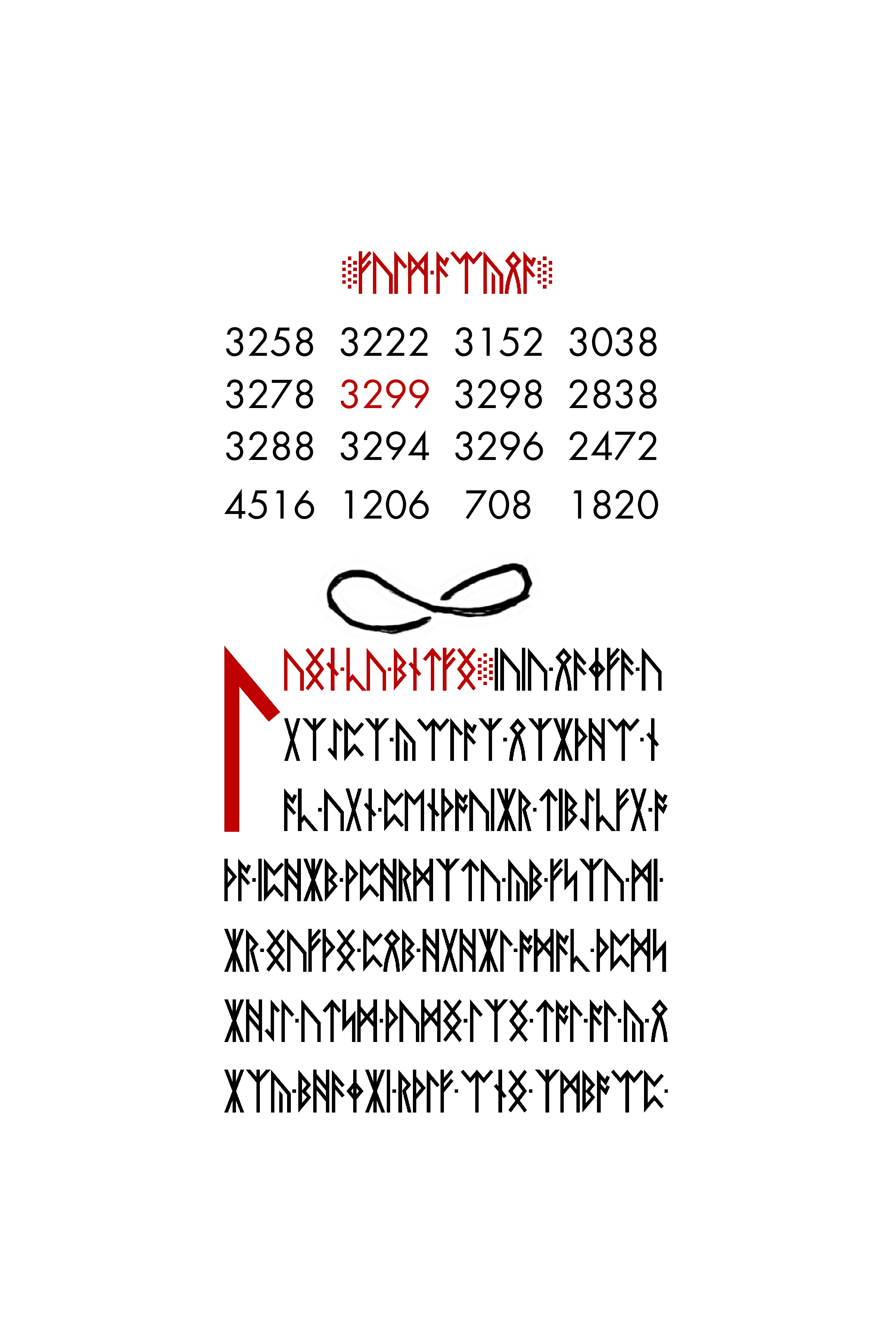
The byte grammar permits first digits 0–3 with any of the sixty legal second characters, or 4 with second character 0–9 or A–F. Splitting the first printed number makes 32 and 58; the second cannot be a grid byte. Splitting 708 would produce 70 and the orphan 8. Across the table, only 21 of the resulting 32 chunks are legal. None of the four forced rows qualifies.
We used the actual four ink lines, including the red 3299, and projected each onto the x-axis. At the main grayscale cutoff, inside gaps range from 6 to 33 pixels (median 13); between-entry gaps range from 70 to 115 (median 74). Repeating at cutoffs 80 and 180 scarcely moves the endpoints: every integer separator cutoff from 33 through 68 gives the same four entries at all three settings. On the real byte grid, by contrast, the 29–63 pixel gaps between pairs partially overlap those inside pairs, which reach 36 pixels. A 50-pixel rule that separates the decimal table perfectly would merge real grid cells.
Page 15 is a useful comparator because it uses the same familiar digit shapes at another size and really does print numbers in columns. Treating each character count as a token count would erase the very evidence we need. The table is not an independent occurrence of the grid's notation; this says nothing about whether its numbers have another purpose.
Measurement and legality test · All three cutoffs, line boxes and forced chunks.