Across 41 lines of black body text on four neighboring pages, the leftmost ink starts at x=600 and the furthest right edge is x=1796. That gives the grid test a 1,196-pixel-wide comparison area measured without the grid. It tells us where the nearby prose actually printed. The unseen margin settings of the original typesetter are still unknown.
We used the two text pages immediately before the three-page display and the two immediately after. The source scans all measure 2,400 × 3,600 pixels. An edge coordinate below is the first pixel after the ink on the right: a 600–1796 span is 1,196 pixels wide.
| LP2 page and original scan | Plain black body rows | Left edge of the page's body ink | Individual row endings: shortest to longest x coordinate |
|---|---|---|---|
| 47 | 12 | 601 | 1707–1790 |
| 48 | 12 | 601 | 1721–1796 |
| 52 | 12 | 600 | 1716–1796 |
| 53 | 5 | 601 | 1741–1779 |
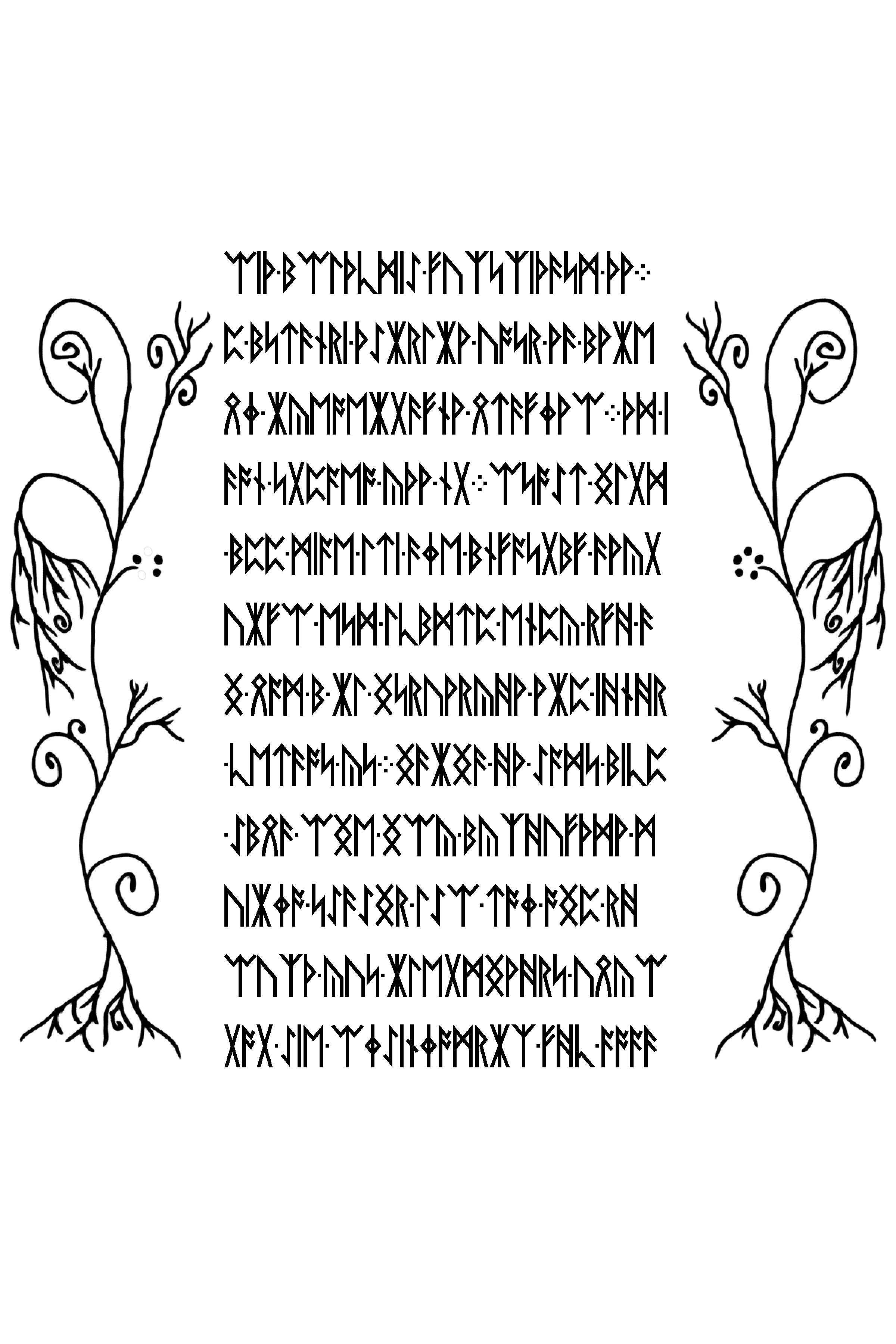
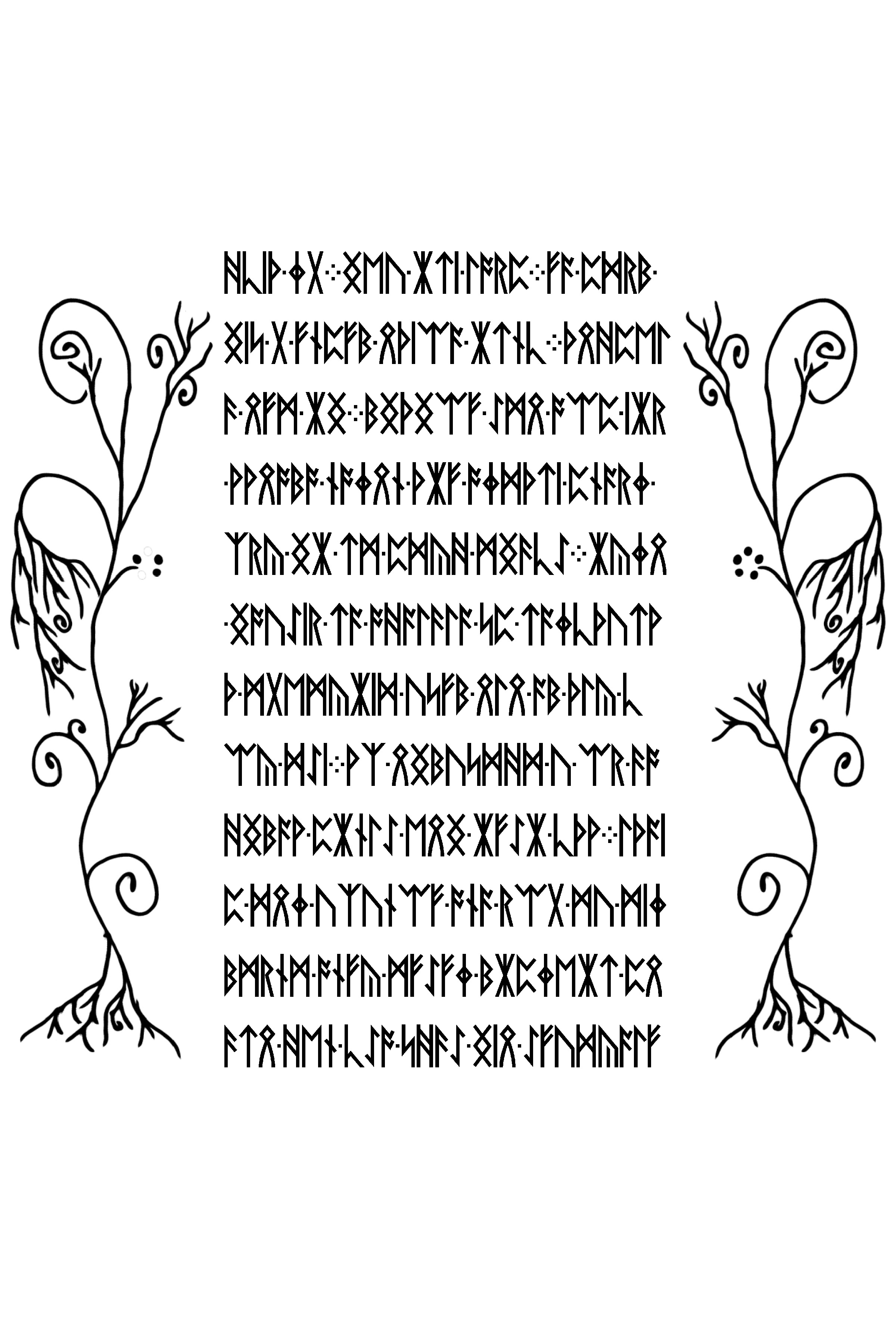
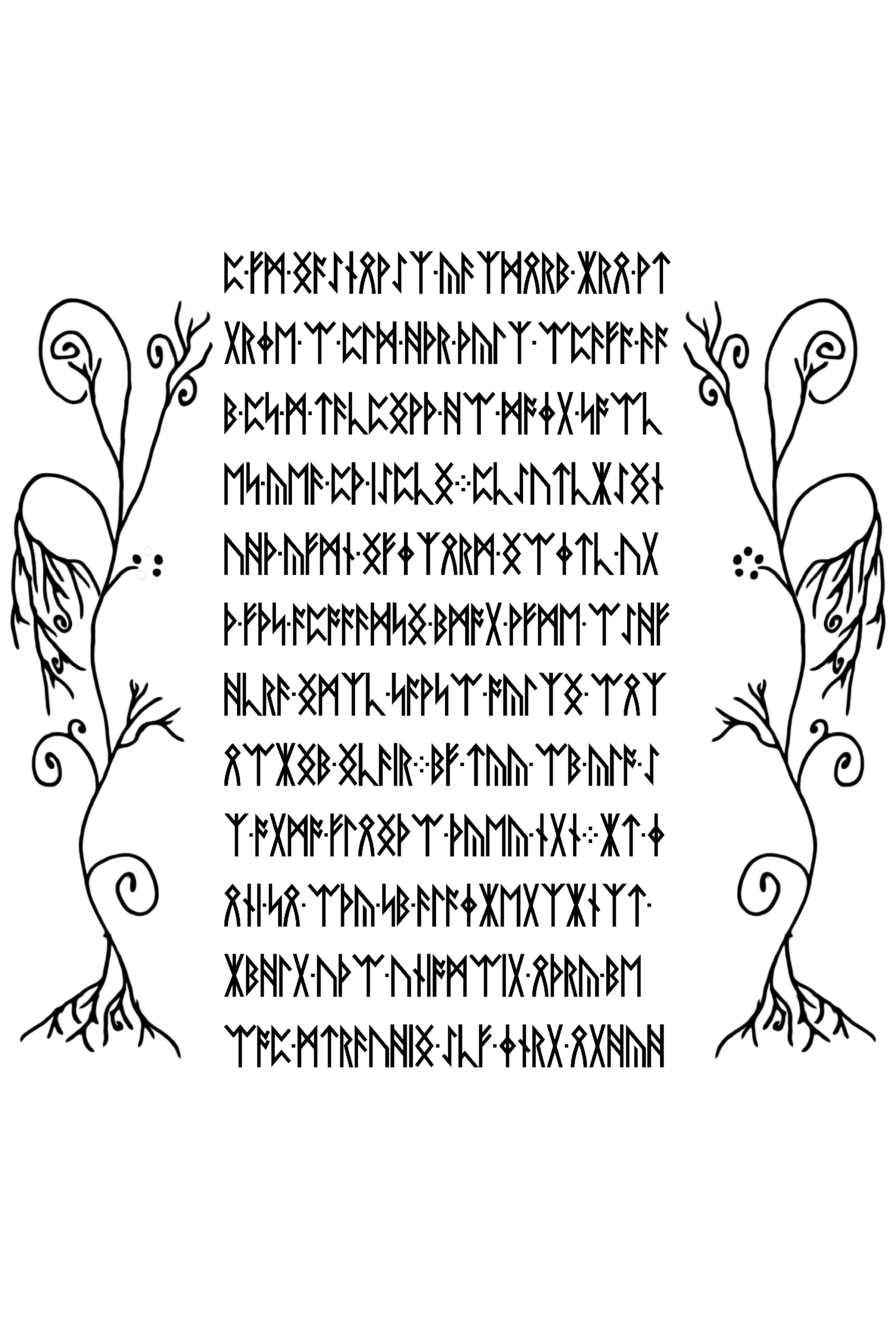
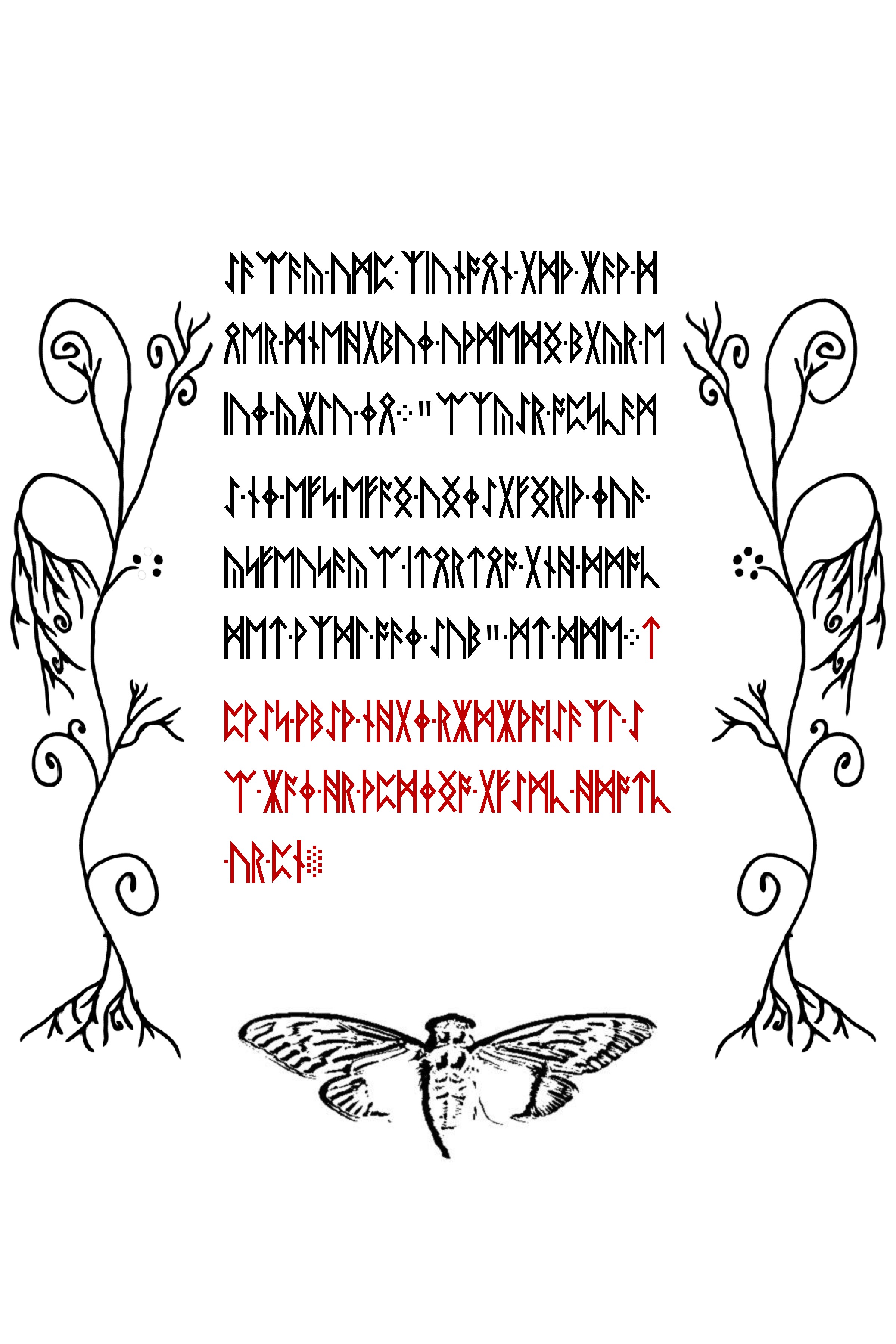
Separating text from decoration. We located the row heights in the middle of each page, then measured each row across the full scan width. In each height band, the rune line formed the group straddling the page center. The widest internal ink-free gap was 18 pixels; the nearest decorative ink outside any line was at least 31 blank pixels away. Changing the darkness threshold (80, 125 or 180) and the largest gap allowed inside a group (20, 24 or 28 pixels) left all 41 pairs of line endpoints unchanged. On page 53 we stopped before the line that changes from black to red, so neither its red closing text nor the insect below entered the measurement.
Of the 41 lines, 38 begin at x=601, two at 602, and one at 600. Using only pages 48 and 52 gives the same 600–1796 band. Dropping any single page retains the right edge of 1796; dropping page 52 moves the left edge inward by just one pixel.
We passed three comparisons forward. The observed ink band is 600–1796. The typical page band, using the median of the four page-level left edges and the median of the four right edges, is 601–1793. A nominal symmetric band, rounding the usual 601-pixel start to 600 and leaving the same margin on the right, is 600–1800. The last is a layout assumption. None of these uses the eighth grid cell to choose where the ninth must stop.
A typesetter can leave space at a line ending or allow a glyph to overhang its nominal boundary. Earlier checks on ordinary prose show why a hard cutoff in visible ink alone does not explain every wrap. The ninth-cell test therefore has to check the known eight cells first and separate rows that are decisively too wide from those whose classification changes with the assumed margin.
Prior test design · Measure the four source images · All 41 row extents, settings and source hashes.