Rows 2 and 3 on LP2 page 49 contradict both rules, and neither row contains a disputed character. Each starts with seven data bytes; the last byte determines which constant that row would need. These are decimal byte values:
| Row on the original page | First seven bytes | Last byte | Constant needed for addition | Constant needed for XOR |
|---|---|---|---|---|
| 2 | 92, 249, 156, 222, 247, 4, 183 | 212 | 83 | 119 |
| 3 | 121, 202, 15, 33, 102, 137, 59 | 87 | 186 | 30 |
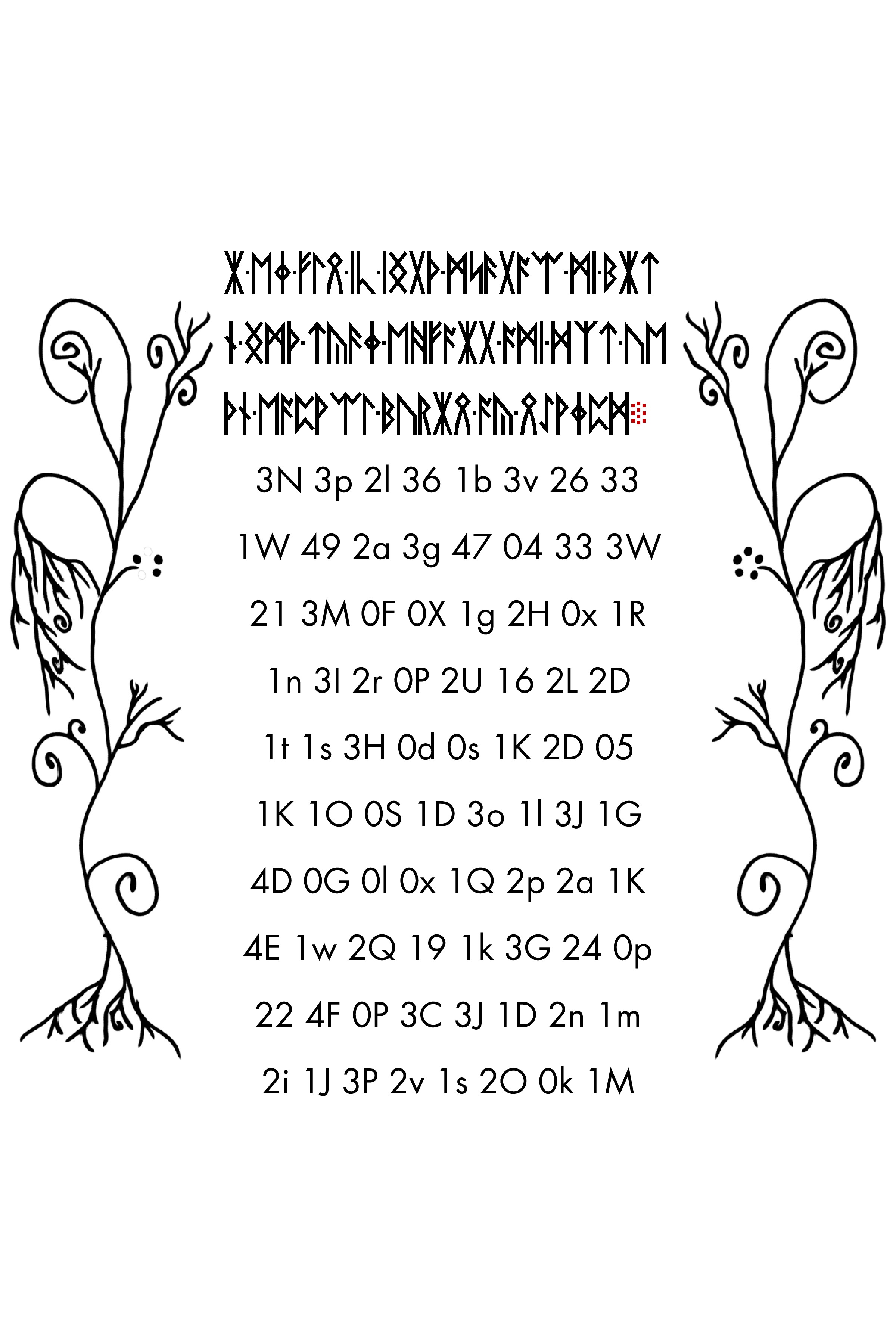
For example, the first seven bytes of row 2 sum to 1,153. Modulo 256 that is 129, so the offset needed to produce 212 is 83. Row 3 instead requires 186. For the XOR rule, XOR all eight bytes of a row to get its required constant. A single constant cannot be both 119 and 30. The other training page also supplies its own undisputed counterexample: rows 1 and 3 on page 50 require 183 and 152 under addition, or 35 and 122 under XOR.
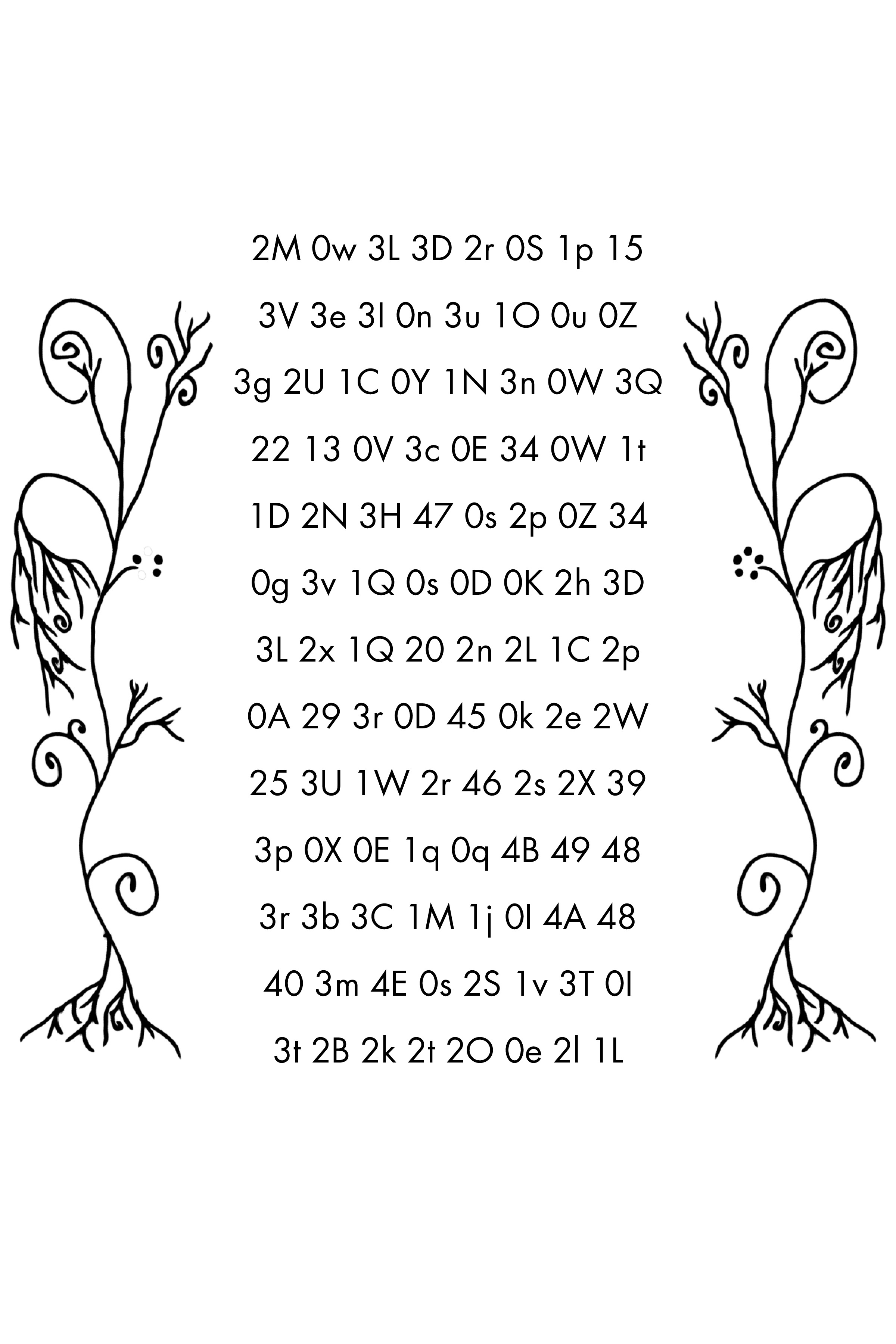
Eight of the ten flagged I/l positions are on the training pages: four on page 49 and four on page 50. Changing I to l changes a decoded byte by 29 (and the reverse by −29). Two flagged cells are on the held-out page. Their choices cannot affect the training decision. The 1,024 full-grid labelings therefore correspond to 256 distinct training grids, each counted once here.
| Training material | Distinct readings | Addition: readings admitting one common constant | XOR: readings admitting one common constant |
|---|---|---|---|
| Page 49 alone, 10 rows | 16 | 0 | 0 |
| Page 50 alone, 13 rows | 16 | 0 | 0 |
| Both pages, 23 rows | 256 | 0 | 0 |
Even counting partial matches, no additive constant matches more than one row in any of the 256 grids. Under XOR the maximum is one row in 128 readings and two in the other 128. Considering only the 15 undisputed rows, every pair gives incompatible constants under both rules: 105 pairs in total.
We checked this in two ways: enumerating the training grids, and independently intersecting the possible constants allowed by each individual row. Both give the empty set. The computation uses the recorded alternatives from the two scan readings. It neither decoded nor scored the held-out row endings. This is a robustness check on the two rules fixed before testing, not a claim that the grid has no other structure.
Replay code · Training cells, required constants and counterexamples.