Every one of the 23 training rows asks for a different additive constant. Every row also asks for a different XOR constant. Neither of the two rules in the published protocol qualifies to predict an ending on page 51. No last-page prediction was made or scored.
The display has 32 printed rows of eight cells: ten on LP2 page 49, thirteen on page 50, and nine on page 51. We preserved that order and used the two earlier pages as training. Both independent scan readings, the master values recorded in the cell inspector, and a fresh base-60 conversion agree on the 184 preferred training bytes. The source files already contain the complete grid; this was a procedural holdout. The test extracted only the training values and would open the last-page endings for scoring only after a rule qualified.
| Training question | Addition, modulo 256 | Bitwise XOR |
|---|---|---|
| Constants tested | 256 | 256 |
| Training rows one constant had to fit | 23 | 23 |
| Most rows any constant fits, on the preferred reading | 1 | 1 |
| Constants qualifying for the nine reserved rows | 0 | 0 |
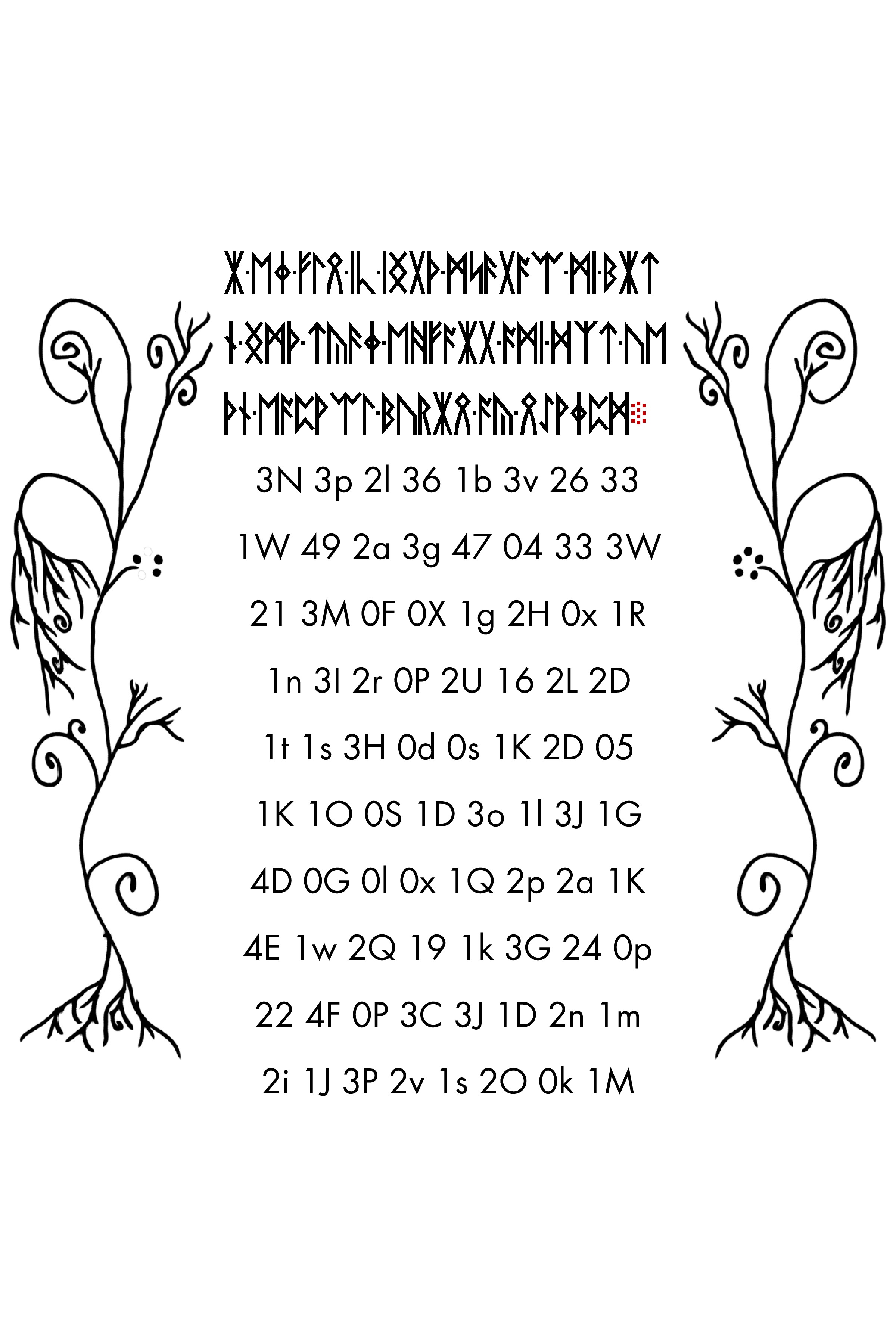
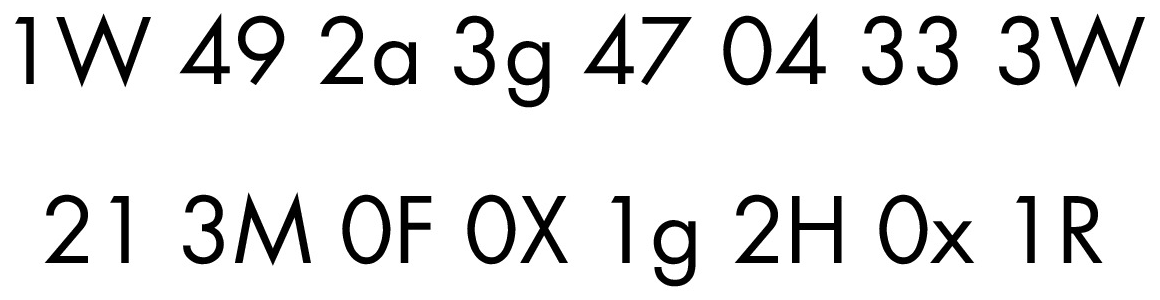
Read the contradiction directly off the page. Below are the second and third rows on LP2 page 49, in their original order. Neither contains an ambiguous I/l. In the grid's base-60 alphabet, 3W is 3 × 60 + 32 = 212, and 1R is 1 × 60 + 27 = 87.
| Printed row | Last byte | Sum of first seven, modulo 256 | Constant needed for addition | XOR of first seven | Constant needed for XOR |
|---|---|---|---|---|---|
| Page 49, row 2 | 212 | 129 | 83 | 163 | 119 |
| Page 49, row 3 | 87 | 157 | 186 | 73 | 30 |
For addition, subtract the sum of the first seven bytes from the last and wrap into the range 0–255. For XOR, combine all eight bytes with bitwise exclusive-or. If a rule held, its column of required constants would be the same on every row. These two rows alone give different answers for both rules. The full output records the residual for every training row and all matching rows for each of the 512 rule/constant pairs.
Every disputed reading gives the same rejection. Exact edit counts distinguish a near miss from a failure spread throughout the grid. The positive and negative controls show what this procedure can recover when the rule really is present. The result excludes these two checksums in the specified orientation. It does not identify the bytes as random, encrypted, or meaningless.
A separate question is whether eight cells per row carries information at all. We would next use the original page geometry to test whether a ninth cell could fit inside an independently measured text area. That proposed geometry test uses the print without trying more checksums on the reserved bytes.
Original method and stopping condition · Numerical replay · Reproduce the scan crop · Both visual readings · Replay sessions 325–328.