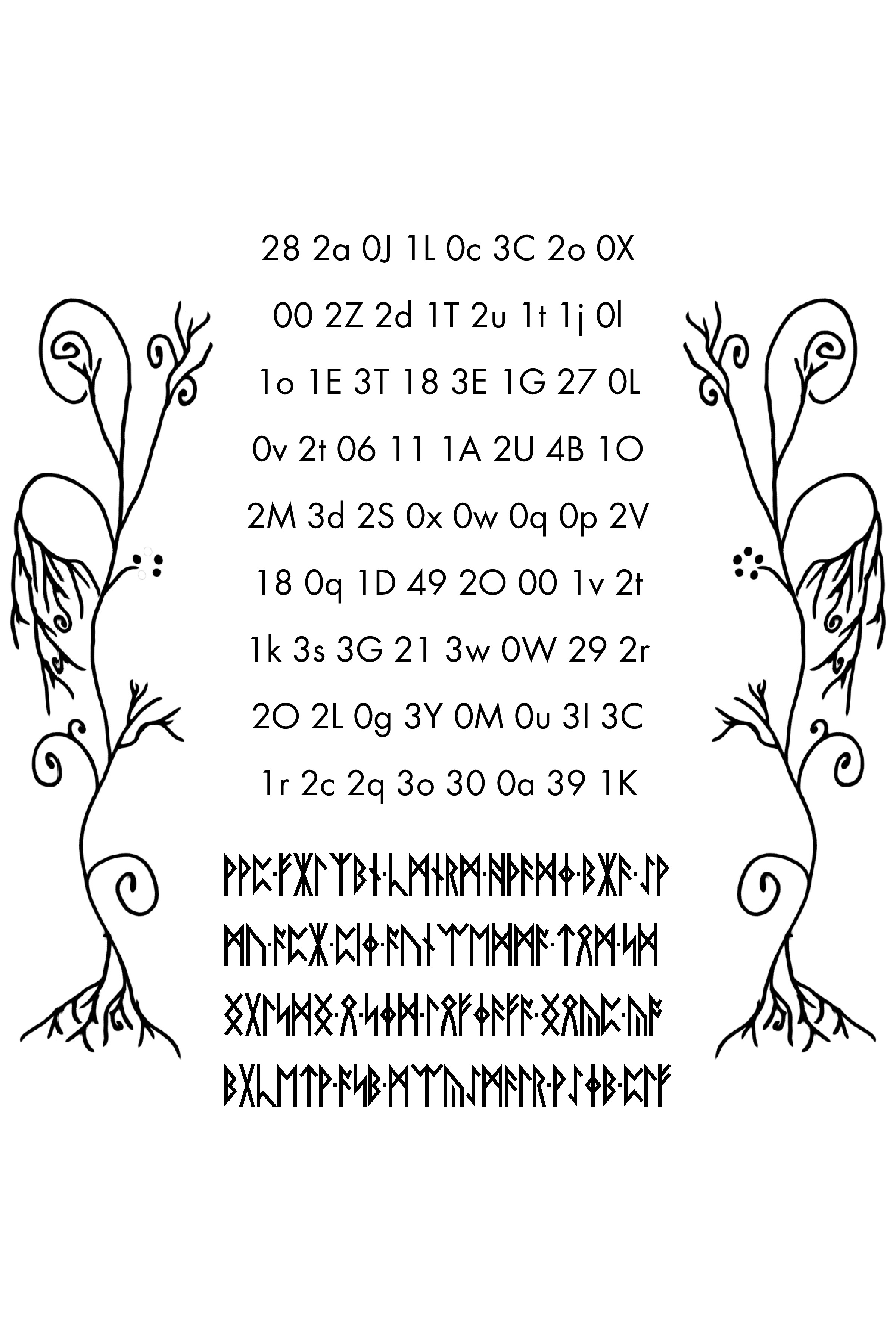
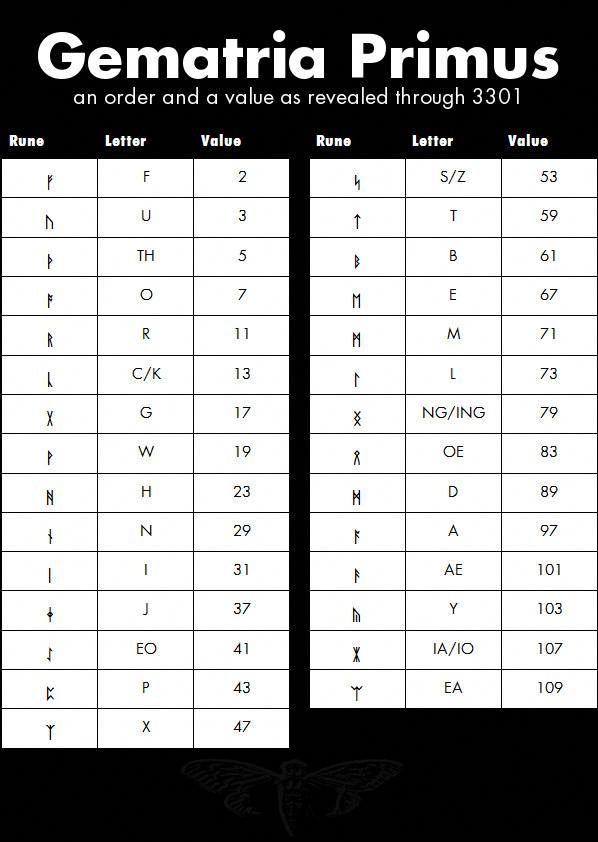
A direct image comparison supports all twelve letters of the four-word grid constraint. All twelve rank first against the 29 rune shapes in the separate 2013 Gematria Primus chart. The next word gives a useful caution: its final rune is AE in the transcription, but matching the small chart by shape alone calls it A. A native-size AE on another page is a pixel-for-pixel ink match.
To test the equality claims independently of letter names, we compared the native scan crops of the fifteen selected letters in all 105 pairs. After scaling each letter to a common height, all twelve pairs with the same transcribed value were closer than any of the 93 pairs with different values. The largest mean squared pixel difference among equal letters was 0.000606; the smallest among unequal letters was 0.010765 (ink coverage scaled to 0–1). This is a check on those fifteen positions, not a universal identification threshold.
For letter names we cropped the rune columns of the original chart, without using a target manuscript page to build the templates. The nearest chart shape agreed on 14 of the 15 letters. AE ranked eighth for the last glyph of B·IO·AE. On a separate control page, LP2 41, the same method was correct on only 131 of 180 glyphs. All six known AEs were called A. These counts use the eight rows whose glyph/mark layout aligns end to end; four other rows were excluded. The chart itself is small, and scaling it up does not restore lost detail. The IO name here is the notebook's label for the chart's IA/IO rune.
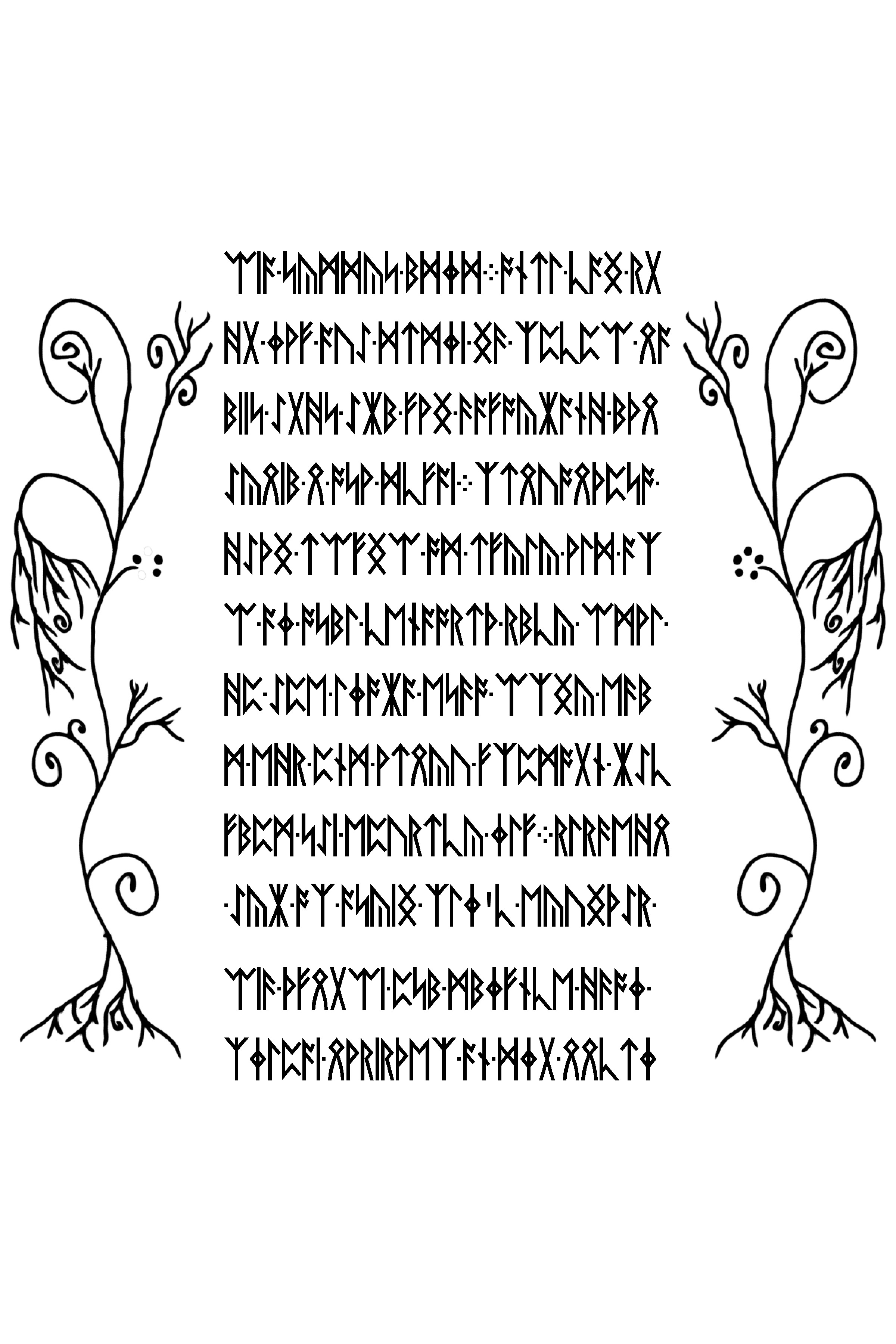
We then checked that apparent A against the larger manuscript print. All 29 rune types occur on the eight eligible control rows. The final glyph of the held-out word, at native box (1658, 2285)–(1692, 2399) on page 51, has the same 34 by 114 black/white pixels as the rune transcribed AE on page 41, row 7, box (1233, 1803)–(1267, 1917). None of the nine A exemplars on those rows matched it. The equality holds at all three image thresholds tested. Using the same page-41 comparison, the nearest named manuscript exemplar agrees for all 15 target positions.
There are limits to that second check. Page-41 labels come from the existing transcription, so this is separate pixel evidence for agreement with another printed glyph, not an independent ancient alphabet. Leaving out each exemplar's entire row gave 180/180 on eligible page-41 glyphs. Trying the same extraction on separate pages 36–40 yielded just one eligible row, on page 39 (23/23); page 40 alone supplied none. We would not use those figures to claim full-page OCR. The earlier failed whole-page reader remains a separate result.
The core's shared P and W really do look alike where the constraint says they should. There is no print evidence here for changing the held-out word to B·IO·A, and resolving that difference supplies no plaintext.
Chart image and labels · Control page 41 · Target page 51 · Code · Control confusions, nearest exemplars and exact binary hashes.