The first failure from session 320 can be checked without a solver. It needs only three printed words: W·W·P at the grid, J·P·J on page 42 and P·I·J on page 51.
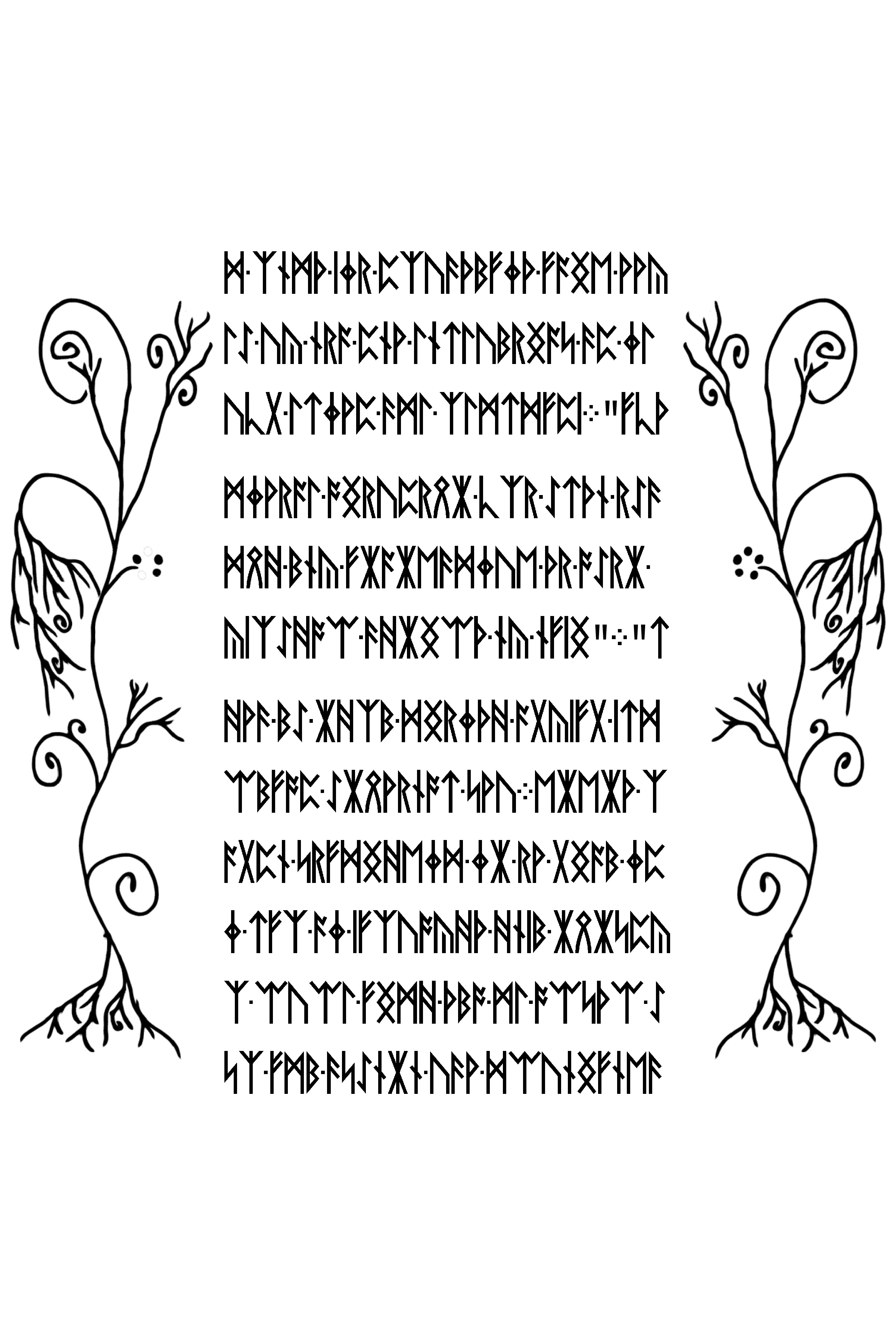
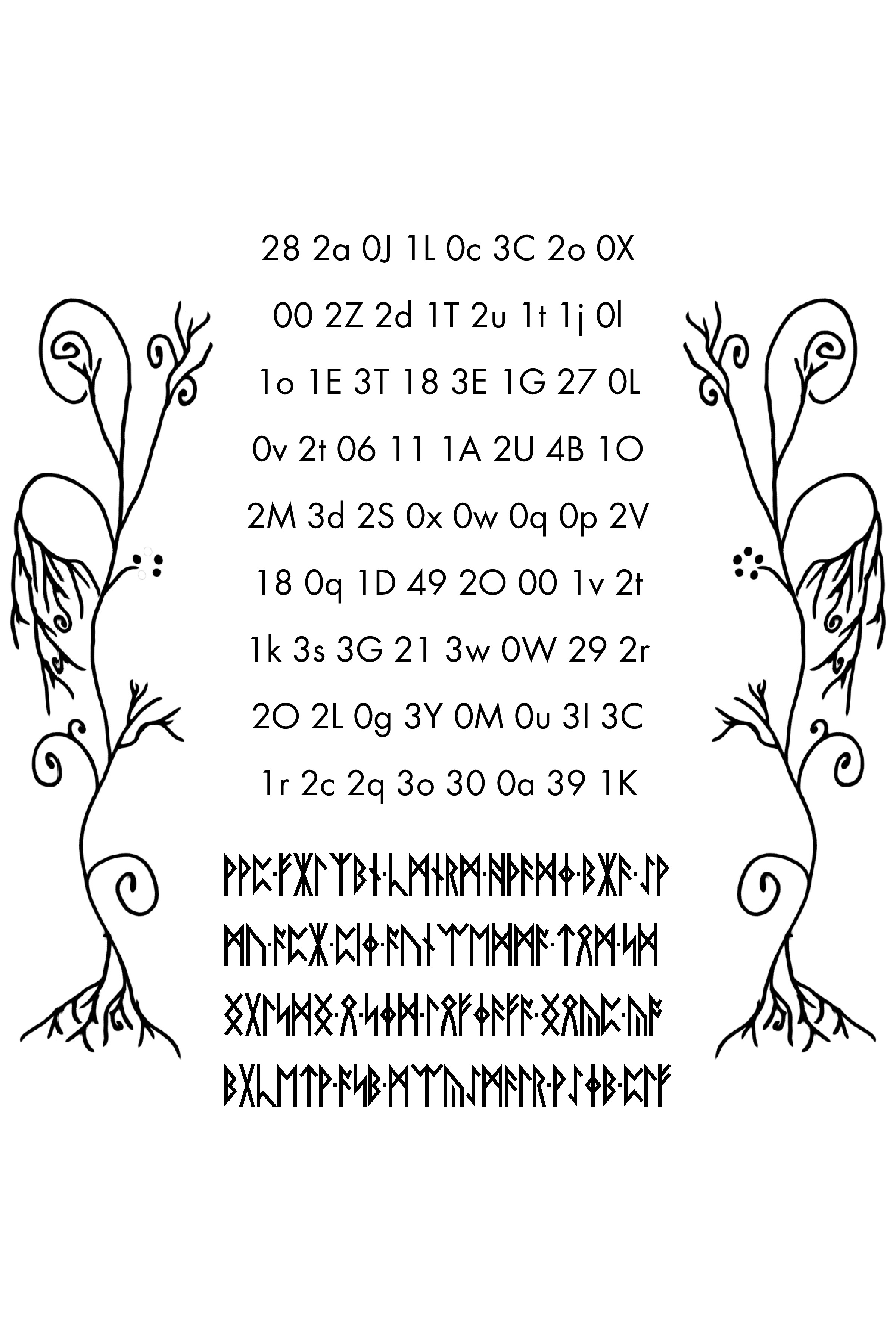
- Reading W·W·P as
ddingforces W to represent D and P to represent ING. ING counts as one rune. - J·P·J must then have ING in the middle and matching ends. The only allowed normalized form is S·ING·S, spelled sings or zings. That forces J to represent S.
- P·I·J would have to begin with ING and end in S, with three distinct runes. Among all 1,142 distinct all-different forms in the retained lowercase reference, only ingle (ING·L·E) and ingot (ING·O·T) begin with ING. Neither ends in S.
That contradiction does not depend on what any of the other 26 letters represent. It does depend on the word list and the fixed alphabet. For the other grid spelling, dds, the analogous conflict takes more words. Keeping the original four repeated-letter constraints, the first failing prefix has exactly two inclusion-minimal subsets of ordinary words: #1, 2, 5, 6, 10, or #2, 3, 5, 6, 7, 10. With the grid spelling fixed, the first subset needs only B·P·P from the original constraints. It forces printed B to represent A, since ass is the only compatible B·P·P spelling once P represents S. The remaining clash involves several words sharing these letters; it is not a misspelling identifiable from one position.
What if one ordinary word is simply missing from the dictionary? We allowed any one ordinary word in the prefix to fall outside the reference, still requiring one fixed mapping everywhere else. We did not excuse a grid or repeated-letter premise. The table gives the first ordinary word by which every choice of a single exception fails:
| Repeated-letter evidence | dding, one exception allowed | dds, one exception allowed |
|---|---|---|
| The four words linking the grid | #10 (page 52, offset 43) | #16 (page 52, offset 223) |
| All seven distinct forms available by the grid | #8 (page 52, offset 28) | #11 (page 52, offset 68) |
| All nine section-8 forms | #8 | #11 |
The compact conflicts were checked by a second search that assigns whole dictionary words directly. Removing any single member of each reduced conflict restores a fit; the evidence gives witness alphabets. Both searches also agreed with explicit permutation enumeration on 96 small generated problems. These checks establish exactly where this model fails. They do not tell us whether Cicada used unlisted words, a changing alphabet, or a different mechanism altogether.
Source word list and counting rules · Test code · Minimal conflicts and one-exception witnesses.