W W P is the only word with that exact spelling in the 720 three-rune words on unsolved LP2 pages 0–55, but two other words have the same pattern: S S EA and E E W. All three use different doubled runes. The original page images show both repeated glyphs and the distinct final glyph in each case. EA names one rune.
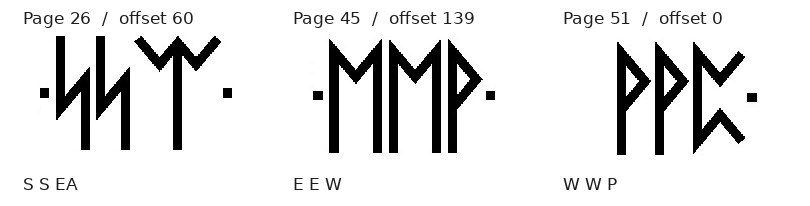
| Printed three-rune word | LP2 scan | Rune offset on page (from 0) | Physical row and starting rune on row (from 1) |
|---|---|---|---|
| S S EA | Page 26 | 60 | Row 3, rune 19 |
| E E W | Page 45 | 139 | Row 7, rune 4 |
| W W P | Page 51, after the grid | 0 | Row 10, rune 1 |
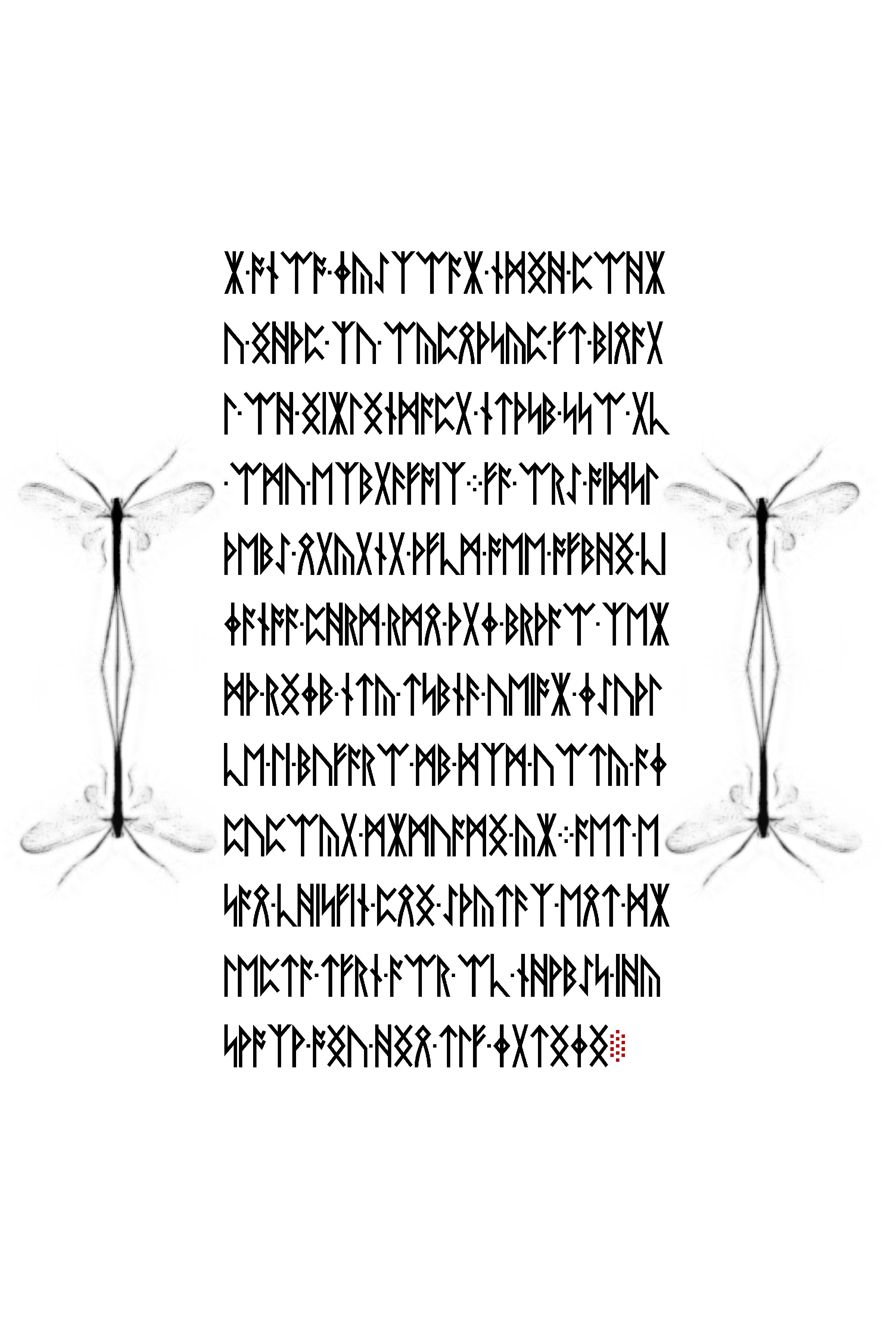
We counted whole words rather than sliding three-rune strings, carrying a word across an ordinary page or line break if no separator intervenes. Of 2,896 unsolved word tokens, 720 have length three. We separately checked the notebook’s nine solved groups, recording both their printed ciphertext and their historical reference plaintext. Letters in the labels below stand for distinct rune values, not guessed English letters.
| Pattern | Unsolved printed / 720 | Solved printed / 176 | Solved plaintext / 176 |
|---|---|---|---|
| AAA: all three equal | 0 | 0 | 0 |
| AAB: first and second equal | 3 | 2 | 0 |
| ABA: first and last equal | 32 | 0 | 0 |
| ABB: second and last equal | 7 | 6 | 9 |
| ABC: all different | 678 | 168 | 167 |
The two solved ciphertext examples give a direct demonstration of why the distinction matters: K K EA in Welcome reads ARE, and W W U in the Second Koan reads YOU. Both historical passages use moving keys. Those readings do not predict the word on page 51; they show that a doubled print need not represent doubled plaintext. A fixed one-to-one substitution, by contrast, must preserve all equalities. Under that assumption the grid opening would have a shape absent from the retained solved plaintext.
The 32 cases with matching first and last runes also outnumber the three doubled openings in the same unsolved pages. Pooling all repetitions together would hide that difference. Session 213 found that a different statistic, all decoded neighboring doubles in words of any length, failed to identify known four-position keys. The present count does not rank keys. Next: where do the three openings occur?
Fixed scope and positional tests · Replay the counts · Per-section and per-page counts, two solved examples and all three unsolved coordinates · Rebuild the scan plate.