Not even one complete word from the end of the solved page 56 lead-in or the beginning of its follow-up fits the equivalent grid edge. The final word before the known digest is TO, two runes; the unknown word before the grid has six. The first known word after the digest is IT, two runes; the unknown first word has three.
We tested a precise proposal: copy the known wording at the corresponding edge, keeping one printed rune per plaintext rune and preserving word divisions. We used the actual solved rune spellings. For instance, THE occupies two runes because TH is one rune; WITHIN occupies five, and THAT and THIS each occupy three. The known page was checked by replaying its prime-minus-one shifts with its literal F exception.
| At the corresponding edge | Known page 56 lengths | Unknown grid lengths | Longest matching word sequence at edge |
|---|---|---|---|
| Immediately before | A PAGE THAT HASHES TO = 1, 4, 3, 6, 2 | Last five = 4, 6, 5, 2, 6 | 0 |
| Immediately after | IT IS THE DUTY OF = 2, 2, 2, 4, 2 | First five = 3, 6, 5, 5, 3 | 0 |
What if the phrase is moved? Between the previous stop and the grid, one internal pair has the lengths of HASHES TO (6, 2). It ends at page 49 gap 20, leaving 46 runes before the display. No three-word suffix of the known lead-in fits anywhere in that flank. After the grid, four internal words have the two runes needed for IT, but none is followed by a second two-rune word for IS. These are matches of lengths alone, not recovered words.
If we let both the known excerpt and its proposed location move, THE DEEP WEB THERE EXISTS appears to fit five slots beginning at page 49 gap 18. A source detail rejects that match: the solved page has three black dots between WEB and THERE; the corresponding unknown gap has one. Requiring the same punctuation between neighboring words leaves at most three consecutive known word lengths on either side. The single longest surviving placement before the grid has the shape of THE DEEP WEB. On the far side three distinct triples fit. This much freedom also makes coincidences easy: we compared 363 possible pairs of starting words on the left and 480 on the right. None of the surviving triples retains the proposed wording at its display edge.
Controls. At 39 other internal transcription stops in section 8 (excluding the grid and the two red 13-dot passage/heading marks), 24 also fail to fit even one corresponding reference word on either side; seven fit at least one before and eight at least one after. None fits both. These are descriptive counts, not independent trials. Two additional solved LP1 examples, Some Wisdom and An Instruction, introduce a square with KNOW THIS, a four-rune word followed by three, then 11 red dots. Our grid ends after words of lengths 2, 6 and ten red dots; that exact label fails as well. Those square pages have no following prose below the display.
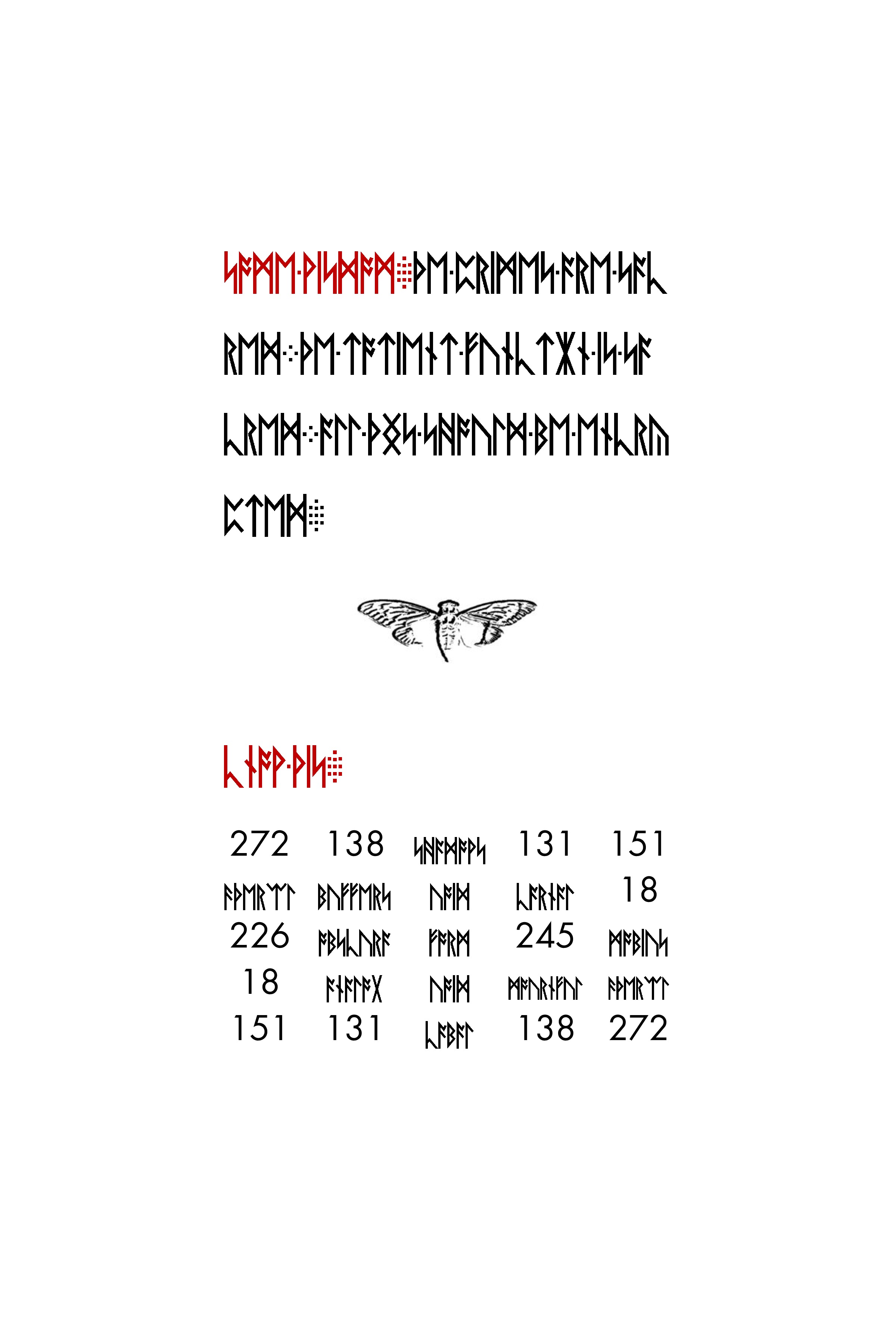
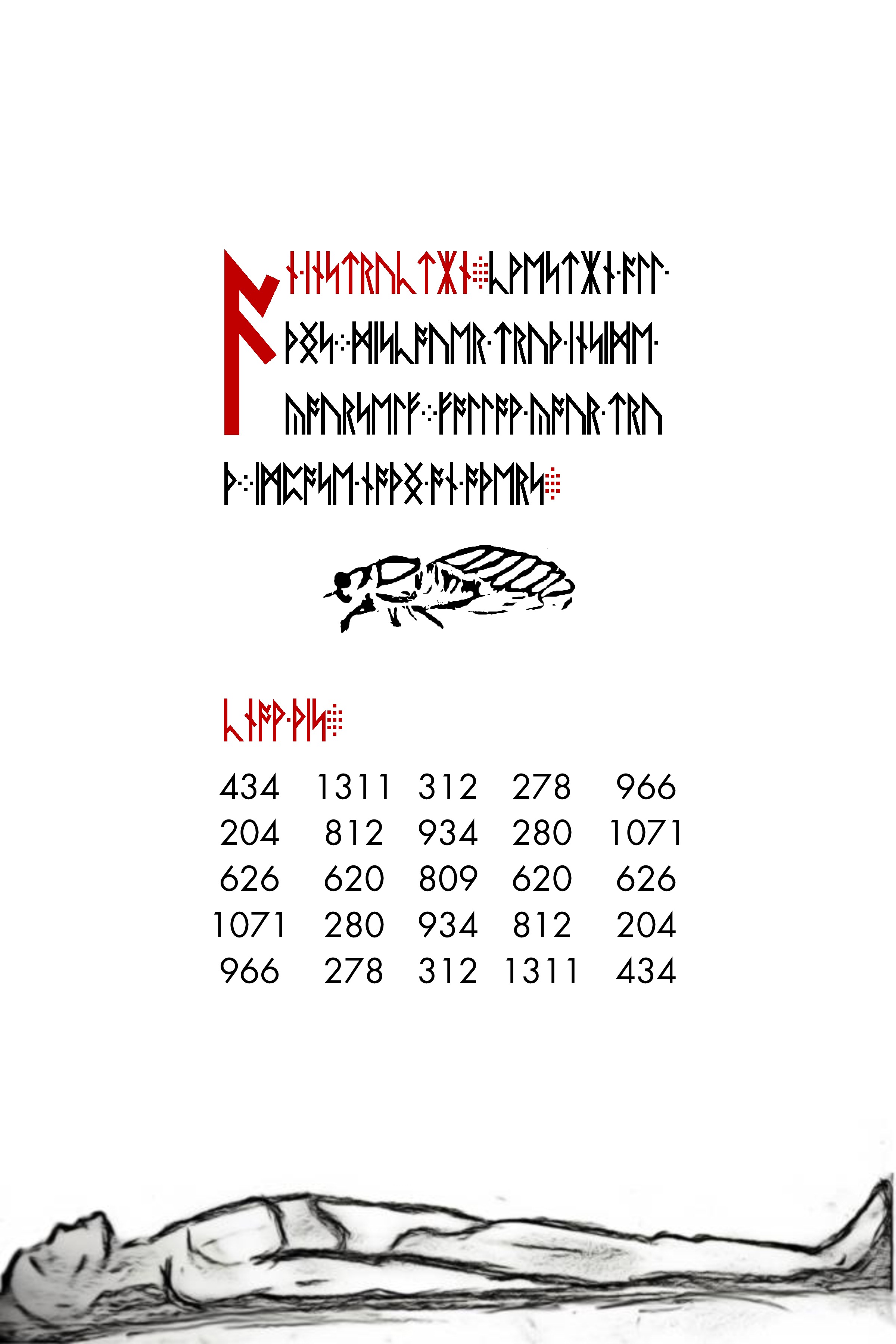
The result rules out these particular copied prompts at these positions under the stated assumptions. Other wording could introduce the same kind of object. Nothing here decodes a grid cell or supplies a new reading of the neighboring runes.
Source-image audit · Complete words, alignments and controls · Reproduction · Fixed flank selection · Established page 56 reading · Earlier solved punctuation audit.