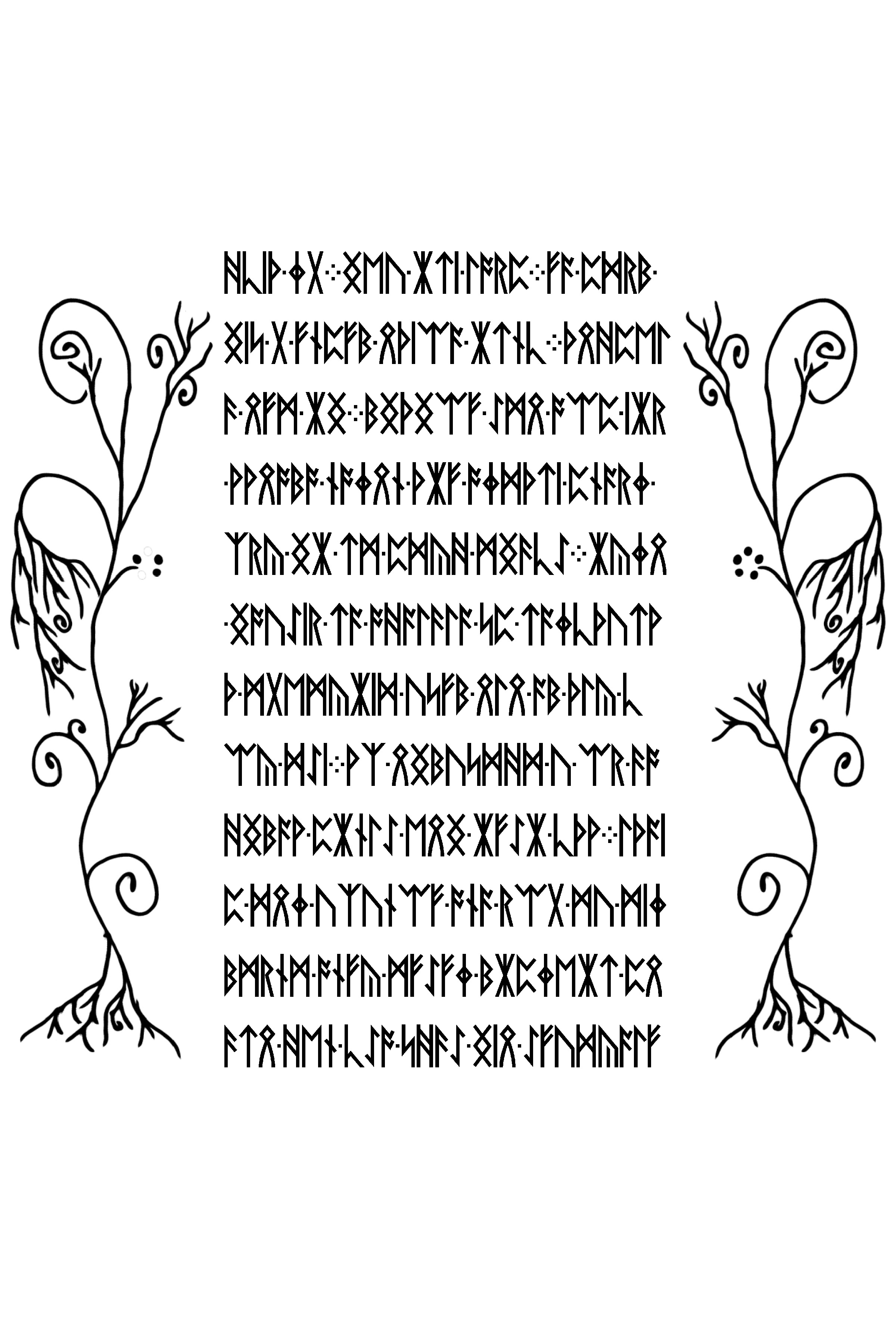
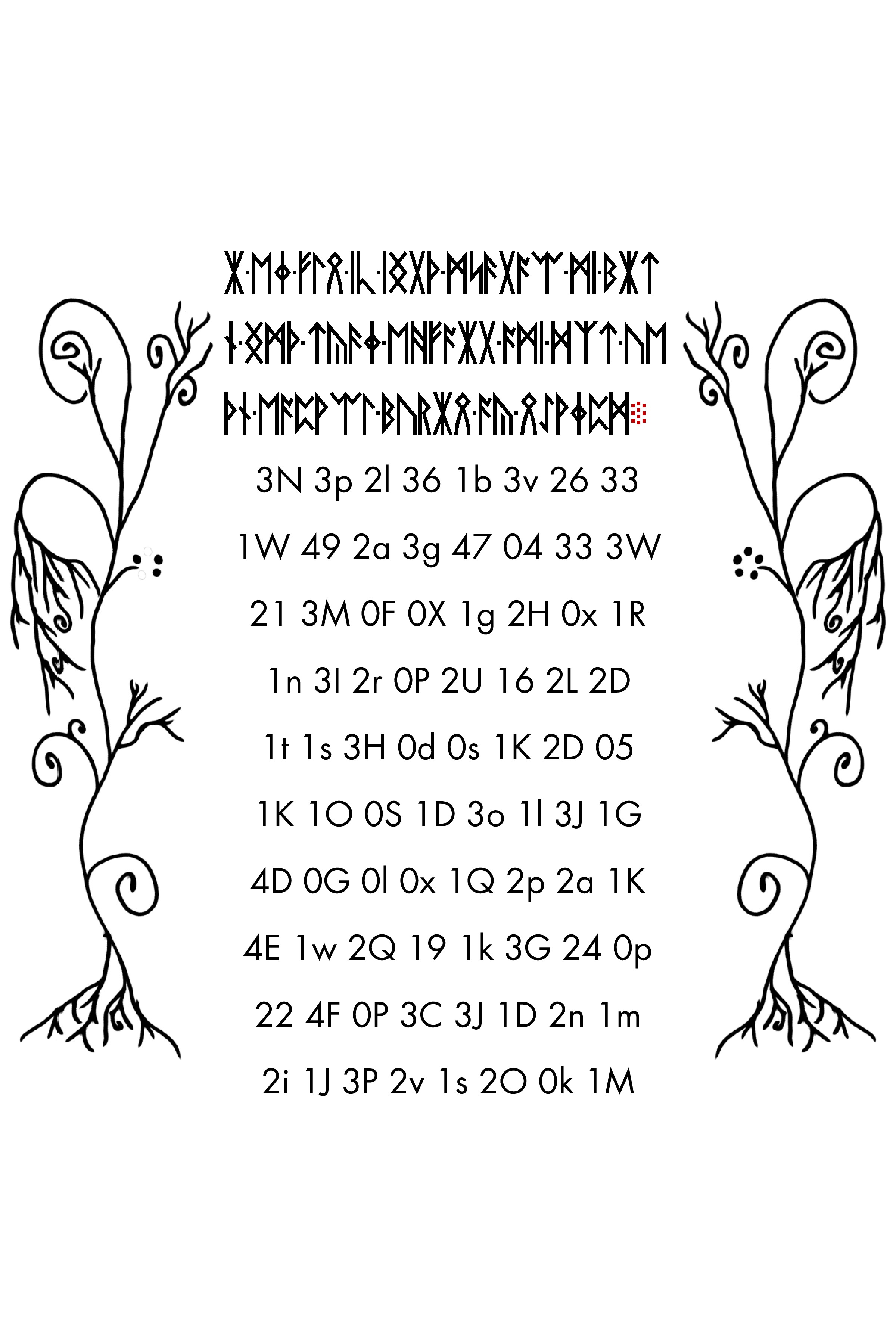
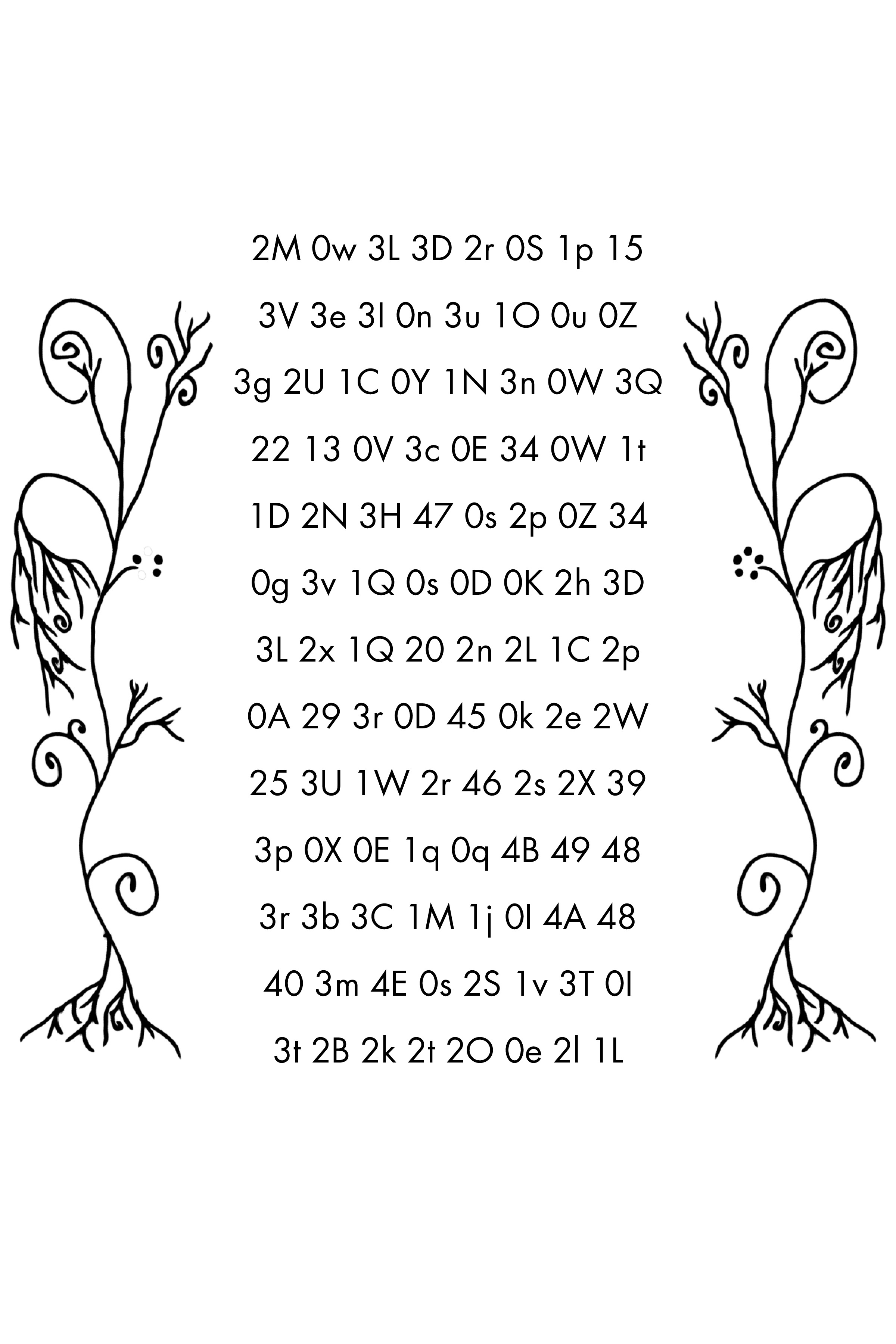
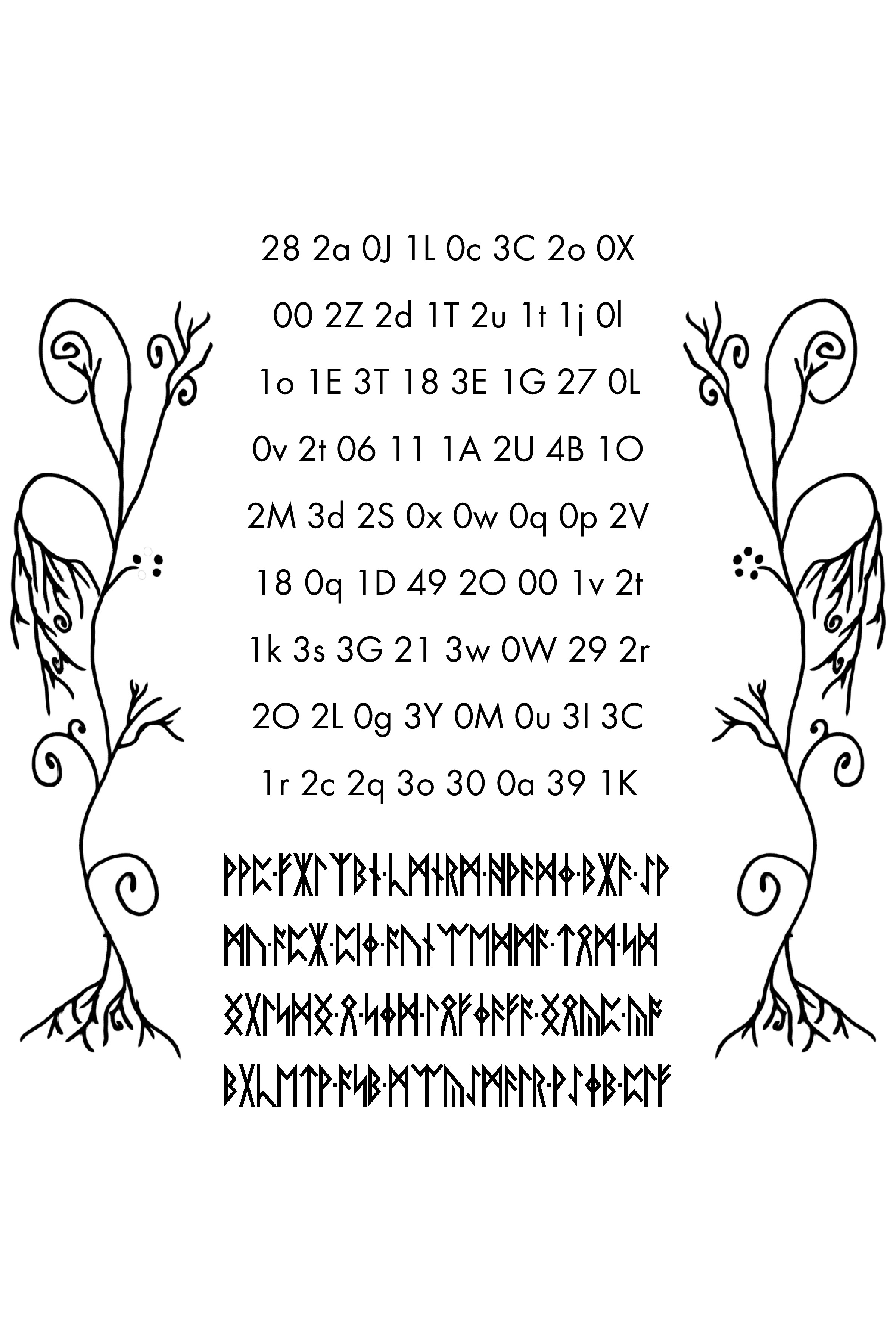
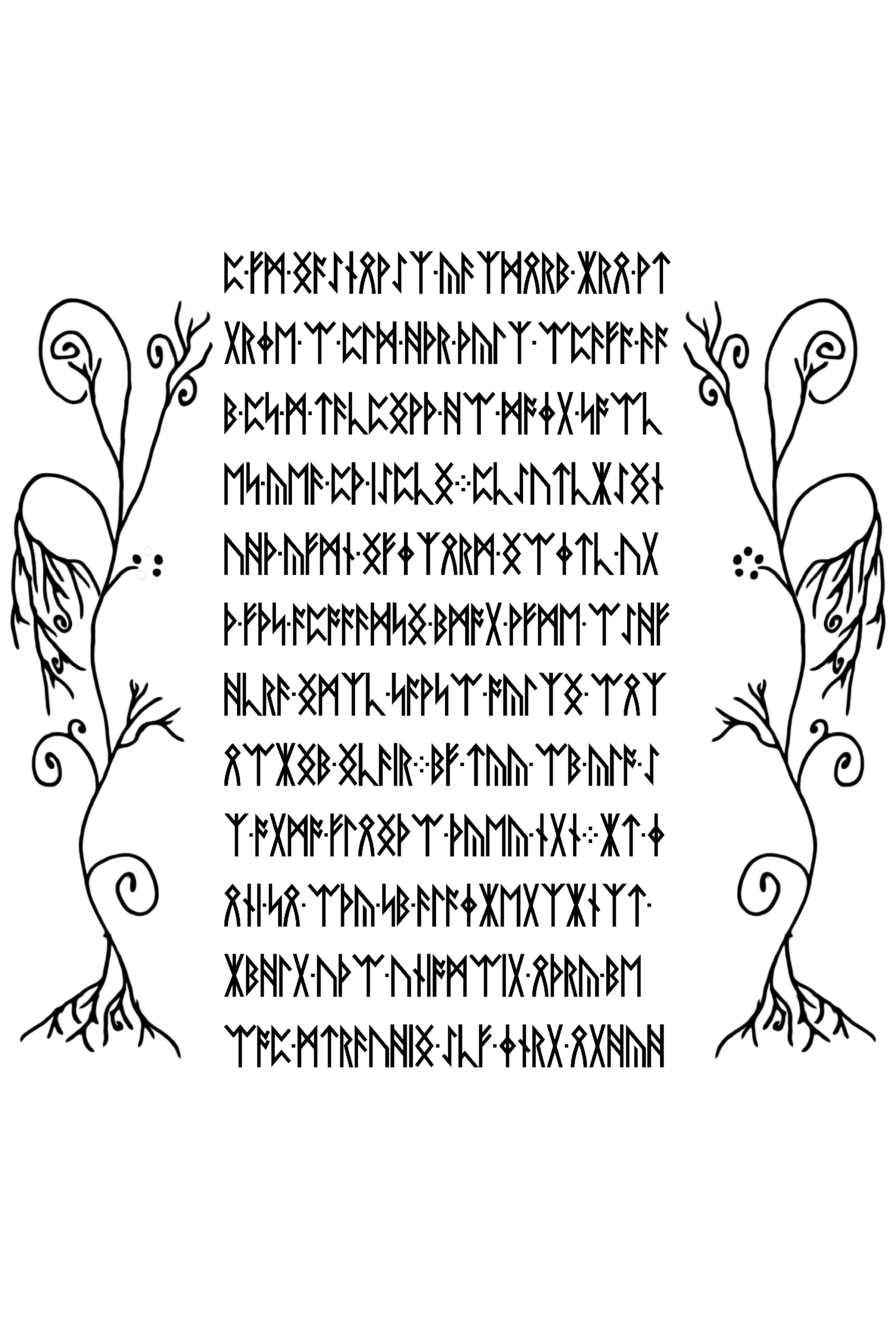
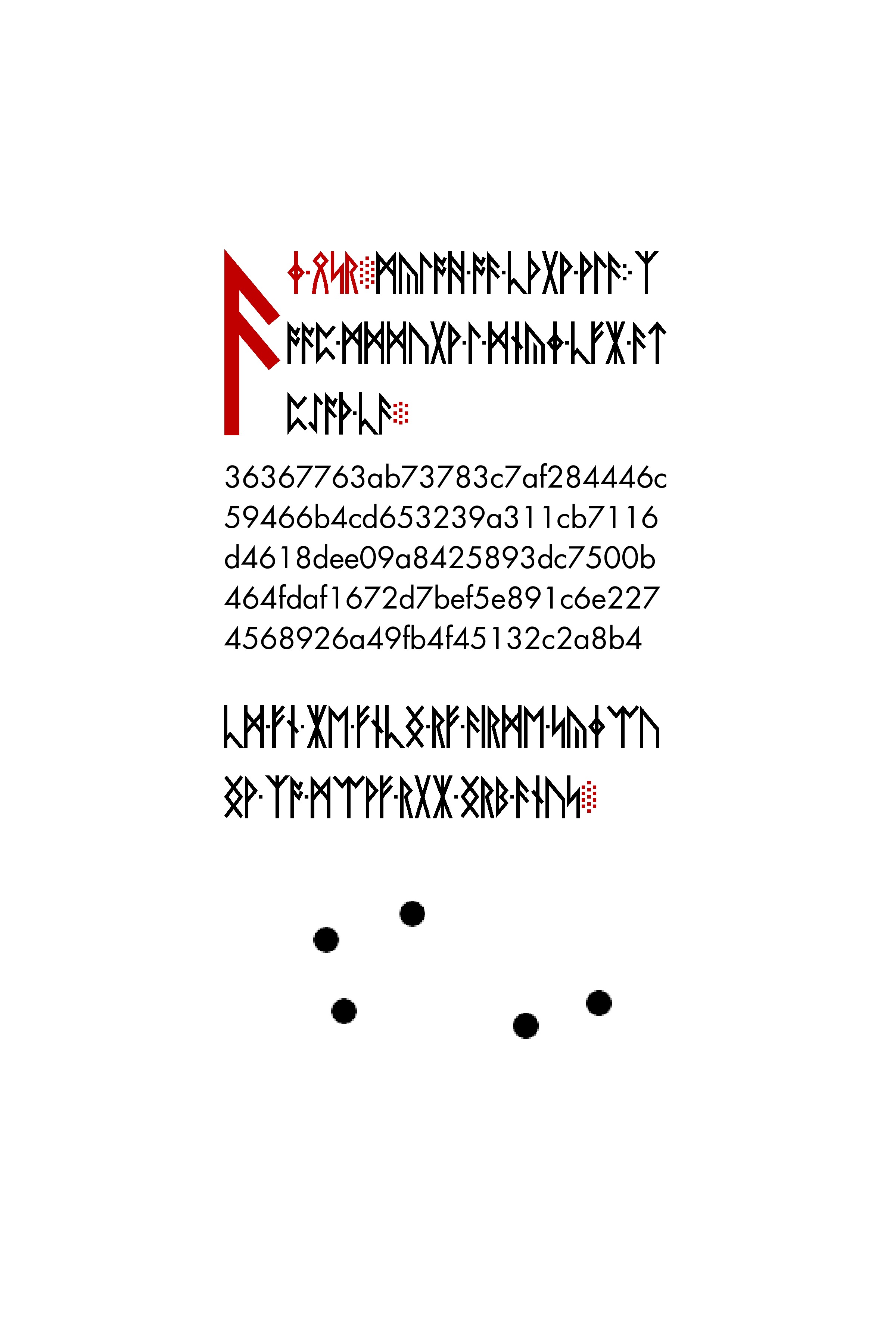
The 256-cell grid and the solved page 56 digest share a printed convention: a complete runic word, a mark of ten red dots, a separate alphanumeric display, and a return to black runes. Neither display has a matching red mark at its exit. This makes page 56 a useful comparison. It does not tell us that the larger grid is a hash or that the neighboring runes give the same instructions.
We fixed the comparison at the physical edges. On each side we took the uninterrupted runic passage up to the nearest other printed stop. Line ends and page turns were ignored unless a word separator was actually present. For the unknown text these are stop-delimited spans: without a reading we cannot say where a grammatical clause or sentence ends. The solved example illustrates the distinction. Its runes say “hashes to”; the displayed digest supplies the object of “to.”
| Location | From the previous stop to the display | From the display to the next stop |
|---|---|---|
| LP2 pages 49–51, eight columns across 32 rows | Page 48 gap 199 → page 49 gap 66: 138 runes, 33 words | Page 51 gap 0 → page 52 gap 78: 170 runes, 40 words |
| LP2 page 56, 128 hex characters across five lines | After the red heading AN END, gaps 5 → 45: 40 runes, 11 words | Gaps 45 → 85: 40 runes, 12 words |
Offsets count runes from zero within each page. The two unknown spans occupy section 8 gaps 2,336–2,474 and 2,474–2,644. The alphanumeric material lies at gap 2,474 in this runes-only coordinate system; that does not give it zero physical length.
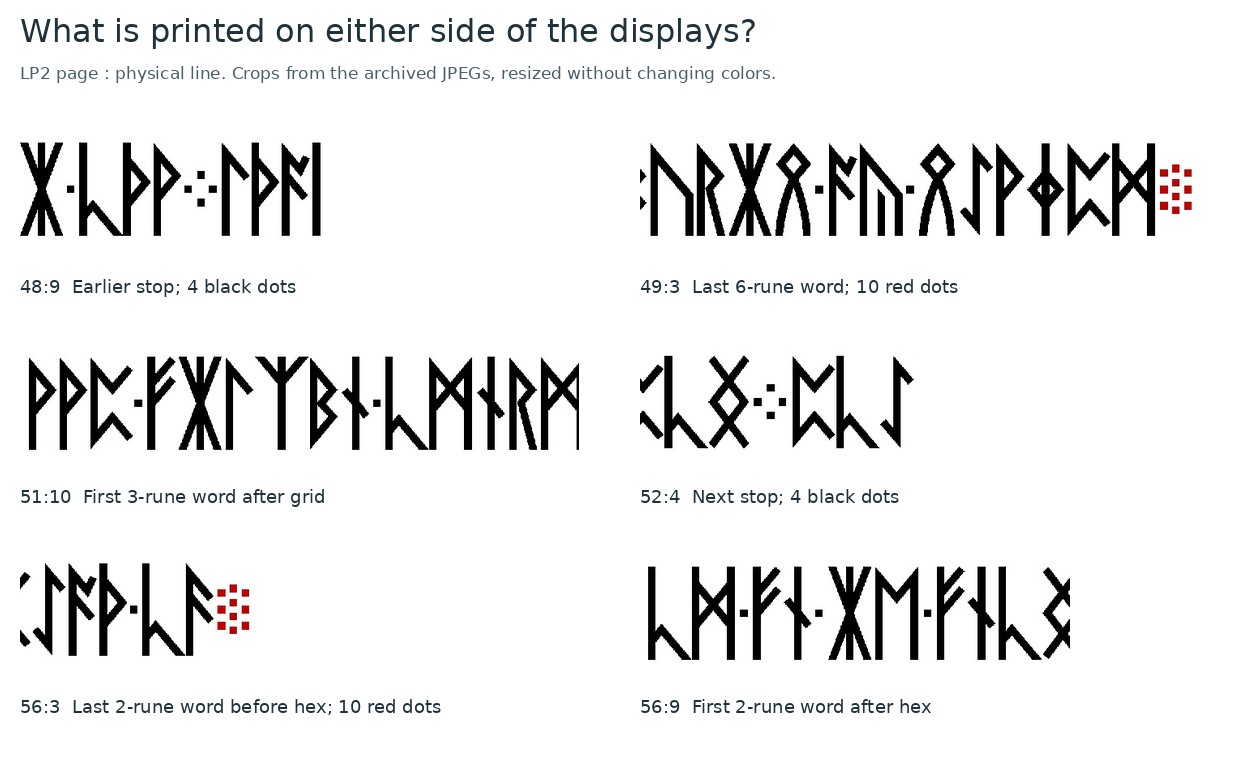
The page joins matter. The last eight runes on page 48 join the first rune on 49 to form one nine-rune word. The last three on page 51 join the first on 52 to form one four-rune word. Splitting text at page turns changes both flanks’ word inventories. At the display itself there is no such ambiguity: the last unknown word on 49 has six runes before the ten-dot mark; the first word after the grid has three runes before a single black dot.
We compared the ordered dot groups against the transcription across 20 original text rows covering the four passages: 103 groups matched, with the same ordered counts and colors at three image thresholds. The unknown outer stops are four black squares on page 48 line nine and page 52 line four. Page 56 instead starts its left flank after a red 13-dot heading terminator and ends the right flank at a red 13-dot closing mark. Its left flank also contains a black three-dot mark. This is a check on marks and alignment, not independent recognition of every rune.
Page 48 · Page 49 · Page 50 · Page 51 · Page 52 · Solved page 56 · Frozen rule · Word positions, dot boxes and source hashes · Reproduction · Test the actual wording.