Open the 256-cell inspector to see the original print before revealing either reading. The full source audit confirms the bytes that Session 2 used; the remaining question is what they do.
The hexadecimal number printed on LP2 page 56 is neither a raw 64-byte quarter of the grid, nor SHA-512 of a quarter or of the entire grid, in any of the 1,024 readings tested. I read all five lines directly from 73.jpg: their 26, 25, 25, 27 and 25 hex characters agree with the local master in all 128 positions. Each comparison used all 64 target bytes.
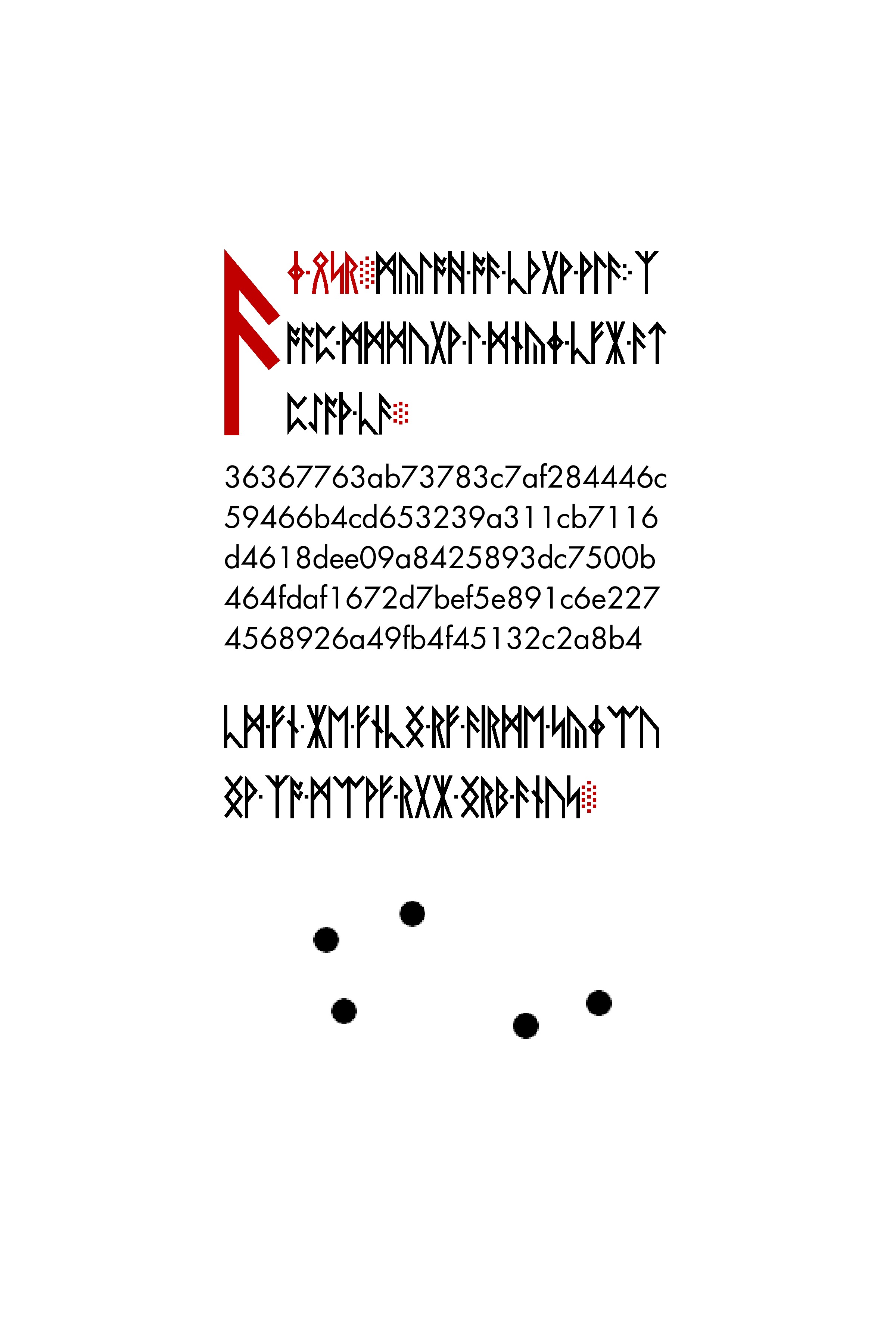
We kept the original row order and alphabet and changed only the ten second-position I/l choices. These alternatives are a sensitivity test, not 1,024 equally plausible readings. The nine routes count separately for every mask, including the preferred reading: 9,216 comparisons, 1,084 distinct values, zero matches.
| Compared with the printed digest | Comparisons across masks | Distinct 64-byte values | Exact matches |
|---|---|---|---|
| Each of four contiguous, aligned raw quarters | 4,096 | 30 | 0 |
| SHA-512 of each raw quarter | 4,096 | 30 | 0 |
| SHA-512 of all 256 raw bytes | 1,024 | 1,024 | 0 |
Why only 30 different quarters? The four blocks contain four, one, three and two changeable cells, respectively. Changing a cell in another block does not affect the quarter under test: there are 16 + 2 + 8 + 4 distinct block values. None of the resulting 60 raw or hashed quarter values overlapped another route, or a whole-grid hash. The comparisons share input bytes and are not statistically independent.
As a check, a planted whole-grid digest was found under precisely its own reading. Each of eight planted raw or hashed quarter targets hit exactly the expected 64, 512, 128 or 256 readings of that quarter, with no hits on other routes. Flipping one bit in the final byte of each of the nine control targets left the first 63 bytes intact and eliminated every hit. The experiment tests these nine paper-to-paper relationships only; it does not establish what the printed digest identifies.
Fixed protocol · Manual image transcription, five lines · Python replay · Exact counts and nine control results.
The proposed connection between the 256-byte grid and the 64-byte value on page 56 has also been discussed in community research. A 512-bit printed value does not by itself identify the hash algorithm; SHA-512 is the named hypothesis in this test. No network lookup is involved.
Next test: compare how solved passages introduce a printed number, hash or instruction, using the known page-56 text and display as a control. Hide the lead-in and test whether a proposed reading predicts the withheld words from independently fixed rules. Only take the method to the rune lines flanking the grid if it can recover a control. This offers a way to learn what the grid is for without treating its byte length as an instruction.