At 53 of 56 measured breaks on LP2 pages 27–32, the next rune was too wide. Three remain borderline, and none clearly ended early. Session 127 left eight unresolved. This test accounts for the blank space assigned to a rune beyond its visible strokes. It explains five of the eight, including line 3 on the page with the tree.
What happened to the strongest lead?
On the tree page, LP2 page 32, line 5 ends in T and line 6 starts with F. In the original pairs, the F’s ink could end at x = 1797–1798. That looked promising because other lines have ink at 1798. But those last strokes belong to different runes, which can reserve different amounts of blank space.
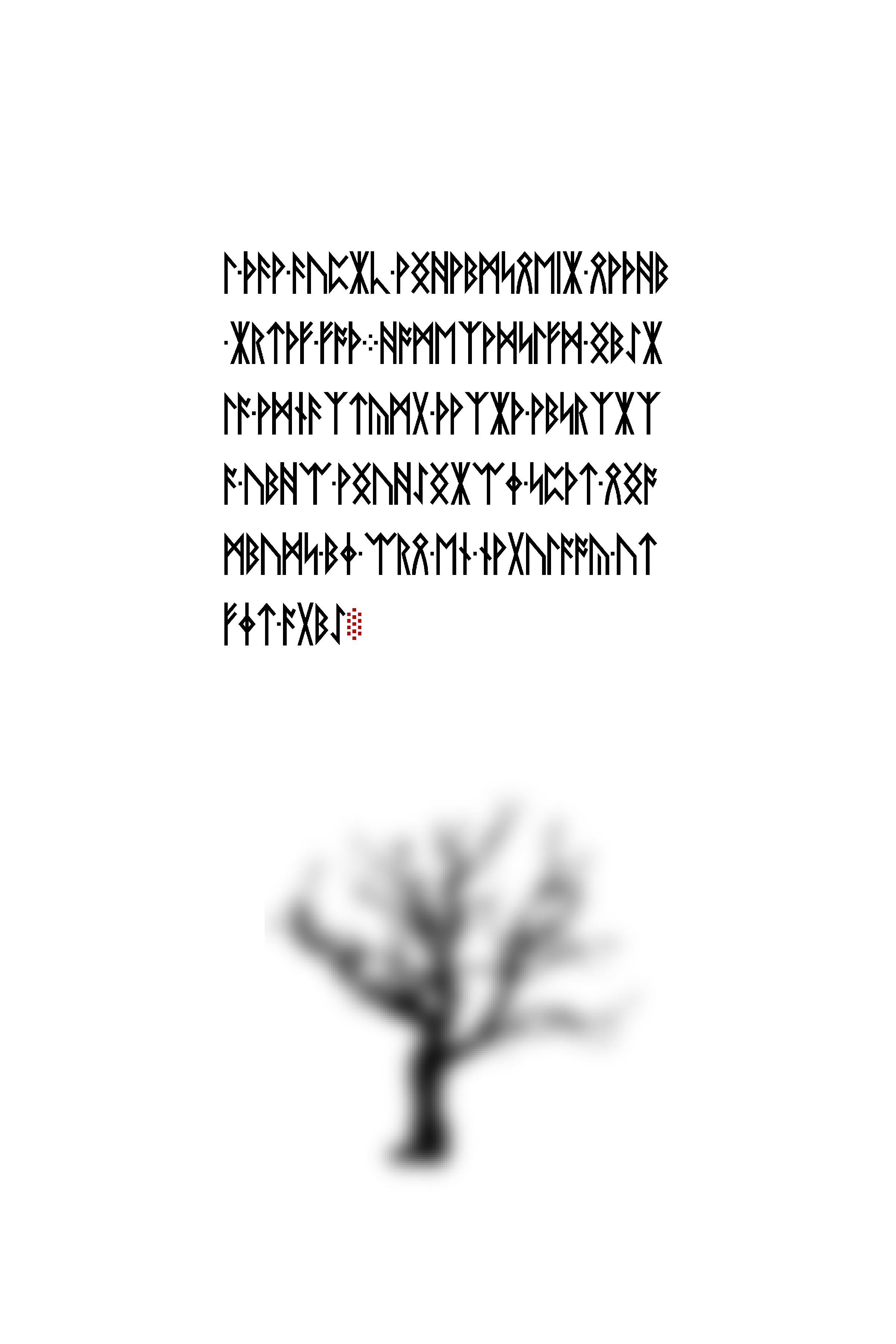
After allowing for the font’s spacing, the F would reach about 0.6 pixels beyond the estimated cutoff. Ordinary wraps on two pages set aside for testing bracket it: scan 29, line 10, was about 0.3 pixels over; scan 25, line 6, was about 0.9 over. These are model estimates, not measurements accurate to tenths of a pixel. The point is that line 5 looks like other lines that wrapped. It falls well inside the two-pixel uncertainty allowance, so its grade stays open.
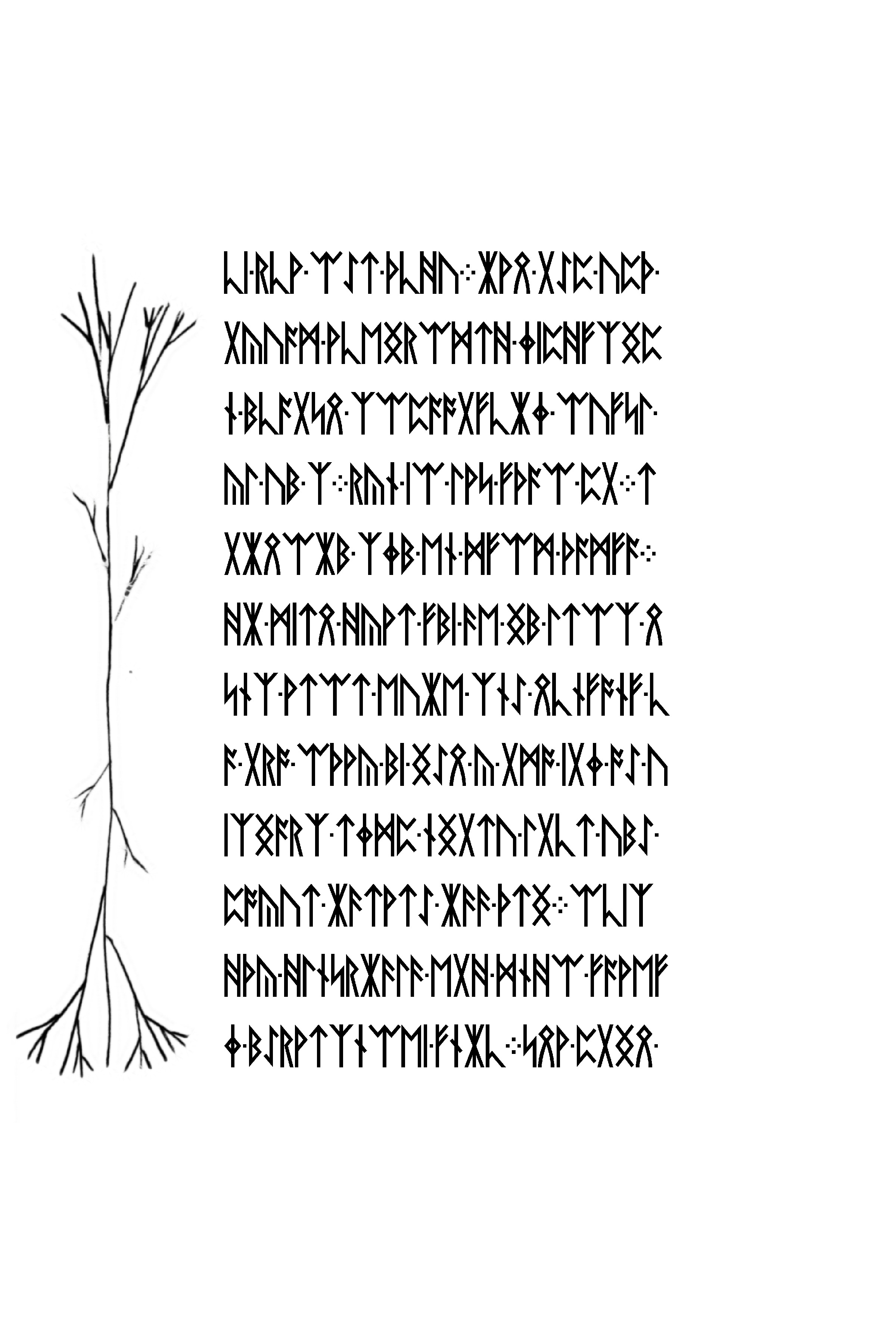
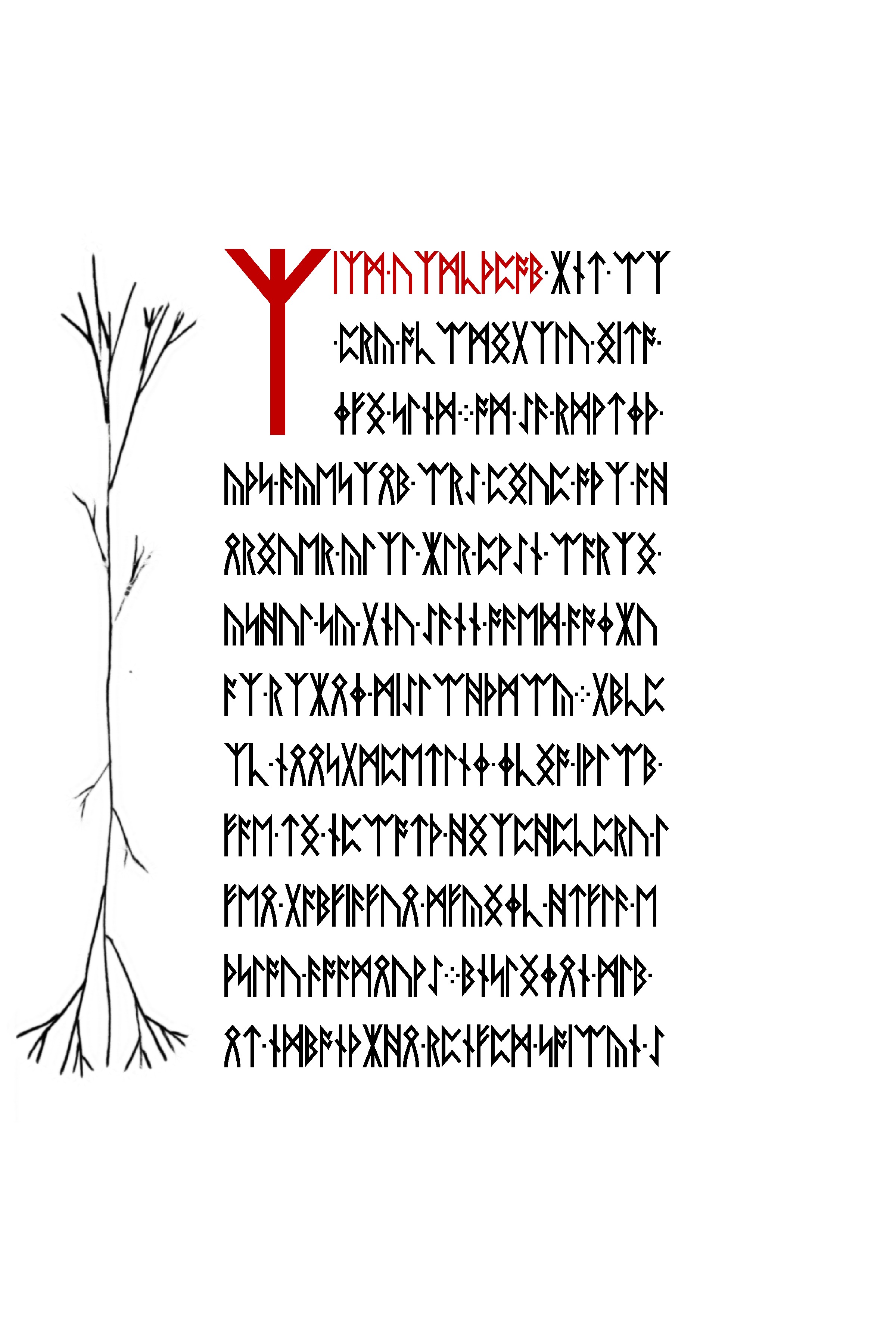
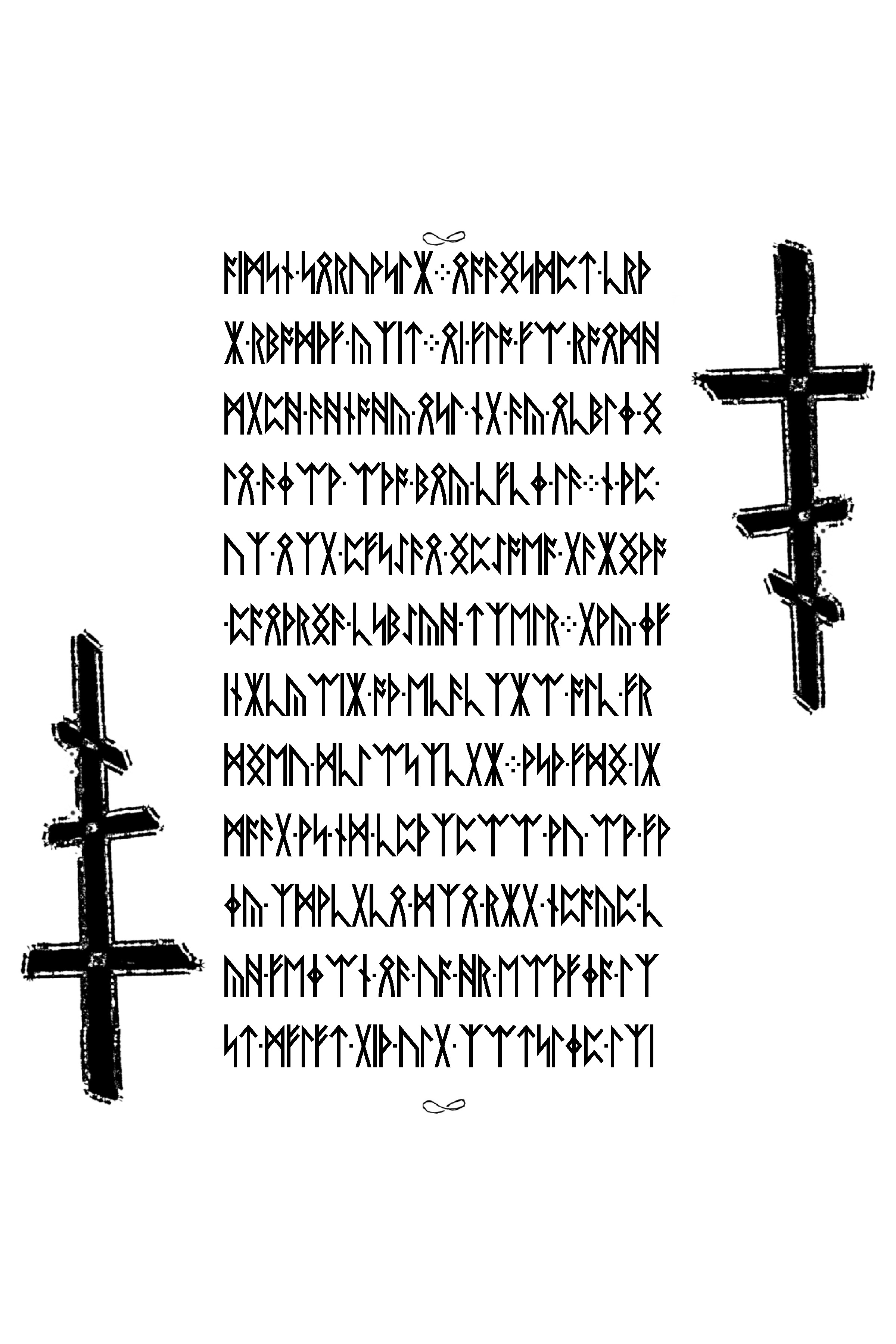
We also checked for a direct comparison without modeling the font: eight eligible reference lines ended in F. The furthest printed F ended at 1794 (scan 18, line 6). None establishes that an F could print through 1797–1798. Nine reference wraps began the next line with F; none was as close to the cutoff as the tree case. This small sample cannot settle the question either way.
Does the model predict other pages?
We fit the gaps between 5,157 adjacent sign pairs on even-numbered reference scans. A gap is the trailing space of the first sign plus the leading space of the next. The split between leading and trailing space has an arbitrary common offset: the scans reveal differences in spacing, not the original font file’s absolute measurements. The cutoff and the computed ends use the same offset, so their difference is meaningful. All six target scans were excluded.
On 138 ordinary line transitions from 24 even-numbered scans, one cutoff could admit every printed end and exclude every proposed next rune. We froze the midpoint of that interval. On 24 separate odd-numbered scans, all 5,678 measured gaps were within two pixels of their predictions. Then we tested the frozen cutoff on two questions:
| Held-out test | Clear correct | Inside two-pixel allowance | Clear wrong |
|---|---|---|---|
| Would the incoming rune overflow an ordinary line? | 151 / 155 | 4 | 0 |
| Would the last printed rune fit back onto a line artificially cut one sign early? | 122 / 128 | 6 | 0 |
The artificial breaks come from the same held-out rows, so the counts are related. Page selection still requires ordinary black body text and an unambiguous match to the existing transcription. The results do not establish what the original compositor did on every page. At darkness thresholds 80 and 140, the tests also passed; the eight target decisions stayed the same.
The eight remaining cases from Session 127
Positive values put the incoming rune past the midpoint cutoff. To rule a rune too wide, we required it to exceed even the furthest cutoff permitted by training after subtracting a two-pixel allowance. That is why +2.11 stays borderline but +2.51 does not. Pages below are LP2 page numbers, not archive scan numbers.
| Page | Line | Printed pair | Predicted excess (pixels) | Decision |
|---|---|---|---|---|
| 27 | 5 | dot → EA | +4.84 | Too wide |
| 27 | 6 | dot → I | +5.93 | Too wide |
| 28 | 6 | dot → A | +1.85 | Borderline |
| 29 | 10 | J → H | +10.79 | Too wide |
| 30 | 5 | E → TH | +2.11 | Borderline |
| 31 | 6 | G → R | +2.51 | Too wide |
| 32 | 3 | X → A | +8.72 | Too wide |
| 32 | 5 | T → F | +0.61 | Borderline |
The earlier 48 calls are carried forward, not retested here. All three surviving lines are on the overflow side of the midpoint. There is no positive evidence here for an intentional early wrap, a key position, or new plaintext.
Next discriminating test: reconstruct whole reference lines from their left margins, using the positions of every rune to estimate how fractional widths accumulate. Before inspecting any target results, freeze the model and show that it predicts ordinary breaks and planted early breaks more precisely than this two-pixel test. If it cannot, these three breaks are too close to use as cipher clues.
Rules fixed before measurement · Reproduction script · Results, per-sign estimates and every primary reference transition (gzipped JSON) · Image hashes · Previous pair measurements